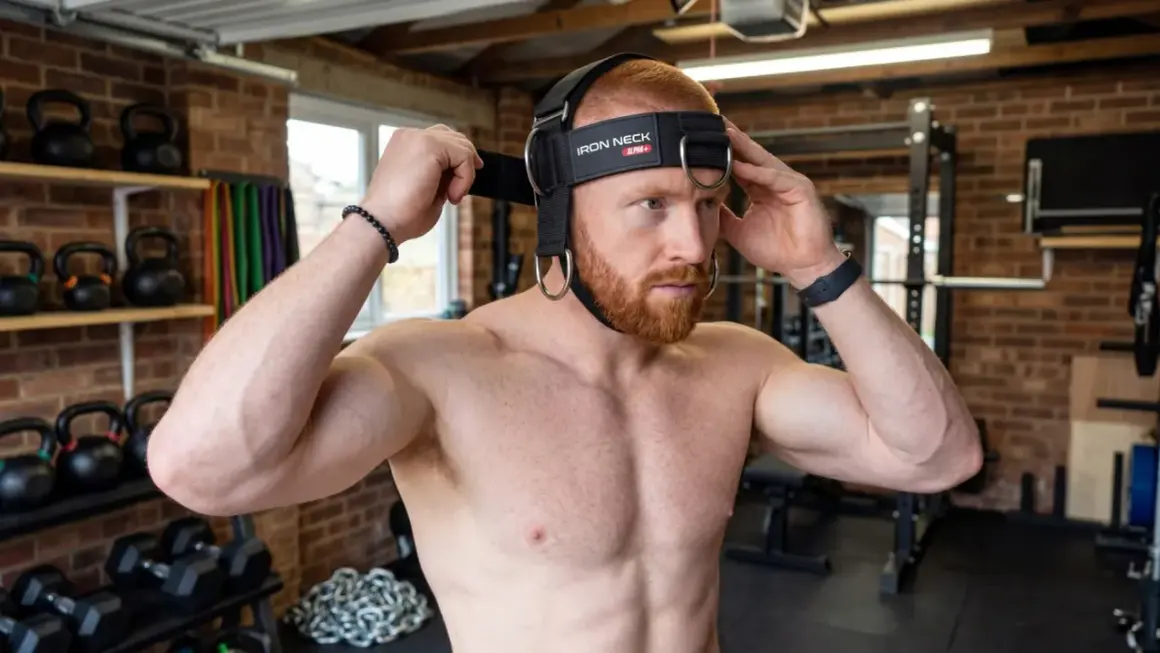
What a weighted neck harness changes in training
- It adds progressive resistance to the cervical muscles that support flexion, extension, and lateral flexion.
- It is most useful for athletes who need head control, collision tolerance, or stronger neck endurance.
- It can be a smart overload tool, but it is not a guarantee against concussion or neck injury.
- It works best when the load is light at first and the movement stays controlled.
- It is usually a better fit for intermediate trainees than for people already dealing with neck pain or nerve symptoms.
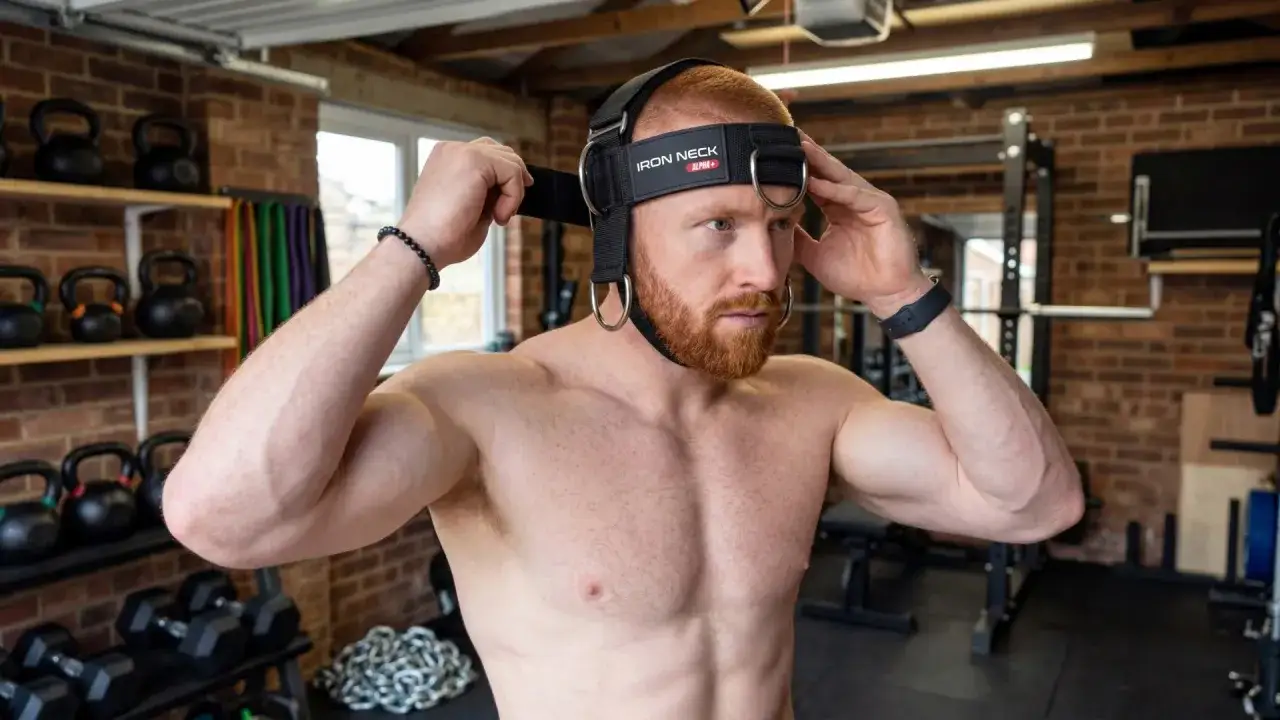
How a weighted neck harness changes the work your neck has to do
The cervical spine supports the head, which weighs roughly 10 to 13 pounds, and it has to do that while allowing flexion, extension, rotation, and side bending. A neck harness lets you add external resistance to that job, so the muscles around the cervical spine have to produce more force and tolerate more time under tension. In practice, that means the harness is not just a “neck builder”; it is a way to train the neck like any other muscle group, with measurable overload and a more predictable progression.In my view, that is the main advantage. Bodyweight neck drills and manual resistance are useful, but they are harder to standardize. A harness gives you a simple way to repeat the same movement, add small amounts of load, and track whether your neck is actually adapting instead of just surviving the session. That makes it especially useful when conditioning needs to be measurable, not just hard.
From here, the important question is not whether the tool works in theory, but which adaptations are worth chasing in real training.
The benefits that matter most for conditioning
The strongest case for a harness is not “bigger neck” for its own sake. It is what stronger cervical muscles can do for contact tolerance, posture, and force transfer when training gets messy.
| Benefit | Why it matters | Practical caveat |
|---|---|---|
| Greater neck strength | Helps the neck resist external force during clinch work, shots, sprawls, and collisions. | Strength has to be built gradually; fast jumps in load are where most mistakes happen. |
| Better head control | Can reduce how much the head whips around when the body gets moved. | This is helpful, but it does not make you immune to impact. |
| More postural endurance | Useful for long rounds, long sessions, and athletes who spend time braced or bent under load. | Endurance still needs specific work; one heavy set is not enough. |
| Possible injury-risk reduction | Several studies associate greater neck strength with lower concussion risk or lower head acceleration. | The evidence is promising, not conclusive, and neck size alone is not the same thing as neck strength. |
That last point is important. The current research trend is encouraging, but I would not sell a harness as concussion insurance. The honest version is simpler: stronger neck muscles may help the head move less violently, and that is one part of a broader injury-prevention strategy. Once that is clear, the next question is which training method gives you the best return for your situation.
When a harness is the right tool and when it is not
I usually think of neck training in layers. Some athletes need a low-risk entry point, some need a way to add resistance without expensive equipment, and some need direct overload because their sport demands it. A weighted harness sits in the middle of that spectrum.
| Method | Best for | Main limitation | My take |
|---|---|---|---|
| Isometric neck holds | Beginners, rehab-informed work, and athletes who need control before load | Harder to quantify progression once the hold gets easy | Best first step if the neck is sensitive or undertrained |
| Manual resistance | Low-cost practice and coach-assisted sessions | Load is inconsistent from rep to rep | Good bridge, but not ideal for long-term tracking |
| Weighted neck harness | Progressive overload, sport-specific conditioning, and repeatable sets | Can be irritating if the load jumps too quickly | One of the best tools when the athlete already tolerates basic neck work |
| Specialty machines or rigs | Gym settings where precision and multiple angles matter | More expensive and less portable | Excellent if you have access, but not necessary for solid results |
If I only had one piece of advice here, it would be this: use the harness when you want measurable overload, but do not use it as a shortcut past basic neck control. The better you can control the neck in simple positions, the more the harness will add instead of aggravate.
How to program it without beating up your neck
Neck work responds best when it is treated like training, not punishment. I prefer short sessions, moderate frequency, and controlled reps. A practical starting point is 1 to 2 sessions per week, with 2 to 4 exercises and enough load to make the last few reps challenging without grinding.
For most athletes, I would start with 2 sets of 10 to 15 controlled reps in the directions that matter most for their sport, usually extension, flexion, and sometimes lateral flexion. Use a slow tempo, keep the torso still, and stop the set if you have to jerk the harness to finish the rep. If the movement looks like a shrug, a head toss, or a swing, the load is too heavy.
Two other details matter. First, place the work after a proper warm-up, not cold at the start of the session. Second, adjust volume around contact days. If you sparred hard, wrestled live, or took repeated blows to the head that week, neck volume should probably come down, not up. That is how I would keep the drill productive instead of noisy.
The program itself is only half the story, though. The other half is avoiding the small errors that make the harness feel worse than it should.
The mistakes that make harness work feel worse than it should
Most bad neck training is not dramatic. It is usually just a few small mistakes stacked together until the neck starts complaining.
- Loading too fast and assuming the neck should adapt at the same speed as the arms or legs.
- Using momentum instead of controlled range of motion.
- Only training extension because that feels easiest, then wondering why flexion or side-bending still feels weak.
- Chasing range before control and forcing the head through positions that feel pinchy.
- Ignoring symptoms like dizziness, radiating pain, numbness, or a sharp catch at the base of the skull.
- Training through acute irritation after a hard collision, whiplash-type event, or unresolved neck strain.
The same logic applies to exercise order. If your neck is already tired from sparring, clinch drills, carries, or heavy upper-back work, a hard harness session may be unnecessary. In that case, lighter isometrics or a reduced-volume session usually make more sense. From there, the real issue becomes who gets the most value from the tool in the first place.
Who usually benefits the most from this kind of training
The harness makes the most sense for athletes and trainees who need the neck to do a real job, not just look thick. That includes boxers, MMA fighters, wrestlers, grapplers, rugby players, football athletes, and some functional-fitness lifters who want better posture under load.
I also like it for athletes who already have a base layer of general strength but still feel their neck lag behind the rest of their body. That mismatch is common. Someone may deadlift, row, and press well, yet still lose position easily when their head gets pulled off line in clinch work or during scrambles. In that situation, a harness can close a specific gap instead of just adding more fatigue.
For newcomers, I would be more selective. If someone has recent concussion symptoms, cervical disc issues, nerve symptoms, recurrent headaches, or a history of neck instability, I would not treat a harness as the first move. Start with a safer entry point, clear the problem if needed, and earn the right to load the neck later. That restraint is not a limitation of the idea; it is part of using it responsibly.
What I would take from the evidence before buying into the hype
The most useful takeaway is simple: a weighted harness is a specialized overload tool, not a magic fix. It can help build stronger cervical muscles, better head control, and more useful neck endurance for combat sports and other contact-based training. It may also support lower head acceleration or lower concussion risk, but the evidence is still mixed enough that I would never present it as a standalone solution.
If I were building a program from scratch, I would start with controlled isometrics, add light harness work once the neck tolerated the basics, and keep progression conservative. That approach gives you the upside of the harness without turning the neck into the weak link in the week’s training. Used that way, the neck weight harness benefits are real, practical, and much more relevant than the marketing usually makes them sound.