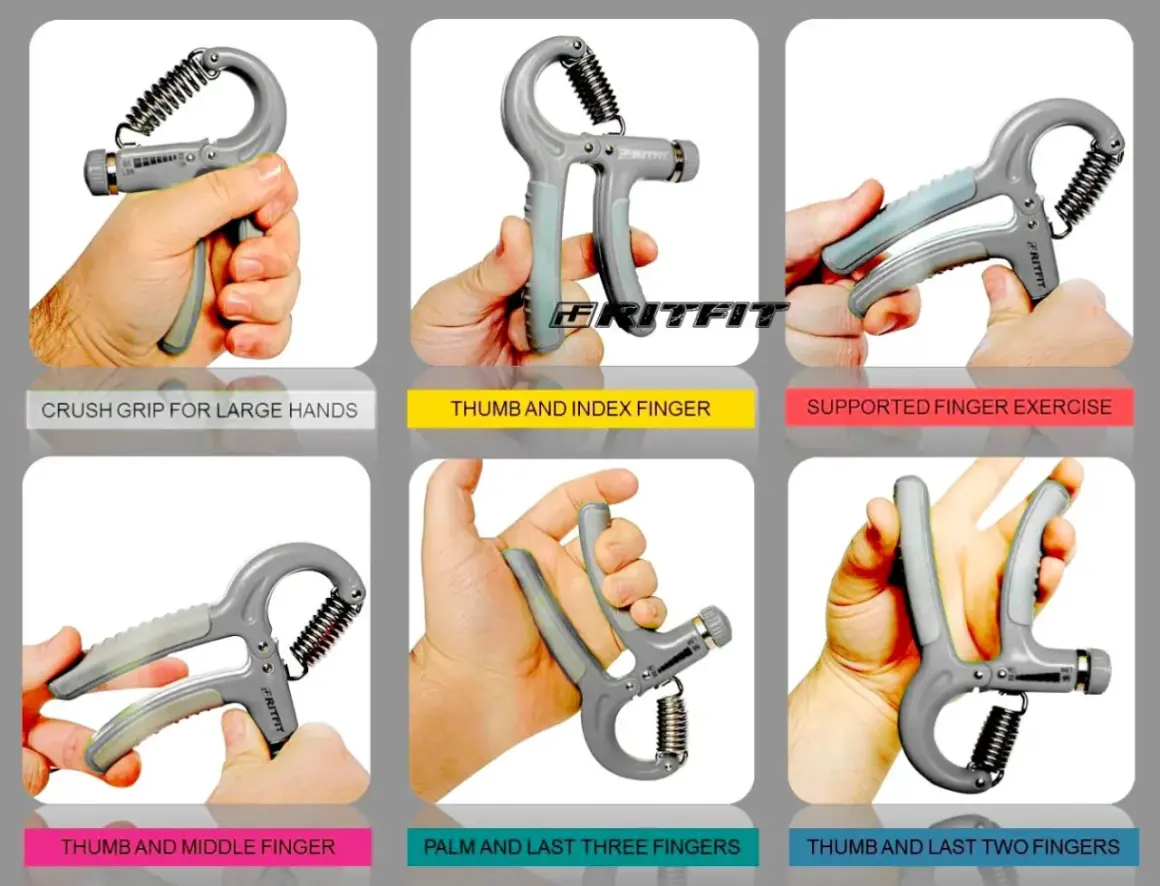
Hand grippers can build a stronger closing grip, improve local forearm endurance, and give you a simple way to measure progress. So, do hand grippers work? Yes, but mainly for the type of grip they actually train, not as a shortcut to every kind of hand strength. I treat them as a targeted accessory for fighters, lifters, climbers, and anyone whose grip gives out before the rest of the body does.
What matters most before you buy into grippers
- They are effective for crush grip, which is the ability to squeeze a handle closed.
- They can improve local forearm endurance when you train them with progression instead of random reps.
- They do not replace carries, hangs, rows, or pinch work if you want complete grip development.
- Their value is highest when you use them as a small, measurable accessory inside a bigger conditioning plan.
- Too much daily squeezing can irritate the fingers, wrist, or elbow before you ever see useful gains.
What hand grippers actually train
I separate grip into three buckets because the distinction matters. Crush grip is squeezing something shut, support grip is holding on to a load for time, and pinch grip is controlling an object between the thumb and fingers. Hand grippers mostly train crush grip, plus a bit of finger flexor endurance and wrist stability.
That narrow focus is exactly why they work. The muscles and tendons involved in closing the hand adapt to repeated resistance, especially when the load increases gradually. In practical terms, that means a gripper can make your closing force better, your hand fatigue slower, and your forearm feel more durable during specific tasks like gi gripping, wrestling hand fighting, deadlift setup, or thick-handle pulling.
A 2019 meta-analysis in Gerontology found that exercise training can produce meaningful but small transfer to handgrip strength in older adults. I take that as a useful reminder: the hand responds well to load, but specificity still rules. Specificity simply means the body adapts most to the exact demand you repeat.
That is the right starting point, because once you know what grippers train, it becomes easier to see where they fit and where they fall short.
Where grippers fit among other grip tools
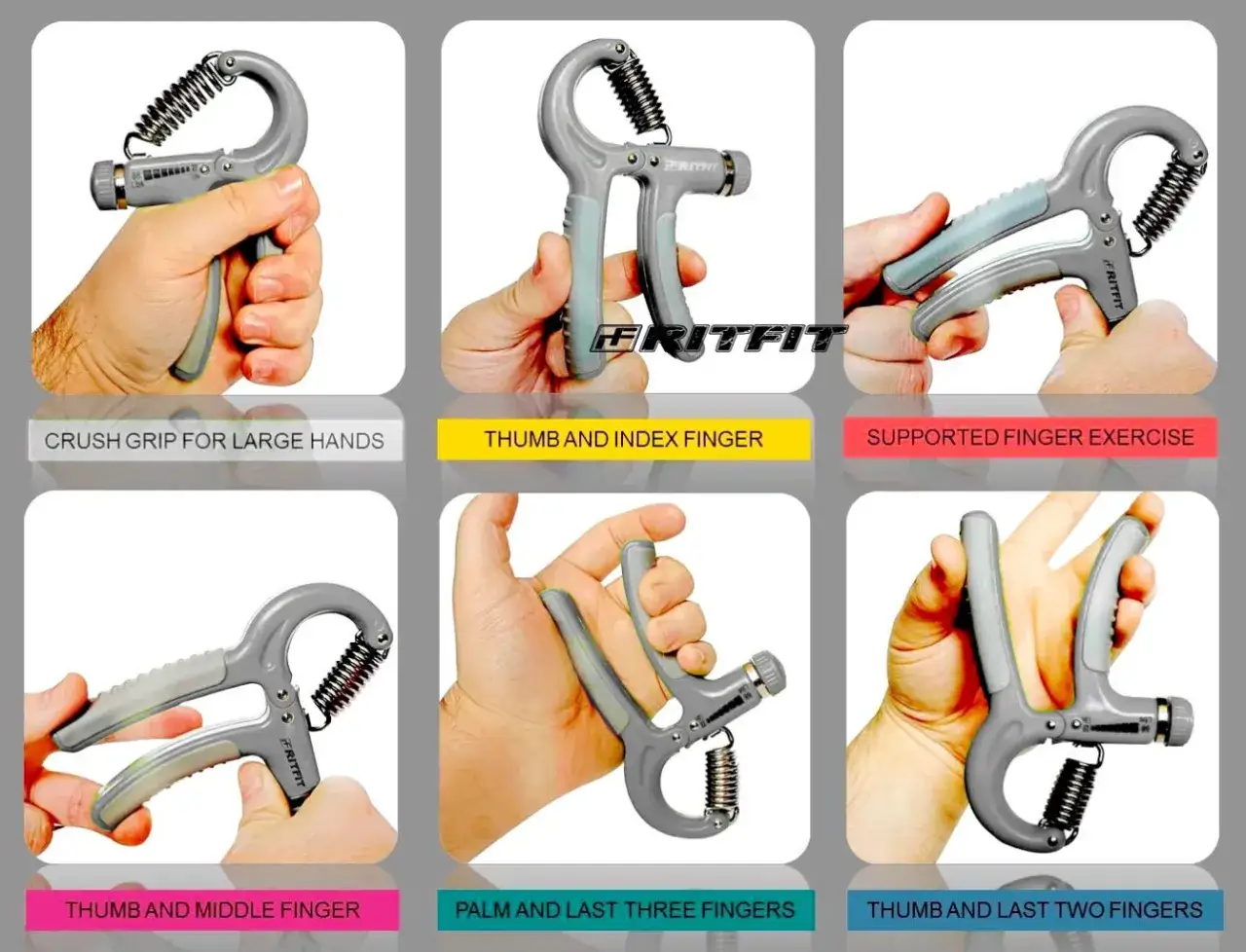
One reason hand grippers get overrated is that people ask them to do the job of four different tools. I would not do that. They are useful, but they sit inside a broader grip toolbox, and each tool develops a different piece of the puzzle.
| Tool | Best use | Main limitation |
|---|---|---|
| Hand grippers | Crush grip, closing strength, short bouts of hand endurance | Limited carryover to support and pinch strength on their own |
| Farmer's carries | Support grip under load, trunk stiffness, total-body conditioning | Less isolated finger work and less direct closing strength |
| Towel hangs | Open-hand endurance, pulling stamina, climbing and grappling carryover | Harder to scale precisely from session to session |
| Plate pinches | Pinch grip and thumb strength | Does not train crush grip very well |
| Fat grips or thick handles | General hand and forearm challenge during compound lifts | Less isolated and less measurable than a gripper |
Once that role is clear, the next question is how to dose grippers so they create adaptation instead of fatigue.
How I would program them for conditioning
The biggest mistake is treating grippers like a stress toy. They work better when they are trained like any other strength accessory: consistent frequency, progressive loading, enough recovery, and a clear goal. For most people, the sweet spot is short sessions two to four times per week.
A simple starter protocol
- Use a gripper you can close with clean form for 5 to 12 repetitions, or use a harder gripper for timed holds.
- Perform 2 to 4 sets per hand in one session.
- Leave 1 to 2 reps in reserve on most sets, which means you stop before failure instead of grinding every rep.
- Rest 60 to 120 seconds between sets if your goal is strength; shorten the rest only if you are chasing endurance.
- Train both hands, even if one side is stronger, so the weaker side does not lag badly.
How to progress
- Move up when you can close the current gripper for all prescribed sets with no hitching, no wrist collapse, and no cheated range.
- For timed holds, progress once you can maintain a strong close for 15 to 20 seconds without losing hand position.
- Every 4 to 8 weeks, retest the same gripper or switch to the next level so the work stays measurable.
- If your sport already has heavy pulling, keep the gripper volume modest so it supports the program instead of stealing recovery from it.
Read Also: Arm Strength Exercises - Build Power, Not Just Show!
When to back off
- If your fingers ache at the joints rather than the muscles, reduce volume immediately.
- If your elbows feel hot or irritated, especially on the inside of the elbow, stop chasing high daily volume.
- If your hands stay stiff for hours after training, you are probably pushing too hard for the current tolerance level.
In my view, grippers are most useful when they stay small and sharp in the program, not when they dominate it. That brings us to the people who tend to benefit most, and the ones who need to be careful.
Who gets the most out of them and who should be careful
I like grippers most for athletes whose sport punishes the hands repeatedly: grapplers, strikers who clinch, climbers, strongman-style lifters, and anyone who has to keep a hold on a person, bar, or object under fatigue. For that crowd, the device is simple, cheap in training time, and easy to track. A 2024 review in J Health Popul Nutr also notes that handgrip strength is a useful marker of physical function, which is another reason it deserves attention beyond the gym floor.
They are also useful for general fitness clients who want a clean, low-complexity way to work the forearms without adding another complicated lift. That said, I would be more cautious with people who already have tendon irritation, trigger finger, carpal tunnel symptoms, or elbow pain from pulling volume. The muscles may be able to handle more work than the connective tissue does, and that mismatch is where trouble starts.
For older adults or rehab cases, grippers can still be helpful, but the dosage has to match the person. A little consistent loading is often better than aggressive squeezing, especially when the goal is function rather than ego. The same is true for desk workers who already spend all day gripping a mouse, keyboard, or steering wheel in a static way.
That leads straight into the most common errors, because those are usually the reason people think the tool failed.
The mistakes that make grippers look overrated
- Using only one resistance - If the tool never gets harder, progress stalls and the exercise turns into maintenance.
- Training to failure every session - Tendons recover slower than muscles, so constant max-effort squeezing is a bad trade.
- Skipping the full close - Half reps feel hard, but they do not always build the same closing strength or measurable progress.
- Ignoring support and pinch grip - A strong crush grip does not automatically mean better hanging, carrying, or controlling objects.
- Chasing pump instead of performance - Forearm fatigue is not proof of adaptation; closing more resistance with better control is.
- Training randomly - Ten squeezes here and there will not match a short, planned block with progression and recovery.
I see the same pattern over and over: people buy a gripper, crush it until their hands are tired, and then wonder why nothing changes. The fix is not more enthusiasm. It is better structure.
The simplest way I would fold them into a weekly plan
If I were adding grippers to a fighter or functional-fitness program, I would keep them brief and predictable. They should support the main work, not compete with it. A clean model might look like this:
- Day 1 after pulling work - 3 sets of 6 to 8 controlled closes per hand.
- Day 2 or 3 - 2 to 3 sets of 15-second isometric holds per hand.
- Optional extra day - Light technique work only, if the hands still feel fresh.
- Every 4 weeks - Retest the same gripper or move to a harder one.
That setup gives you enough stimulus to improve without turning grip training into a recovery problem. My rule of thumb is simple: if the grippers make your hands stronger for the things that matter, keep them; if they just make your forearms tired, simplify the plan. Used that way, hand grippers do work, but they work as a precise tool inside a bigger conditioning system, not as the whole system itself.