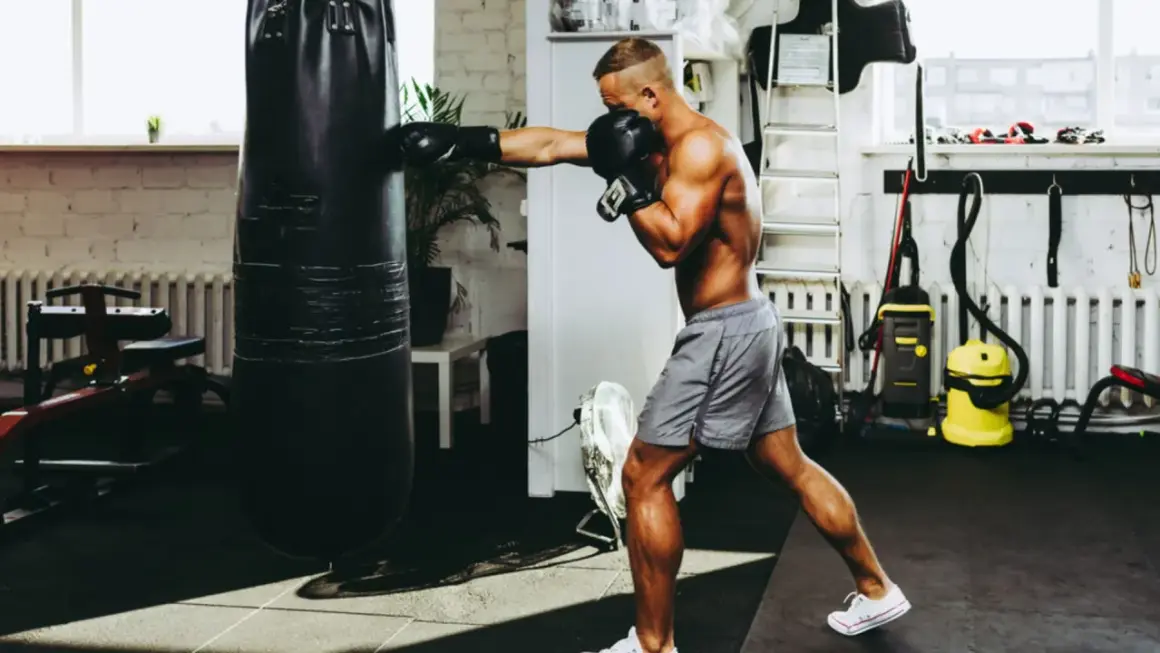
Does boxing build muscle? Yes, but it builds a very specific kind of muscle: dense, functional tissue that supports speed, power, balance, and repeat-effort conditioning. In this article, I break down what boxing actually does to the body, which muscles change the most, where the limits are, and how to train if you want both conditioning and visible muscle.
The short version on boxing and muscle gain
- Boxing builds muscle mostly through repeated explosive work, isometric bracing, and high training volume.
- The biggest changes usually show up in the shoulders, back, core, hips, legs, and forearms.
- It is excellent for conditioning, but boxing alone is not the fastest path to large muscle gain.
- If you want noticeable size, pair boxing with two weekly strength sessions and enough food.
- A practical hypertrophy target is about 10 quality sets per muscle group per week, plus recovery.
What boxing really does to your physique
When I look at long-term boxing training, I see three main adaptations. First is muscular endurance: your shoulders, trunk, and hips learn to keep producing force round after round. Second is power: punches are short, violent actions that reward rapid force production. Third is recomposition: because boxing burns a lot of energy, many athletes get leaner while keeping or even adding muscle, which makes the changes look more dramatic than scale weight would suggest.
That is why boxing physiques often look compact and hard rather than oversized. The sport asks your body to be efficient under fatigue, not simply big. Repeated punches, stance maintenance, guard position, slipping, and footwork create a training effect that is real, but it is not the same stimulus as bodybuilding.
High-level boxing also demands well-developed upper- and lower-body power, so the body adapts by getting better at producing force quickly and repeatedly. That becomes clearer when you look at the muscles boxing loads most.
Which muscles boxing trains hardest
Boxing is not just an arm workout. The punch starts in the floor, passes through the hips and torso, and finishes through the shoulder, arm, and fist. That chain means a few muscle groups do most of the work:
- Shoulders and triceps keep the guard up and repeat fast extensions on jabs, crosses, hooks, and uppercuts.
- Chest and serratus anterior help drive and control punching mechanics, especially when you are throwing volume.
- Lats and upper back are heavily involved in retraction, posture, and deceleration after each strike.
- Core and obliques transfer force between the lower and upper body and keep the torso from collapsing under rotation.
- Glutes, quads, and calves create stance strength, stepping power, and the ability to reset quickly.
- Forearms and grip stabilize the wrists, protect the hand, and maintain control through long sessions.
I also think the trunk is underrated. A lot of the visible “boxing muscle” is really core stiffness and better force transfer. That is useful in the ring and in everyday athletic movement, even if it does not always look dramatic in a mirror.
The body changes most where the sport asks for repeat force, not where you are simply trying to pump blood into a muscle. That difference matters when you compare boxing to traditional muscle-building work.
Why boxing is better at conditioning than building big muscle
The reason is stimulus. Boxing gives you repeated high-output work, but the muscle is rarely loaded in a slow, progressively heavier way for long enough to maximize hypertrophy. The sport is also metabolically expensive, so it can be hard to stay in a calorie surplus, which is the environment where size gains happen most easily.
| Training approach | Main adaptation | Muscle gain potential | Best use |
|---|---|---|---|
| Boxing only | Power, endurance, coordination, work capacity | Moderate at best; strongest in beginners | Lean athletic look and fight conditioning |
| Boxing plus strength training | Power, size, resilience, better force production | High if food and recovery support it | Athletic physique and better ring performance |
| Strength training only | Maximal hypertrophy and force | Highest for size | Bodybuilding-style growth or pure strength goals |
That is the tradeoff I see in real training. Boxing can absolutely change your body, but if you want measurable muscle growth in the chest, back, legs, and arms, you need direct loading that you can track and progress. A boxer can get stronger and denser without looking huge; that is not a failure of the program, it is simply a different adaptation.
For reference, current hypertrophy guidance points toward roughly 10 quality sets per muscle group each week, give or take according to recovery and experience. Boxing alone usually does not give each muscle that kind of direct, countable stimulus.
That does not mean boxing is useless for size. It means the setup has to be smarter if you want more than conditioning.
How to train boxing and still add muscle
If the goal is size without losing fight fitness, I would build the week around two things: enough resistance training and enough recovery to absorb the boxing volume. The cleanest approach is usually:
- Lift twice per week. Focus on compound patterns like squat or split squat, hinge, press, row, pull-up, and loaded carries.
- Keep boxing technical, not just punishing. You do not need every session to become a conditioning test. Skill work and mitts still create useful load.
- Use progressive overload in the gym. Add reps, weight, or sets over time. Boxing alone is too inconsistent for that kind of progression.
- Eat for the goal. A practical protein target is about 1.6 to 2.2 g/kg per day, or roughly 0.7 to 1.0 g per pound of body weight. If you want more size, starting with a surplus of about 200 to 300 calories per day is more realistic than trying to grow on a hard deficit.
- Recover like it matters. Sleep 7 to 9 hours, keep one real rest day, and do not stack hard sparring, heavy legs, and long conditioning on the same exhausted week.
One simple weekly structure I like is two full-body strength sessions, two or three boxing sessions, and one session that is either light skill work or active recovery. That is enough volume to grow without turning the week into a grind that you cannot recover from.
If you want a stronger, more muscular boxing frame, the rule is simple: let boxing provide the athletic stimulus, and let lifting provide the growth stimulus.
The mistakes that stop boxing from adding muscle
The biggest problems are usually not genetic or mysterious. They are programming mistakes:
- Relying on bag work alone. Heavy bag rounds build output and shoulder endurance, but they do not replace progressive loading.
- Doing too much extra cardio. If your training day already includes boxing, hard intervals on top can make it hard to eat and recover enough to grow.
- Staying in a calorie deficit for months. Many boxers get lean this way, but it is a poor setup if size is the real goal.
- Ignoring the lower body. Good boxing starts from the floor. If you skip squats, hinges, lunges, and calf work, you leave power on the table.
- Chasing fatigue instead of progression. Being wrecked after every session feels productive, but muscle growth responds better to repeatable overload and recoverable work.
The big idea is simple: sweat is not a growth metric. You can be exhausted, sweating hard, and still underdose the muscles that need a clear growth signal. That is why better programming matters more than harder punishment.
Once you stop treating boxing like a random calorie burner and start treating it like a sport with specific demands, the whole question becomes easier to answer.
The balance I’d choose for a boxer who wants to look stronger
If your goal is an athletic, muscular frame rather than pure size, boxing should stay in the program. I would keep the skill work, the conditioning, and the sharp footwork, then add enough lifting to cover the gaps that boxing leaves behind.
- Choose boxing alone if your priority is conditioning, fat loss, and fight skill.
- Choose boxing plus strength training if you want lean muscle, a harder punch, and better durability.
- Choose lifting first and boxing second if your main goal is visible mass.
That is the honest answer I give most athletes: boxing can build muscle, but it builds it best when the rest of the week supports that goal instead of fighting it. Keep the work sharp, load the muscles directly, eat enough to recover, and the physique follows.