What matters most when you stretch the upper body
- Dynamic movement before training helps you warm up without dulling power.
- Static holds after training are better for relaxing tight tissue and restoring length.
- Target the chest, lats, shoulders, triceps, neck, and thoracic spine, not just the arms.
- A useful dose is usually 10 to 30 seconds per hold, repeated 2 to 4 times.
- Most people get better results from 8 to 12 minutes of focused work than from a long random routine.
- If a stretch causes sharp pain, numbness, or pinching in the shoulder, back off immediately.
Why upper-body mobility changes how your training feels
I treat flexibility as a way to improve position, not as a separate goal. When the chest, lats, and front of the shoulders stay tight, the shoulders drift forward, overhead reach gets expensive, and the neck and lower back start compensating for movement that should have happened higher up. That matters in combat sports, where you need clean hand positioning, fast recovery between exchanges, and enough range to frame, pummel, strike, and defend without locking up. For lifters, the same issue shows up in pressing, pull-ups, front rack work, and even basic posture between sets. A stiff thoracic spine means the upper back stops contributing, so the rib cage flares or the head juts forward to fake range. In practice, that is not just a mobility problem. It is an efficiency problem, because poor positions cost energy. Once you see it that way, the next question is timing: what should happen before training, and what should wait until after.When dynamic movement beats a static hold
The simplest rule I use is the one most coaches already live by: move before training, hold after training. The ACSM’s flexibility guidance is straightforward here, with static holds generally sitting in the 10 to 30 second range for 2 to 4 repetitions per muscle group. I would keep the warm-up active and the cool-down calmer.
| Method | Best use | What it feels like | Good examples | Main limitation |
|---|---|---|---|---|
| Dynamic mobility | Warm-up, between sets, movement prep | Controlled, active, slightly rhythmic | Arm circles, shoulder rolls, thoracic rotations, cat-cow | Good for readiness, but not enough on its own for stubborn tightness |
| Static stretching | Cool-down, recovery days, desk breaks | Steady tension without bouncing | Doorway pec stretch, cross-body shoulder stretch, triceps hold | Can feel flat or power-sapping if used right before explosive work |
In other words, the right stretch at the wrong time can still be the wrong tool. A few controlled repetitions before pads, lifting, or grappling usually work better than long holds, while static work tends to pay off more after the session when you are trying to bring the body back down. That timing decides which movements actually earn a place in your routine.

The stretches I would keep in a fighter’s toolkit
If I had to keep the list tight, I would focus on movements that open the chest, clean up shoulder line, and restore motion through the upper back. These are the ones I reach for most often because they solve the problems that show up in striking, clinching, pressing, and desk-heavy recovery.
Doorway pec stretch
This is the most useful chest opener for people who live with rounded shoulders. Set one forearm on a doorway, keep the elbow around shoulder height or slightly lower, and step through until you feel a gentle pull across the chest and front of the shoulder. Keep the ribs stacked and avoid arching the lower back to fake a deeper range. I usually hold this for 20 to 30 seconds for 2 rounds per side. If the front of the shoulder pinches, lower the arm angle and reduce the stretch.
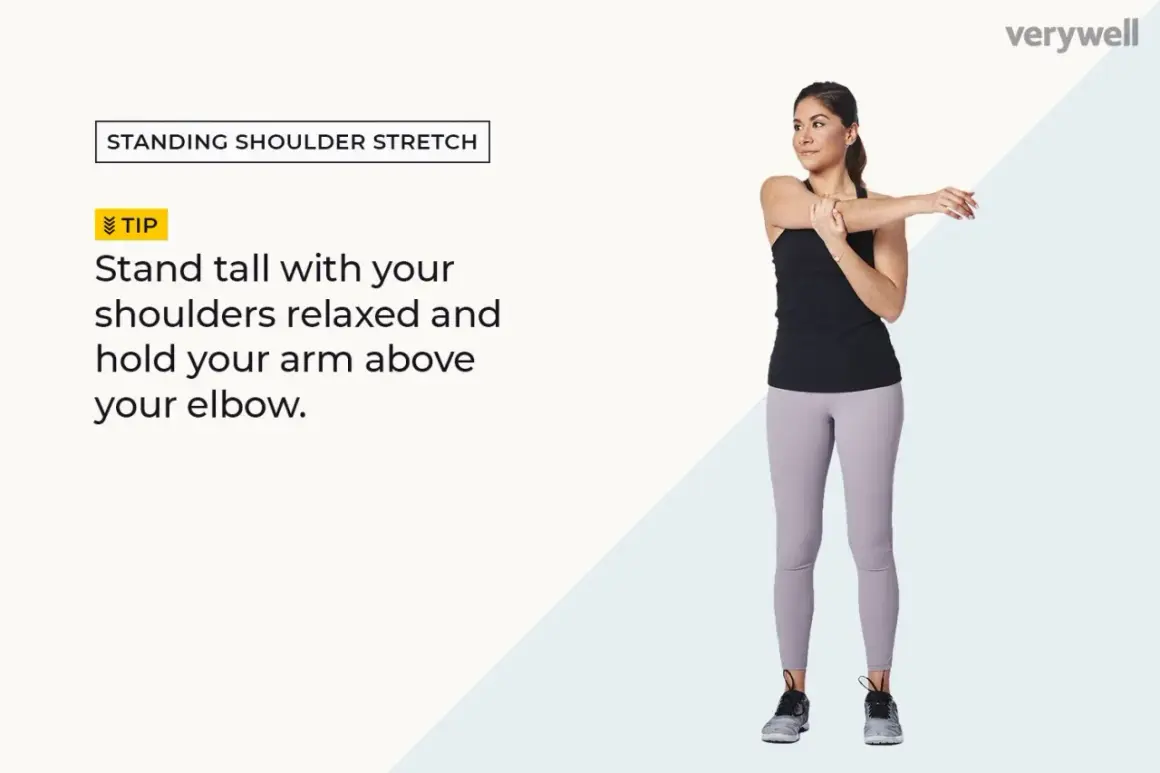
Cross-body shoulder stretch
This one targets the back of the shoulder and the posterior capsule area. Draw one arm across the chest, support it at the elbow, and keep the torso facing forward instead of twisting to win extra range. It is especially useful after bag work, wrestling, or any pulling-heavy session because it helps the shoulder feel less crowded without forcing the joint. I keep it around 20 seconds for 2 to 3 rounds each side.
Overhead triceps and lat reach
Many people think they are stretching the arm when the real limitation sits in the lat. Raise one arm overhead, bend the elbow, and guide it gently with the other hand while keeping the ribs down. If you want more lat involvement, add a small side bend instead of leaning back through the lumbar spine. That distinction matters. A stretch that disappears into low-back extension is not solving the problem. Hold this one for 20 to 30 seconds for 2 rounds per side.
Thoracic extension and rotation
This is the piece that keeps the upper back from handing all its work to the neck and shoulders. Cat-cow is a simple option because it is breath-led and easy to control; seated thoracic extension or a slow rotational drill works well too. I like 5 to 10 controlled reps here, moving with the breath and keeping the motion higher through the rib cage rather than dumping it into the low back. If the movement feels jammed, shorten the range and keep the neck relaxed.
If you only keep four drills, keep these four. They cover the areas that usually restrict punching, pressing, framing, and overhead work. From there, the next step is not adding more exercises. It is placing them into a routine that matches the day.
How to build a routine that fits training days
A good mobility session should feel boring in the best possible way: simple, repeatable, and easy to fit around the work. I prefer short blocks that match the session in front of you rather than one giant flexibility routine you will skip half the time. Cleveland Clinic’s split is the one I trust most in practice: dynamic work before training, static holds after.
A warm-up version that wakes up the shoulders
- Do 30 seconds of shoulder rolls or arm circles.
- Move through 5 to 8 cat-cow reps.
- Add 6 thoracic rotations per side.
- Finish with 8 scapular retractions or band pull-aparts if you have a band.
This version is for days when you need to punch, press, grapple, or move explosively. Keep it smooth, not aggressive. The goal is to increase temperature, improve awareness, and make the shoulders feel organized before the real work starts.
A cool-down version that restores length
- Doorway pec stretch for 20 to 30 seconds per side.
- Cross-body shoulder stretch for 20 seconds per side.
- Overhead triceps and lat reach for 20 to 30 seconds per side.
- Finish with 3 slow breaths in a neutral posture.
This is the version I would choose after harder lifting sessions or intense rounds on pads. The slow breathing matters more than people think because it helps the ribs settle and lets the nervous system stop guarding every inch of motion. That is usually when the stretch starts to feel useful instead of forced.
Read Also: Weighted Neck Harness Benefits and How to Use It Without Overdoing It
A desk break version that keeps things from tightening back up
- Stand up and do 5 shoulder rolls backward.
- Perform 3 slow neck side bends per side.
- Hold a doorway chest opener for 15 seconds.
This version is not meant to “fix” anything. It is meant to stop the day from undoing your training. Small doses are easy to repeat, and repetition is what actually changes the pattern. Once the routine is set, execution matters more than exercise choice.
Mistakes that make the work feel useless or irritating
- Bouncing at end range instead of easing into the stretch.
- Chasing a bigger range with the lower back when the chest or lats are the real target.
- Letting the shoulder shrug up during doorway or overhead positions.
- Holding your breath, which usually turns a mobility drill into a bracing contest.
- Using long static holds before explosive work when the body needs readiness more than relaxation.
- Ignoring asymmetry and treating both sides the same when one shoulder is clearly tighter or more irritable.
A stretch should feel like a controlled pull, not a test of tolerance. If you feel sharp pain, tingling, numbness, or a pinching sensation in the front of the shoulder, stop and change the drill. The point is to improve movement quality, not to prove that you can endure more discomfort than your tissues are ready for. That is where stretching stops being useful and starts becoming a distraction from the real issue.
When stretching is not enough
This is the part many people skip: flexibility is only useful if you can own the range. If your shoulders feel open for five minutes and then tighten again, the missing piece is often control, not another stretch. I would rather see a fighter or lifter pair a few mobility drills with a few strength drills than collect fifteen stretches and never train the pattern under load.
- Rows and face pulls help the shoulder blades stay stable and retracted when you need them to.
- Serratus wall slides or push-up plus train upward rotation, which matters for overhead reach and punch recovery.
- Loaded carries and dead hangs build tolerance in the shoulders and upper back without forcing range.
- Thoracic rotation drills keep the upper spine contributing instead of letting the neck do all the work.
If the same shoulder keeps feeling tight every week, I also look at training balance. Too much pressing, too much striking volume, poor sleep, or a desk posture that never changes can all make the body feel locked down. And if pain lasts more than a week, strength drops, or numbness shows up, stretching is no longer the right answer on its own. That is the point where a proper assessment matters more than another routine.
The routine I would keep on a hard training week
- Before training: 5 minutes of dynamic work, built around shoulder circles, cat-cow, thoracic rotation, and scapular activation.
- After training: 8 minutes of static holds, focused on the chest, rear shoulder, triceps, and lats.
- On desk-heavy days: 2 minutes of neck, chest, and shoulder reset work every few hours.
The best routine is the one that keeps your upper body open enough to train hard tomorrow. I would not chase a huge menu of stretches; I would chase consistency, cleaner positions, and enough tissue tolerance to keep doing the work.