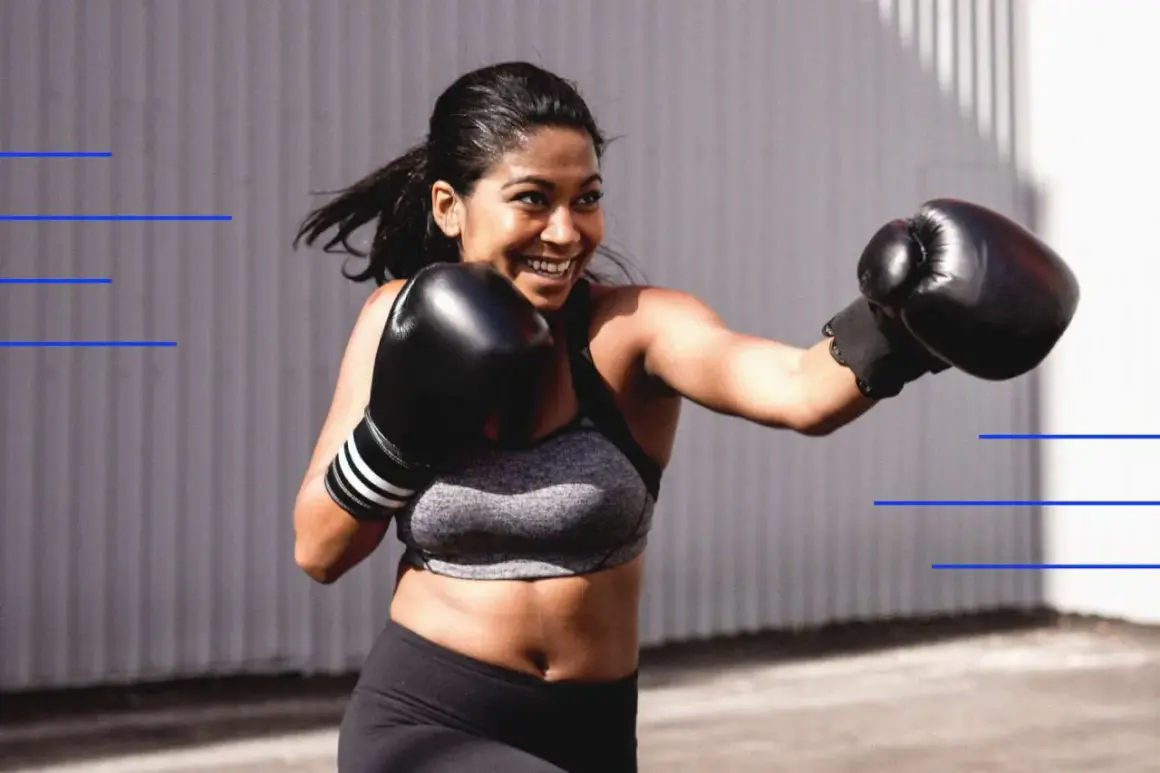
Effective women boxing exercises should build repeatable bursts, stable footwork, shoulder endurance, and the ability to recover fast enough to stay sharp from the first round to the last. The goal is not just to feel tired, but to keep technique intact when the pace rises. In this guide, I break down the conditioning priorities, the drills that carry over best, how I would structure a weekly plan, and the mistakes that quietly stall progress.
What matters most in boxing conditioning
- Round-based work beats random cardio when the goal is better ring performance.
- Jump rope, shadowboxing, bag rounds, sprints, and med-ball throws cover most of the real transfer.
- Two to four focused sessions a week is enough for most athletes if the work is organized well.
- Strength training should support punch force, posture, and injury resistance.
- Recovery, food, and sleep decide whether the conditioning actually sticks.
What boxing conditioning should actually improve
When I write a conditioning plan for a boxer, I am not trying to create a generic engine. I want three things: repeatable output, clean mechanics under fatigue, and fast recovery between exchanges. That is a different target from long steady-state cardio, which can help a base but does not fully prepare you for the stop-start rhythm of a fight.
Boxing is a mix of short explosive actions and brief recovery windows. The aerobic system handles recovery between bursts, while the anaerobic system covers the hard flurries, exits, and counters. In plain English, one system helps you keep going, the other helps you attack hard without falling apart. Good conditioning trains both, but it trains them in a way that still looks like boxing.That is why I start with movement patterns that match the rhythm of a fight, not with random exhaustion. If the last round still looks like the first round, the conditioning is doing its job.

The exercises that carry over best to the ring
I usually build from simple movement quality into more demanding work. USA Boxing’s current warm-up templates still favor jump rope, arm circles, and high knees, and the 2026 conditioning plans also lean on reaction drills and squat jumps. That tells me the sport still values coordination before it asks for power.
| Exercise | What it builds | How I use it |
|---|---|---|
| Jump rope | Rhythm, calf endurance, light feet, coordination | 6 to 10 minutes total, split into 60 to 120 second bouts |
| Shadowboxing with footwork | Timing, balance, breathing under motion, clean mechanics | 3 to 6 rounds of 2 to 3 minutes |
| Heavy bag intervals | Power endurance, combination flow, trunk stiffness | 4 to 8 rounds of 2 to 3 minutes |
| Sprint or bike intervals | Top-end conditioning without extra technical load | 6 to 10 efforts of 10 to 20 seconds, with 40 to 60 seconds easy |
| Medicine ball rotational throws | Hip-to-hand power and force transfer | 3 to 5 sets of 4 to 6 reps per side |
| Split squats, rows, and push-ups | Single-leg strength, posture, shoulder durability | 2 to 4 sets of 6 to 12 reps |
I like jump rope because it is cheap, portable, and brutally honest about your rhythm. Shadowboxing matters because it lets you rehearse footwork and breathing without the panic of contact. Heavy bag work is where you connect combinations to force, and sprint-style work is useful when you want a hard conditioning hit without adding more technical clutter.
I am less enthusiastic about exercises that look athletic but do not clearly improve boxing. Agility ladders and speed-bag drills can have a place, but I would not let them replace round-based work. Once the individual pieces make sense, the next question is how to arrange them across the week.
How I would structure a week of conditioning
The right weekly volume depends on the athlete’s level, sparring load, and recovery capacity. For most women in boxing, I would start with two quality conditioning sessions per week and one strength session, then add more only if technique and recovery stay solid. If sparring is already hard, conditioning volume should usually come down, not go up.
| Level | Sessions per week | Main focus | What I would watch |
|---|---|---|---|
| Beginner | 2 conditioning, 1 strength | Jump rope, shadowboxing, light bag rounds, basic lifts | Clean movement and no excessive soreness |
| Intermediate | 3 conditioning, 2 strength | One speed day, one power-endurance day, one mixed day | Round quality and recovery between sessions |
| Competitive | 3 to 4 conditioning, 2 to 3 strength | Fight-specific rounds, sprint work, controlled sparring support | Total ring volume and shoulder, hip, and calf fatigue |
A practical weekly layout might look like this: Monday strength and a short finisher, Tuesday skill work plus easy aerobic movement, Thursday hard rounds, Friday strength and power, Saturday speed or sparring support, and Sunday rest. Easy aerobic work means a pace where you can still talk in short sentences. That kind of training supports recovery instead of competing with it.
USA Boxing’s athlete resources still reinforce this blend of drills and conditioning, which is one reason I keep the plan simple: hard work, clear purpose, enough recovery. From there, the real value comes from pairing conditioning with strength work that actually supports punching.
Strength and power work that makes the conditioning useful
Conditioning without strength can make you better at being tired. That is not the same thing as being better at boxing. I want the athlete to produce force, hold posture, and keep the hands returning cleanly after every shot. For that, I keep coming back to a few movement patterns.
| Pattern | Good options | Why it matters |
|---|---|---|
| Squat | Goblet squat, front squat, split squat | Builds leg drive and stance control |
| Hinge | Romanian deadlift, hip thrust, kettlebell deadlift | Helps you extend the hips hard without losing posture |
| Push | Push-up, dumbbell bench, landmine press | Supports punching endurance and shoulder stability |
| Pull | One-arm row, chest-supported row, pull-up | Balances the shoulders and helps you snap the hands back |
| Carry | Suitcase carry, farmer carry | Trains trunk stiffness and grip under fatigue |
| Anti-rotation | Pallof press, dead bug, plank row | Helps the torso resist unwanted twist |
| Rotation | Medicine ball scoop toss, shot-put throw | Teaches force transfer from hips through the torso |
My default loading ranges are straightforward. Main lifts usually live in the 3 to 5 sets of 3 to 6 reps range. Accessory work sits around 2 to 3 sets of 8 to 12 reps. Medicine ball throws are best kept explosive, with 3 to 5 sets of 3 to 5 reps per side. I want crisp reps, not grindy ones. If the speed is gone, the set is over.
Not every woman needs the same strength emphasis. Some athletes already have strong endurance but need more absolute force. Others need hip stability, more pulling volume, or simply better tolerance for upper-body work. I adjust to the athlete in front of me, not to a stereotype. Even a smart plan fails if the volume is chaotic, which is where most athletes quietly lose progress.
The mistakes that quietly ruin conditioning
The fastest way to stall progress is to make every session feel like a test. That approach looks hard, but it usually creates a tired athlete instead of a better one. These are the mistakes I see most often:
- Training too hard too often. If every session is max effort, technique drops and recovery gets buried.
- Chasing only steady cardio. A long jog can help your base, but it will not fully prepare you for explosive exchanges.
- Letting form collapse under fatigue. Bad mechanics practiced at speed become habits, not accidents.
- Training the arms instead of the whole body. Boxing power starts with the legs, hips, and trunk, not the shoulders alone.
- Underfueling and under-sleeping. A hard plan cannot adapt well if energy intake and recovery are too low.
I also ask athletes to pay attention to how life outside the gym changes training quality. Travel, work stress, and menstrual-cycle symptoms can all affect energy and recovery. If the numbers are off, I would rather reduce volume by 10 to 20 percent for a week than force a session that only teaches compensation. A simple repeatable session fixes that more often than another random hard workout does.
A 20-minute conditioning session you can repeat
When I want a session that is useful, repeatable, and easy to measure, I use round-based work. This format mirrors the demands of boxing and lets you see whether your quality holds from start to finish. Keep the effort sharp, but do not turn the session into chaos.
| Block | Work | Focus |
|---|---|---|
| Warm-up, 6 minutes | 2 x 60 seconds jump rope, arm circles, high knees, hip openers | Raise temperature without draining energy |
| Round 1 | 3 minutes shadowboxing with footwork, moving after every 3 to 5 punches | Clean technique and breathing |
| Round 2 | 3 minutes bag work or air punches, 15 seconds burst, 15 seconds move | Combination output and rhythm |
| Round 3 | 3 minutes medicine ball slams or squat jumps, paired with quick steps | Explosive power under fatigue |
| Round 4 | 3 minutes shuttle steps, slips, and straight-punch bursts | Fight-specific repeatability |
If you do not have a bag, replace it with fast straight punches in the air and a split-stance shuffle. If you do not have a medicine ball, use squat jumps or skater hops. The point is not the equipment, it is the density of useful work.
To progress the session over four weeks, add one round first, then shorten rest by 15 seconds only if the technique stays clean, and then make the work slightly sharper. I would rather see a controlled 5-round session than a sloppy 8-round one. What matters now is whether the work is changing how you recover, not just how exhausted you feel afterward.
How to tell whether your boxing engine is actually improving
I look for a few simple signs. First, the last round should look a lot closer to the first round than it did a few weeks ago. Second, your footwork should stay light instead of flattening out. Third, your breathing should settle faster during the rest intervals. If those three things are improving, the plan is working.
I also pay attention to the next day. If you can train again within 24 hours without feeling slow, stiff, or unusually flat, the workload is probably in the right zone. If every hard session destroys the following two days, the problem is usually volume, recovery, or fuel, not toughness.
If you want the simplest version of the plan, build around one round-based conditioning day, one strength day, and one easier aerobic day each week, then add only what you can recover from. That approach is more boring than a random burnout circuit, but it is also much more likely to build a real boxing engine.