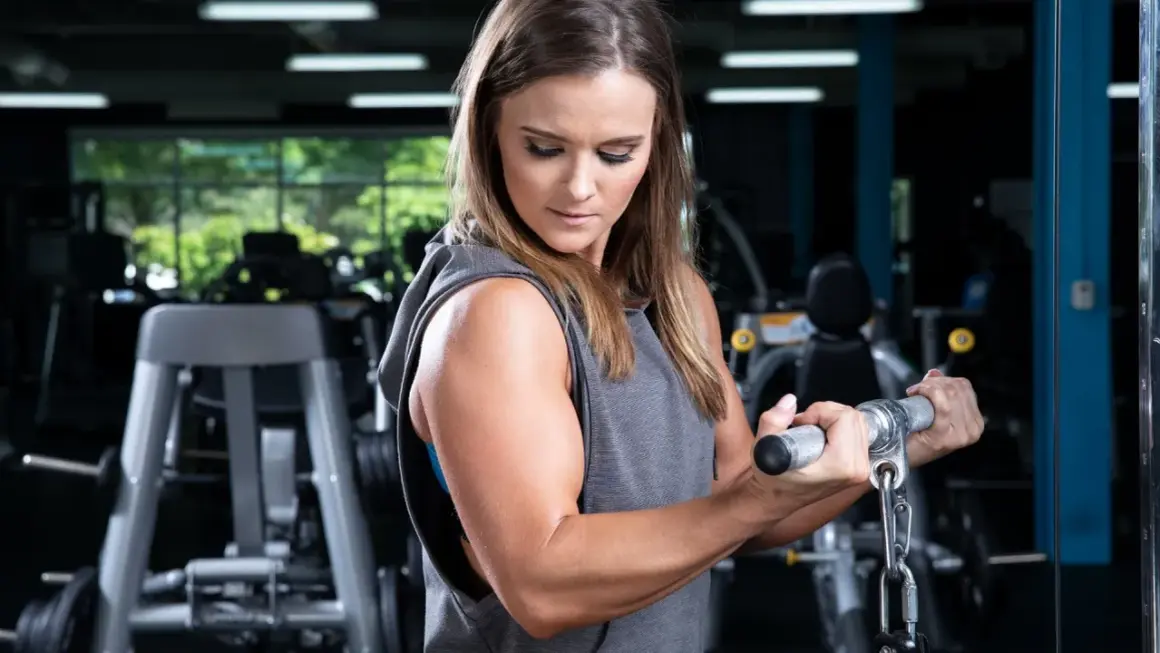
The fastest path to stronger arms is more structure, not more chaos
- Train biceps, triceps, shoulders, and upper back instead of chasing isolated arm burn only.
- Use progressive overload by adding reps, load, tempo, or range of motion over time.
- Two to three home sessions per week is usually enough for visible arm progress when the work is hard enough.
- Protein and recovery matter as much as the workout itself if size and shape are the goal.
- Bodyweight works, but dumbbells, bands, or a loaded backpack make progression much easier.
What actually makes arm muscles grow at home
Arm muscle growth is not complicated, but it is easy to underdose. The muscles need a challenge that is heavy enough, close enough to failure, and repeated often enough to force adaptation. That is why endless light reps usually stop working: the body adapts, and the stimulus gets too easy.
The CDC recommends at least two days of muscle-strengthening activity each week. For arm growth, I treat that as a floor, not a ceiling. In practice, I usually see better results with 2 to 3 upper-body sessions per week, especially when the work includes both pressing and pulling rather than only curls or only triceps work.
ACSM’s 2026 resistance-training guidance points to roughly 10 weekly sets per muscle group for hypertrophy, which is a useful target for biceps and triceps combined. I would rather see a woman do 8 focused, trackable sets than 20 sloppy ones. Most of the time, the difference between stalled and growing arms comes down to three things: enough hard sets, enough load, and enough recovery. Once that is clear, the next question is how to set up the home environment so progression is actually possible.
The home setup that makes progression easier
You do not need a full home gym, but you do need some way to make the exercises harder over time. If I were starting from scratch, I would build the setup in this order: a pair of dumbbells or adjustable dumbbells, a resistance band, a sturdy chair or bench, and a log for tracking workouts.
- Adjustable dumbbells are the best all-around tool because they let you add small amounts of load as you get stronger.
- Resistance bands are useful for high-rep triceps work, curls, face pulls, and assisted variations when joint stress needs to stay low.
- A chair, couch edge, or bench gives you incline push-ups, supported rows, and triceps work with better leverage.
- A loaded backpack can replace a dumbbell for rows, curls, and close-grip push-up progressions if you are working with minimal gear.
- A training log matters more than people expect, because if you do not know last week’s reps or load, you cannot apply progressive overload on purpose.
The main point is simple: if a movement never changes, the muscle eventually stops changing. A little equipment goes a long way, especially for arms where small jumps in load are enough to keep growth moving. From there, the exercise selection matters more than people think, so I like to be picky about what actually earns a place in the routine.
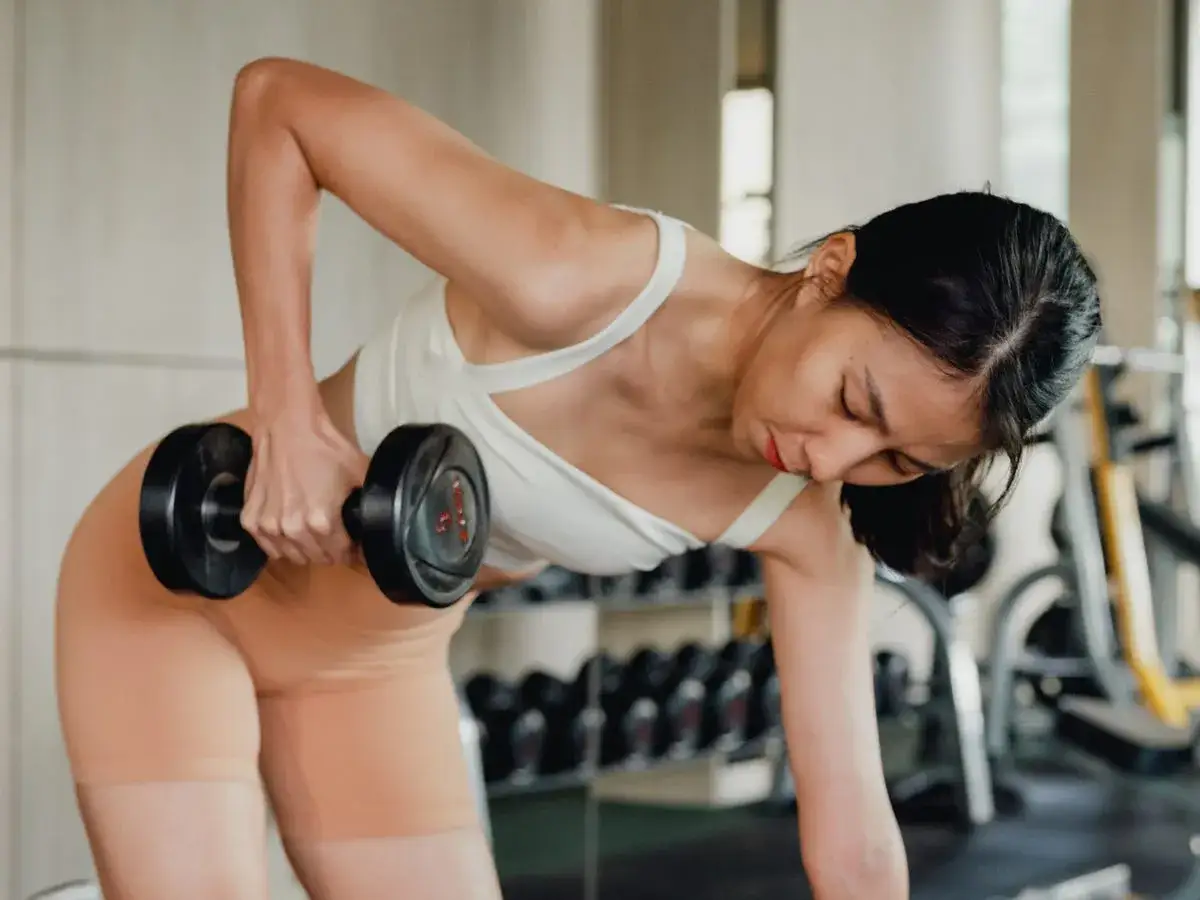
The best exercises for stronger, more defined arms
For home arm training, I want movements that do one of two things: load the arms directly, or load the bigger patterns that make the arms work hard under tension. That means curls and triceps extensions still matter, but presses, rows, and push-up variations matter too. The triceps are a large part of upper-arm size, so ignoring them leaves a lot of visible growth on the table.
| Exercise | Main target | Why it earns a place | Best home version |
|---|---|---|---|
| Close-grip push-up | Triceps, chest, shoulders | High return for time and easy to scale with elevation | Hands on floor, countertop, or couch |
| Overhead triceps extension | Triceps long head | Loads the triceps in a lengthened position, which is useful for size | One dumbbell, band, or backpack held overhead |
| Hammer curl | Biceps, brachialis, forearms | Adds thickness to the upper arm and supports grip strength | Dumbbells, water jugs, or loaded bag handles |
| One-arm row | Back, biceps, grip | Balances the pressing work and makes the arms pull harder | Dumbbell, backpack, or heavy household object |
| Lateral raise | Shoulders | Helps the upper arm look fuller even when the load is light | Light dumbbells or bands |
| Chair dip | Triceps | Good if your shoulders tolerate it, but not my first choice for everyone | Stable chair or bench |
If you want the shortest possible list, start with one press, one pull, one curl, and one triceps isolation move. That combination covers most of what women need for arm size and visible shape without wasting time on novelty exercises. The next step is turning that list into a weekly plan that is hard enough to matter and simple enough to repeat.
A weekly arm plan you can repeat
I prefer a plan that keeps the total volume manageable while still challenging the arms from different angles. Most sets should finish with 1 to 3 reps in reserve, meaning you stop when you could still do only one or two more reps with good form. That is usually where growth and recovery meet in the middle.
| Day | Workout | Sets and reps | Notes |
|---|---|---|---|
| Day 1 | Close-grip push-up, overhead triceps extension, hammer curl, lateral raise | 3 sets each, 8-12 reps for presses and curls, 12-20 reps for raises | Rest 60-90 seconds; last set should feel demanding |
| Day 2 | One-arm row, incline push-up, reverse curl, band pull-apart | 3-4 sets each, 8-15 reps | Keep the row strict so the back and biceps actually work |
| Day 3 | Shoulder press, triceps kickback, alternating curl, suitcase carry | 2-3 sets each, 10-15 reps; carries for 30-45 seconds | Use this day as a lower-stress pump and conditioning session |
Nutrition and recovery that support growth
Training creates the signal for growth, but food and sleep turn that signal into tissue. If the goal is arm muscle, I want enough protein, enough total food, and enough rest between sessions. You do not need a perfect diet, but you do need consistency.
- Protein: A practical target is 1.6 to 2.2 grams per kilogram of body weight per day. If that is easier to think about in meals, aim for roughly 25 to 40 grams of protein per meal across 3 to 4 meals.
- Calories: If you want size faster, a small surplus helps. If you are already new to resistance training, maintenance calories can still work for a while, but gains are usually easier when food intake is not too low.
- Sleep: Aim for 7 to 9 hours most nights. Poor sleep shows up fast in weaker sessions and slower recovery.
- Rest days: Leave at least 24 to 48 hours between hard arm sessions so the muscles and elbows can recover.
- Hydration: Even mild dehydration can make the arms feel flat and the session feel harder than it should.
If you also do conditioning work, the timing matters. I like to place arm training after skill work or on a separate day so fatigue does not wreck punching mechanics, pressing quality, or grip strength. That leads into the mistakes I see most often, because most stalled results are not caused by genetics. They are caused by a few predictable errors repeated for months.
Common mistakes that keep home arm training stuck
Most women do not fail because they are incapable of building arm muscle at home. They fail because the plan is too easy to progress or too random to measure. I see the same mistakes again and again.
- Doing only high-rep burnouts without adding load or harder variations over time.
- Training biceps but neglecting triceps, even though triceps contribute a lot to upper-arm size.
- Using only one exercise pattern, which leaves part of the arm undertrained and makes the routine stale.
- Not tracking reps or load, so there is no clear next step from one week to the next.
- Chasing soreness instead of progress, which sounds productive but does not guarantee growth.
- Ignoring pain signals. Muscle fatigue is normal; sharp joint pain in the elbow or shoulder is not something to train through.
- Expecting arm definition without looking at overall body composition. Arm muscle can grow, but visible definition also depends on body fat level.
There is one misconception I always correct: spot reduction is not a thing. Arm training builds the muscle underneath, but it does not selectively melt arm fat. If you want a more sculpted look, you still need consistent resistance training plus sensible nutrition. When progress slows anyway, the fix is usually not dramatic. It is usually a small adjustment to one of three variables.
When progress stalls, change these three levers first
If arm growth slows down, I do not start by scrapping the whole program. I change one lever at a time so I can see what works. That keeps the process clean and makes it easier to stay consistent.- Add a little more load or one more rep to your main movements. If you already hit the top of your rep range with good form, increase the weight by the smallest available jump.
- Add one set to the muscles that need it most, usually triceps first, then rows or curls. A lot of women undertrain the triceps and upper back, which makes the arms look smaller than they really are.
- Swap to a more loadable variation if the current exercise has stopped challenging you. For example, move from kickbacks to overhead extensions, or from floor push-ups to weighted incline push-ups.
If you have been pushing hard for several weeks and everything feels flat, a deload can help. That simply means a lighter week with less volume or lower effort so you come back fresher. I use it when elbows feel cranky, sessions feel slow, or every set starts to look the same. The goal is not to train harder forever. The goal is to keep giving the muscles a clear reason to adapt. If you keep the plan measurable, make the exercises gradually harder, and recover like the work matters, your arms will usually change faster than you expect.