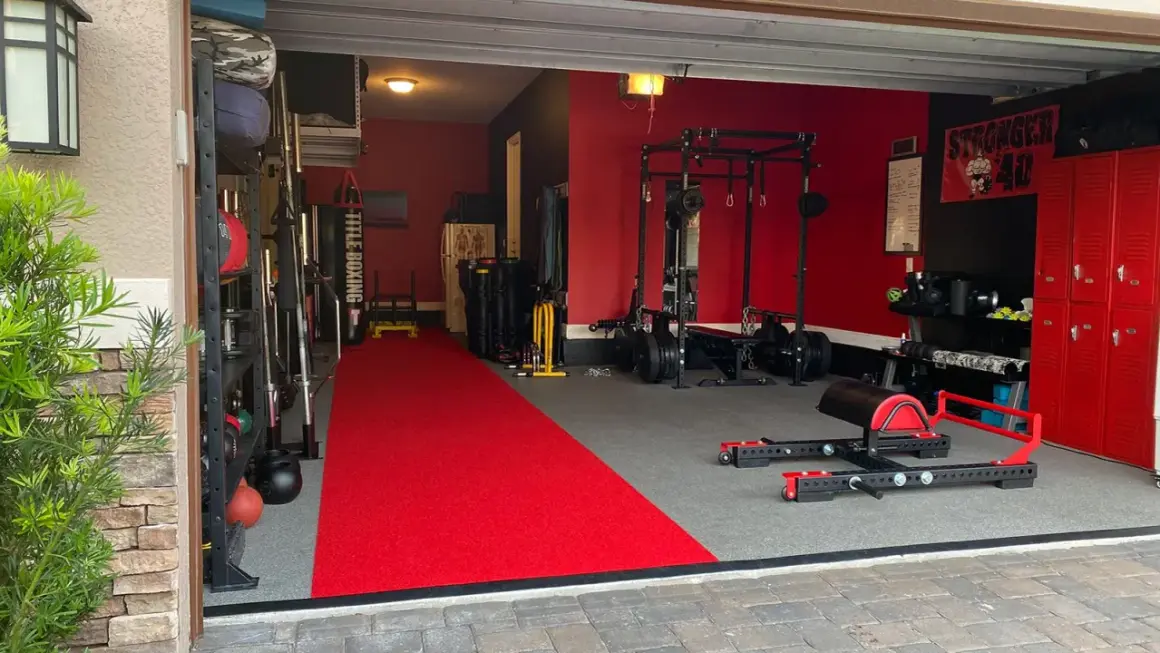
Turning a garage into a boxing room works only when the space supports real training, not just a hanging bag and a few gloves. A garage boxing setup should be built around movement, conditioning, and recovery: enough room to work, flooring that can take impact, and equipment that lets you train in rounds instead of drifting through random reps. This guide focuses on the choices that matter most, the mistakes that waste space, and the conditioning methods that make the room worth using.
The essentials that decide whether the room gets used
- Start with clear floor space, safe mounting, and solid flooring before buying extra gear.
- Train in rounds, because boxing conditioning works best when effort and rest are structured.
- A jump rope, timer, wraps, and a heavy bag cover most garage conditioning needs.
- Ventilation, storage, and lighting matter more than they seem on paper.
- If the garage feels cramped, hot, or noisy, consistency drops fast no matter how good the equipment is.
Design the room around movement, not just the bag
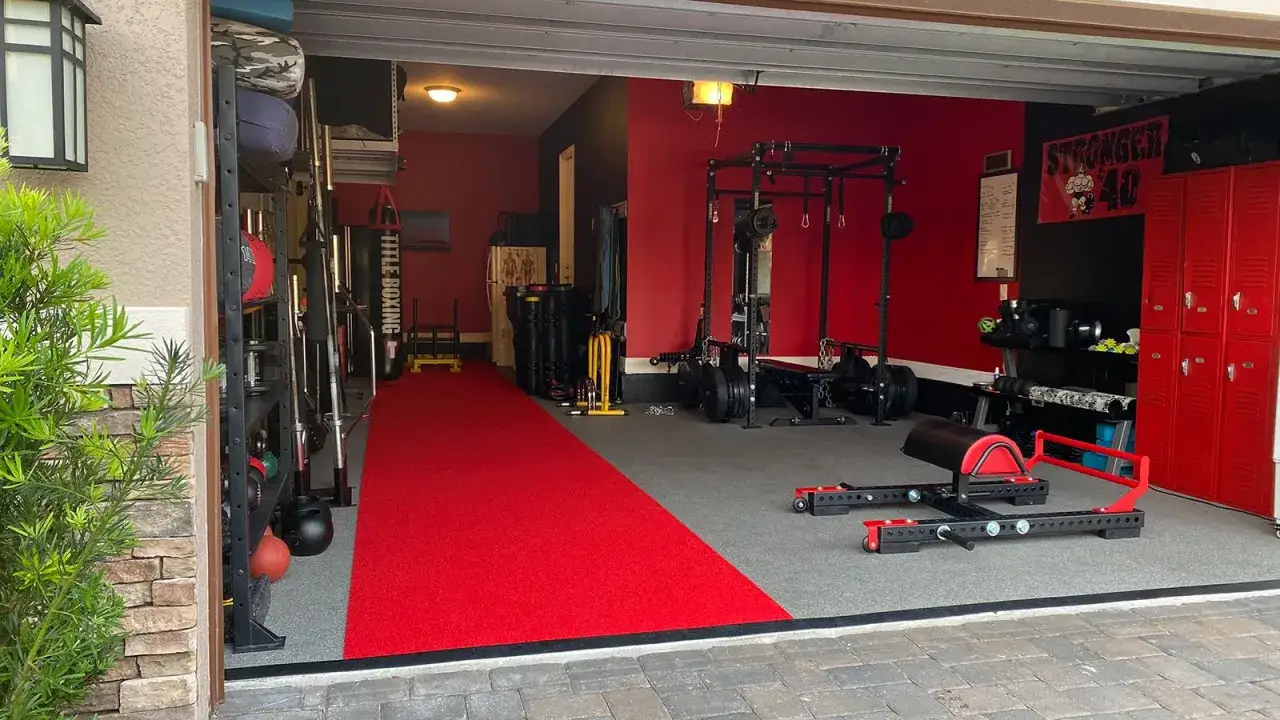
I map a garage like a training lane, not a storage unit. One clear lane for footwork and shadowboxing, one for the bag, and one wall for storage will do more for your conditioning than a crowded room full of gear you have to step around.
- Plan for at least 8 by 8 feet of open space if you mainly shadowbox and use a rope.
- If you want to circle a bag and reset angles properly, 10 by 12 feet feels much better.
- Keep roughly 3 feet of clearance around a hanging bag so the swing does not trap your footwork.
- Put a mirror where it checks stance, guard, and shoulder rotation without becoming a distraction.
- Do not build the room around sparring unless the garage is unusually large; most garages are better for solo conditioning, bag work, and technical rounds.
I also like to think in terms of reset time. If gloves, wraps, rope, and a timer are all within arm’s reach, you will train more often because the room feels ready the moment you step in. Once the layout is clean, the floor becomes the next limiting factor.
Pick flooring and mounting that survive daily abuse
The floor is the first piece of equipment. If it shifts underfoot, every pivot feels off and every punch lands in a room that sounds and feels cheap. For garage training, I prefer dense rubber over soft foam because it protects the concrete, reduces noise, and gives you a more stable base for footwork.
- 3/8-inch rubber is a good baseline for general training and lighter equipment.
- 1/2-inch to 3/4-inch rubber is better if you want more impact control and a quieter room.
- Stall mats are often the most durable option when you want a simple, heavy-duty surface.
- Foam puzzle mats can work for stretching and light bodyweight work, but they are too soft for hard pivots and heavy bag sessions.
- Anchor a bag only into studs or joists; drywall anchors are not a serious option for real striking force.
- If the ceiling height or structure is questionable, a freestanding stand is the safer move.
For the bag itself, I usually want a model that matches the athlete, not the marketing. A lighter bag moves fast and rewards speed, while a heavier one punishes sloppy mechanics and builds better conditioning. The right mount and floor combination matters more than buying the most expensive bag in the catalog. With the room protected, the next question is how to turn that space into actual conditioning instead of random sweat.
Build conditioning around rounds, not random sweat
Boxing conditioning is interval conditioning. The round system works because it forces hard effort, then a real reset, and that makes it feel much closer to fight demands than a generic cardio session. The CDC still puts a useful baseline on weekly activity at 150 minutes of moderate work or 75 minutes of vigorous work, plus strength work on two days, and a garage room makes that easier to hit in short, repeatable blocks.I like to think in rounds because rounds create honesty. If you cannot keep your hands up after the third minute, the session is showing you a real problem. If your breathing never gets challenged, the session is too easy.
| Level | Round structure | Main work | What it develops |
|---|---|---|---|
| Beginner | 6 x 2 minutes, 1 minute rest | Shadowboxing, easy rope, light bag work | Pacing, breathing, basic mechanics |
| Intermediate | 8 x 3 minutes, 1 minute rest | Bag rounds, footwork drills, bodyweight finishers | Work capacity, rhythm, movement under fatigue |
| Advanced | 10 x 3 minutes, 1 minute rest | Hard bag rounds, double-end work, final 30-second surges | Fight-specific output, resilience, pace control |
My rule is simple: the last third of the workout should feel sharp, not chaotic. If your shoulders are burning but your feet are dead, the session is too bag-heavy. If you can talk through every round, it is not challenging enough. That is why the tools you choose matter so much once the conditioning plan is set.
Choose the tools that improve conditioning, not just clutter
The best garage kits are compact on paper and very useful in practice. I would rather own six pieces that all earn their keep than fill the wall with gear that looks serious and gets ignored after two weeks. If you only buy one item beyond the floor, make it a timer, because structure changes everything.
| Tool | Best payoff | Garage footprint | Why it earns space |
|---|---|---|---|
| Heavy bag | Power endurance, trunk rotation, round pacing | Medium to large | The main striking station for most solo training |
| Jump rope | Footwork, calves, rhythm, aerobic base | Tiny | High return per square foot |
| Double-end bag | Timing, accuracy, defense under fatigue | Small to medium | Sharpens reflexes without taking much room |
| Resistance bands | Shoulder endurance, warm-ups, speed work | Tiny | Cheap, portable, and useful on recovery days |
| Medicine or slam ball | Rotational power and trunk conditioning | Medium | Good for non-striking conditioning blocks |
| Round timer | Structure and pace control | Tiny | Turns a casual workout into a real session |
For most adults, an 80-pound bag is a sensible default because it gives enough swing resistance without becoming a dead target. Lighter bags move faster and suit speed-focused work; heavier bags punish sloppy mechanics and are better when you want to build a stronger engine. Wraps are non-negotiable in my book, and 12 to 14-ounce gloves usually make sense for bag and pad work, with 16-ounce gloves reserved for sparring or extra padding. Once the tools are chosen, the garage itself still has to be livable enough to train in all year.
Keep the garage usable year-round
This is the section people underestimate, and it is usually the reason a garage gym gets abandoned. A room that is fine in spring can become unusable in July heat or January cold, and humidity will quietly eat away at gloves, wraps, and the bag if you let it. I want the room to feel simple to enter and quick to reset after every session.
- Use an oscillating fan or airflow setup so the room does not become a heat trap.
- If your climate is humid, a dehumidifier is worth it for comfort and gear longevity.
- In colder months, warm up inside the garage only if the space is actually bearable; otherwise, do the first 5 minutes elsewhere and come in already moving.
- Hang gloves and wraps so they dry fully instead of staying damp in a pile.
- Wipe flooring and bag surfaces regularly to keep odor and sweat build-up under control.
- Use bright, even lighting so shadowboxing and video review are both easier.
If neighbors matter, put the quiet work on the days when noise would be a problem. Shadowboxing, rope, bands, and bodyweight circuits can do a lot of conditioning without the heavy thud of bag rounds. The room does not need to be silent, but it does need to be comfortable enough that you keep coming back. That is why the final build should stay lean until the space proves itself.
What I would buy first if I were building this today
I would start with the floor, the timer, and one clean striking station. That is the minimum setup that tells you whether the garage is truly useful or just visually impressive. A rough US starter build usually lands around $300 to $700 if you already own basic gloves, while a more complete solo room with better flooring, a solid bag, fan, storage, and a second striking tool often sits around $800 to $1,800.
- Rubber flooring first, because everything else depends on the surface.
- A timer next, because structure is what turns movement into conditioning.
- Jump rope and hand wraps, because they are cheap and immediately useful.
- A heavy bag with safe mounting or a stable stand.
- One fan and a simple storage system so the room resets fast.
- A mirror or double-end bag only after the basics already feel consistent.
If the room gets used three times a week for a month, then I would add the next piece. If it does not, the problem is usually comfort, clearance, or setup quality rather than a missing gadget. The best garage training spaces feel plain when you walk in and demanding once the rounds start, and that is exactly what makes the conditioning pay off.