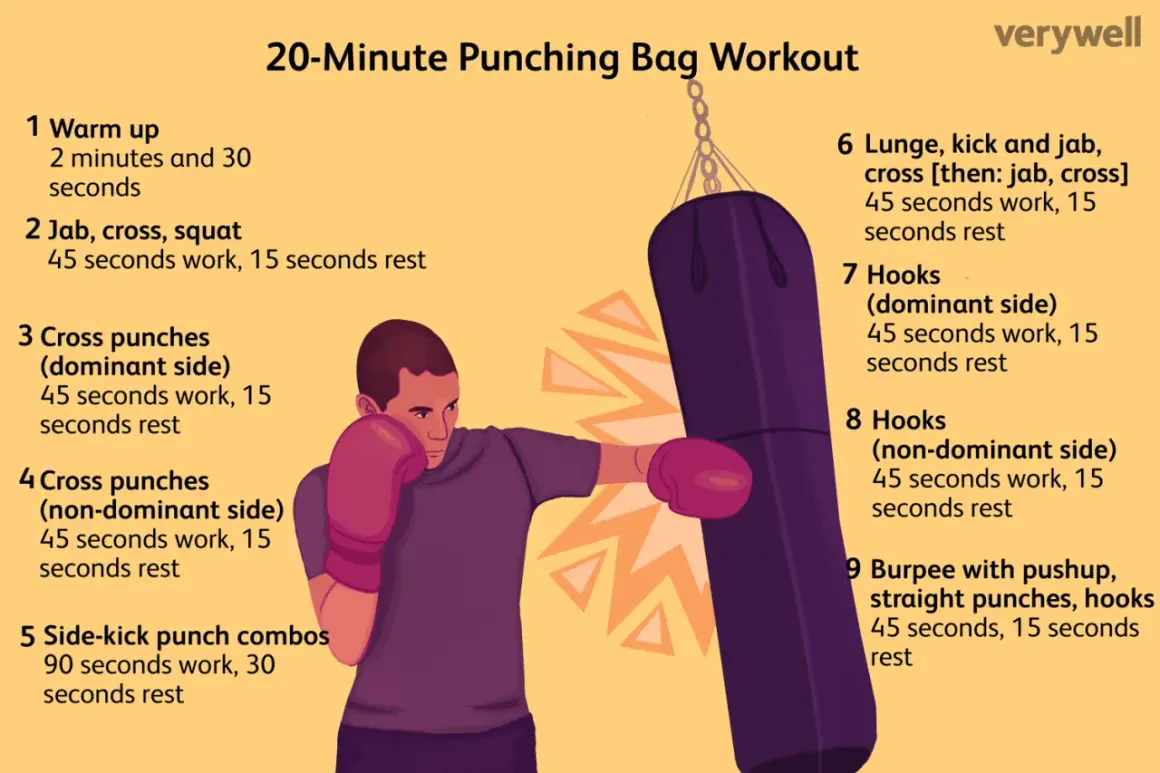
A heavy bag can be excellent cardio when you train it like conditioning instead of casual striking. The bag raises heart rate quickly, demands repeated hip rotation and footwork, and rewards short, focused bursts that look a lot like fight prep.
The real question is not whether it works, but how to use it well enough to build endurance without turning every session into sloppy survival. In this article, I break down what bag work does to your cardio system, how to structure rounds, where it beats other forms of cardio, and how to avoid the mistakes that make it less effective.What matters most before you start bag work
- Yes, it is real cardio when the session is structured with enough pace and limited rest.
- Bag work usually behaves more like interval conditioning than steady-state cardio.
- Two- to three-minute rounds with 30 to 60 seconds of rest are the most useful starting point for most people.
- It trains more than your arms: legs, core, shoulders, timing, and breathing all get involved.
- For best results, use the bag as one part of a broader conditioning plan, not your only cardio tool.
Why bag work drives your heart rate up so quickly
I think of heavy-bag training as cardio with resistance. Every clean punch starts from the floor, travels through the legs and hips, passes through the torso, and finishes through the shoulder and arm. That chain takes energy, and when you repeat it over and over, your heart rate climbs fast.
The other reason it feels demanding is that you are not just punching. You are resetting your stance, managing distance, shifting angles, breathing under pressure, and often moving after every combination. That constant micro-adjustment is what makes the bag more taxing than standing still and throwing isolated shots. If you can carry on a full conversation during rounds, the pace is probably too easy to count as meaningful conditioning.
This is why people often underestimate the bag at first. It looks simple until they try to keep quality output for several rounds. Once that happens, the next question becomes what kind of cardio it actually builds.
What kind of cardio it really builds
Heavy-bag sessions are usually closer to high-intensity interval training than to a long jog. HIIT simply means repeated bursts of hard work separated by short recovery periods. That structure is useful because it pushes aerobic fitness and anaerobic tolerance at the same time, which is exactly why the bag is so popular in combat sports conditioning.
The CDC recommends 150 minutes of moderate-intensity activity per week or 75 minutes of vigorous activity, and a well-run bag session can fit into that vigorous category when the work periods are hard enough. I would not count slow, unfocused bag tapping the same way I would count crisp rounds with real pace, footwork, and controlled rest.| Session style | Work-to-rest feel | Cardio effect | Best use |
|---|---|---|---|
| Light technical work | Short punches, long pauses | Low to moderate | Learning form, warming up, recovery days |
| Standard conditioning rounds | 2- to 3-minute rounds, 30- to 60-second rest | Moderate to vigorous | General fitness, calorie burn, fight conditioning |
| Hard interval work | Fast combinations, limited rest, repeated rounds | Vigorous | Advanced conditioning, power-endurance, sport prep |
The main point is simple: the bag becomes cardio when the round has structure. Without structure, it is just striking practice with elevated breathing. That distinction matters because it determines whether your session improves endurance or just makes you tired for no clear reason.
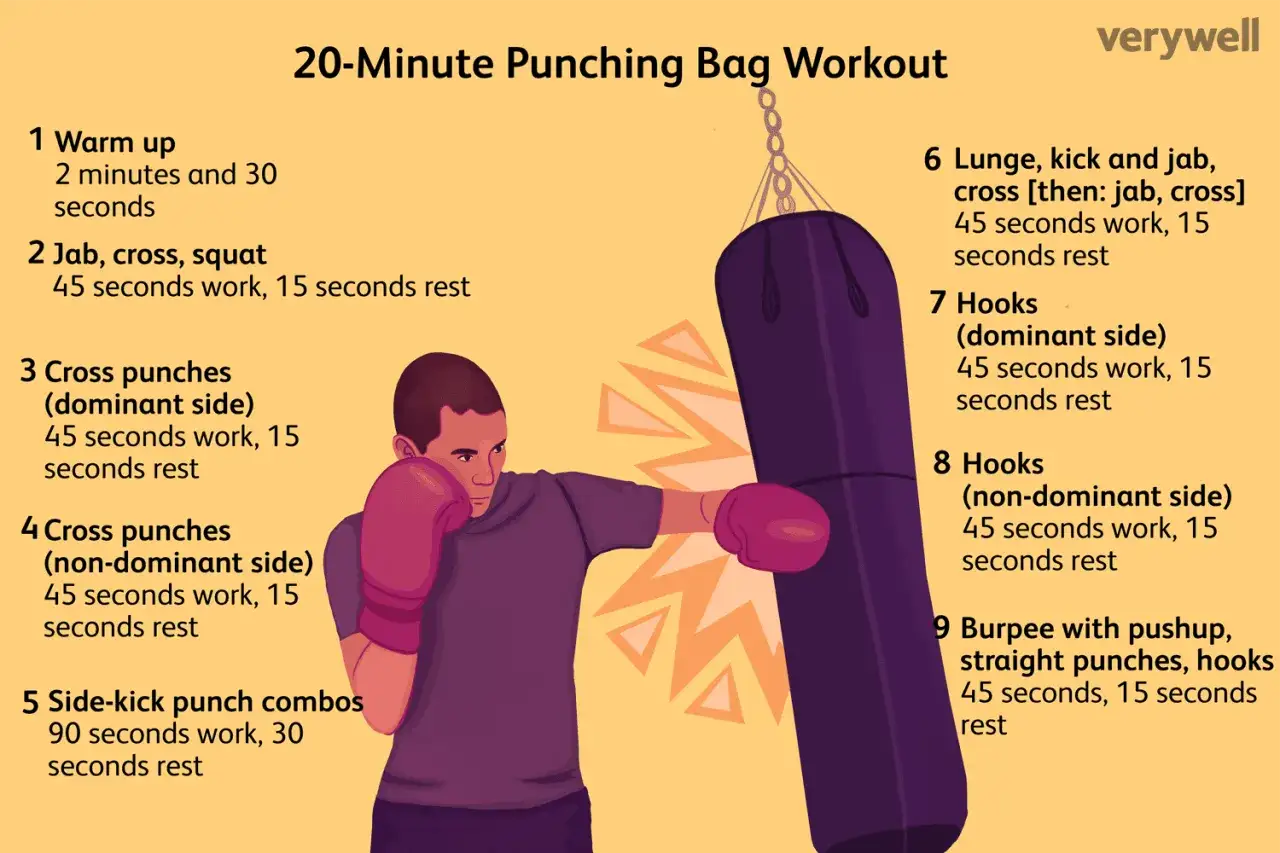
How to turn the heavy bag into a conditioning session
If I were building a bag workout for cardio, I would start with a warm-up, move into repeatable rounds, and keep the rest periods honest. The goal is not to punch as hard as possible every second. The goal is to maintain quality output long enough that your heart and lungs have to work.
For most people, a useful starting point is 15 to 30 minutes total, including warm-up and cool-down. Within that window, the actual rounds can be surprisingly short and still effective.
| Level | Round format | What to focus on |
|---|---|---|
| Beginner | 6 rounds of 1 minute work / 1 minute rest | Jab-cross, stance, breathing, staying relaxed |
| Intermediate | 6 to 8 rounds of 2 minutes work / 45 seconds rest | Combinations, body shots, footwork, rhythm changes |
| Advanced | 8 to 10 rounds of 3 minutes work / 30 to 45 seconds rest | Pace changes, pressure output, movement under fatigue |
A simple 20-minute session might look like this: 5 minutes of jump rope or dynamic movement, then six rounds of bag work, then a short cool-down. In the rounds themselves, I like to alternate between speed, power, and movement so the body never settles into one easy rhythm. That is what keeps the conditioning value high.
A smart progression also matters. Once the same format feels manageable, add a round, tighten the rest, or make the combinations more complex. Do not jump straight from beginner pacing to full fight-style output. That is the fastest way to lose technique and turn the session into a shrugging contest.
How it compares with running, jump rope, and bike work
Heavy-bag cardio is not automatically better than every other form of cardio. It is better for some goals and less efficient for others. I would rather compare it honestly than pretend it replaces everything else.
| Cardio mode | Main advantage | Main limitation | Best fit |
|---|---|---|---|
| Heavy bag | High intensity, upper-body and core demand, skill transfer | Technique can break down when fatigue rises | Combat conditioning, fat loss, athletic conditioning |
| Running | Easy to scale, strong base-endurance builder | Repetitive impact can bother some joints | General endurance, race prep, simple aerobic work |
| Jump rope | Very efficient, sharp footwork, rhythm and coordination | Can be rough on calves and ankles if overdone | Fight prep, foot speed, warm-ups, interval work |
| Bike or rower | Low impact and easier to control effort | Less sport-specific for striking athletes | Recovery cardio, aerobic base, cross-training |
My rule of thumb is this: if you want sport-specific conditioning with a strong mental and technical component, the bag is hard to beat. If you want easy, repeatable aerobic volume, a bike or brisk walk may be the better tool. If you want both, combine them.
That combination is usually where the best conditioning plans live, because one tool rarely covers every energy system as well as people think it does.
The mistakes that make bag work less effective
Most people do not fail on the bag because they lack effort. They fail because the effort is misdirected. A hard session can still be a weak conditioning session if the mechanics are poor.
- Punching only with the arms. This burns the shoulders fast and leaves power on the table. The fix is to drive from the floor and rotate through the hips.
- Standing still for the whole round. If your feet stop, the session becomes a series of upper-body flurries instead of real movement conditioning. The fix is to add angle changes and small steps after combinations.
- Going all-out too early. One explosive minute followed by four minutes of recovery is not the same as sustained cardio. The fix is to pace the first half of the round so the last third still looks sharp.
- Resting too long. Long breaks can turn a cardio session into a strength skill session. The fix is to keep rest honest enough that your heart rate stays elevated.
- Ignoring hand position and wraps. Poor wrist alignment and loose wrapping can create pain that shuts training down. The fix is to protect the hands before volume goes up.
- Never progressing the session. If every week looks identical, adaptation slows. The fix is to add rounds, reduce rest, or increase complexity gradually.
The biggest hidden mistake is breathing badly. If you hold your breath through combinations, fatigue hits much sooner and your output collapses. Exhale on impact, keep the jaw and shoulders loose, and you will feel the difference almost immediately.
Who should scale back and how to progress safely
Bag work is accessible, but it is still vigorous exercise. If you are new to training, returning after a layoff, or managing a shoulder, elbow, wrist, back, or blood-pressure issue, start conservatively. I would rather see someone finish a controlled 12-minute bag session three times a week than survive one heroic workout and disappear for a month.
Cleveland Clinic’s boxing guidance is sensible here: warm up properly, keep sessions short enough to recover from, and build gradually instead of chasing maximal intensity from day one. That approach matters because the bag is easy to overdo when adrenaline kicks in.
A practical progression looks like this: start with 10 to 15 minutes total, keep the combinations simple, and train one to two times a week at first. Once the movement feels smooth, move toward two to three sessions weekly, with at least one easier cardio or recovery day between harder bag sessions. If your joints hurt more than your lungs do, the workload is too technical or too aggressive for your current level.
That is also where the bag fits nicely into a broader plan: one or two conditioning days, one or two strength days, and one easier aerobic day if your goal is all-around fitness.
How I would use the bag in a real conditioning week
If the goal is better cardio, I would not make the heavy bag the only tool. I would use it as the most intense piece of the week, then support it with easier aerobic work so the engine actually improves instead of just getting fried. In plain terms, the bag is your hard day, and the rest of the week should make that hard day repeatable.
A simple structure might be one bag-conditioning day, one strength day, one easy cardio day, and one more bag or interval day if recovery is good. Easy cardio means you can keep breathing under control and hold a conversation; that is the kind of work that builds a base without beating you up. On the bag days, keep score with rounds, rest, and output quality, not just sweat.
My bottom line: a punching bag is very good cardio when you train it with pace, round structure, and enough recovery to keep the work sharp. If you want conditioning that also improves timing, coordination, and fight mechanics, it is one of the best tools you can use. If you want the most balanced result, pair it with some lower-intensity aerobic work and a bit of strength training, then let the bag do what it does best: make hard breathing productive.