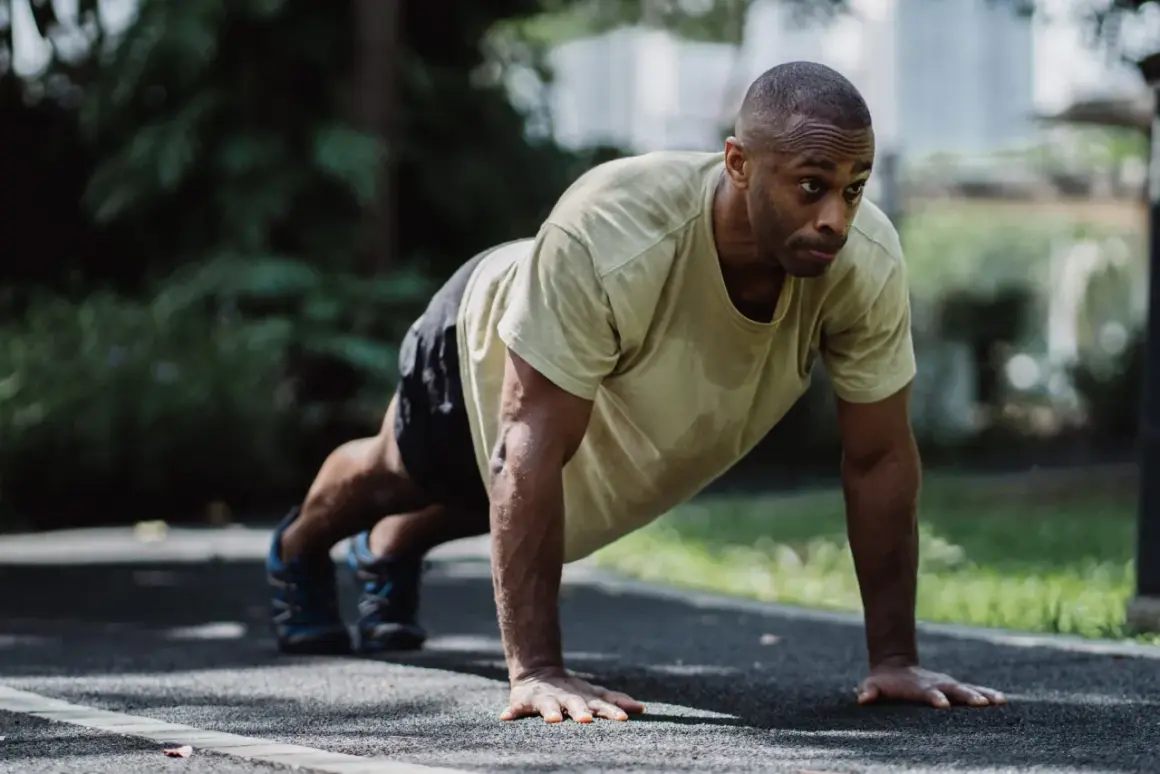
Boxers use push-ups for a reason that goes beyond old-school toughness. The movement builds upper-body endurance, shoulder stability, core tension, and the ability to keep producing force when a round is already wearing you down. In this article I break down what push-ups actually improve, where they fit in boxing conditioning, which variations are worth keeping, and how to program them without wasting time. When people ask why do boxers do push ups, the practical answer is that the exercise matches the fatigue pattern of a fight surprisingly well.
The fast version of what push-ups do for boxers
- They train the chest, triceps, shoulders, and core in one repeatable movement.
- They build the kind of pressing endurance that helps a boxer keep the guard high through later rounds.
- They are easy to progress with tempo, pauses, elevation, and explosive reps.
- They work best as part of a broader program that also includes pulling work and lower-body training.
- Too many sloppy reps are less useful than fewer clean ones done with intent.
What push-ups actually train in a boxer
I think the value of push-ups is easy to underestimate if you only look at them as a chest exercise. In boxing, the pressing pattern has to work together with the shoulders, the trunk, and the shoulder blades, which means a good push-up is really a small test of whole-body coordination. The chest and triceps help produce the push, the front delts help support it, and the core keeps the body from leaking force through the middle.
That matters because a boxer is not pressing a barbell in a stable line. The athlete is repeatedly sending force from the floor, through the hips and torso, and into the hands. Coaches call that linked sequence the kinetic chain, and push-ups reinforce the part of the chain that keeps the upper body organized when fatigue starts creeping in. The serratus anterior, a muscle that helps the shoulder blade move cleanly around the rib cage, also gets involved; that is one of the reasons push-ups tend to carry over better to fighting than a lot of isolated machine work.I also like push-ups for the way they teach anti-rotation, which simply means resisting unwanted twisting. In a boxing stance, that control matters every time you jab, cover, punch in combination, or reset after contact. That is why the drill is more than a basic strength move: it teaches the body to stay structured while the upper body works hard. That structure becomes even more important once the shoulders start burning and the next round demands the same movement again.
Shoulder endurance matters more than max pressing strength
When a boxer fades, it is rarely because the chest is too small. More often, the shoulders and upper back simply stop tolerating repeated effort. Hands drift lower, punches lose snap, and recovery between combinations gets slower. Push-ups help here because they build local muscular endurance, which is the ability of a specific muscle group to keep working under repeated stress rather than peak once and shut down.
I see this as a fight-conditioning quality, not a vanity metric. A boxer can have a strong bench press and still struggle to keep the guard up for three hard rounds. That does not mean benching is useless, only that maximal pressing strength is not the same thing as sustaining a boxing posture under fatigue. Push-ups live closer to the actual problem. They demand repeated output, stable shoulders, and a trunk that does not collapse while the arms are still working.
There is another reason I like the movement: it is honest. If your reps are sloppy, the exercise tells you immediately. If your shoulders are weak, you feel it. If your core cannot stay rigid, the hips sag. That makes push-ups useful as a simple feedback tool during camp, and that is why I treat them as a durability builder first and a strength builder second. That distinction matters when you compare them with other presses.
Why push-ups fit boxing conditioning better than many gym presses
Push-ups are not automatically better than every other pressing exercise, but they do solve a different problem. A lot of gym presses isolate force production in a way that looks strong on paper without always matching the demands of a fight. Push-ups are more specific to boxing because they are bodyweight based, closed-chain, and easy to slot into circuits, warm-ups, finishers, or travel sessions.
| Movement | What it does well | Boxing carryover | Main limitation |
|---|---|---|---|
| Push-up | Builds pressing endurance, core stiffness, and shoulder control | Good carryover to guard work, punching volume, and fatigue resistance | Standard reps get too easy if you never progress them |
| Bench press | Develops maximal horizontal pressing strength | Useful as a strength base for some athletes | Less specific to core tension and fight posture |
| Machine chest press | Lets you load the chest with less technical demand | Can support general hypertrophy | Lowest carryover to balance, bracing, and shoulder control |
| Dips | Loads the triceps and lower chest heavily | Can help some boxers build pressing strength | Can bother shoulders if mobility or control is poor |
The main advantage here is practicality. You can do push-ups almost anywhere, which makes them easy to keep in a camp without a lot of setup. You can also change the difficulty without adding much equipment. Slow the lowering phase, pause at the bottom, elevate the feet, add a vest, or move into explosive reps and you suddenly have a different training stimulus. That is the real reason the exercise lasts in boxing programs: it scales well.
At the same time, I would not oversell them. Standard push-ups stop being enough once an athlete can do them comfortably for very high reps. At that point, the question is not whether boxers should keep doing them, but how to make them harder in a way that still serves conditioning. The next step is choosing the right variations.
Push-up variations that transfer best to fighting
If I were building a boxer’s upper-body endurance, I would not use random variations just because they look hard. I would pick the version that fits the goal. Some variations build clean strength-endurance, some help with speed, and some are better as warm-up drills than as main work.
| Variation | Best use | Why it matters |
|---|---|---|
| Standard push-up | Baseline strength-endurance | Simple, repeatable, and easy to track across a camp |
| Hand-release push-up | Clean reps and full range of motion | Removes bouncing and forces a true reset on each rep |
| Tempo push-up | Control and joint tolerance | Slower lowering builds braking strength and exposes sloppy mechanics |
| Explosive or clap push-up | Speed-power work | Useful once the athlete already has a solid base |
| Incline push-up | Beginners or recovery sessions | Preserves mechanics while reducing load |
| Decline push-up | Advanced strength-endurance | Puts more stress on the shoulders and upper chest |
I usually treat knuckle push-ups as optional, not essential. They can help some athletes get comfortable with wrist position and hand loading, but they are not a magic shortcut to harder punches. If the wrists are irritated, handles, parallettes, or standard flat-hand push-ups are cleaner choices. The better question is always whether the variation supports training quality, not whether it looks rugged.
Scapular push-ups are another useful tool, especially in the warm-up. They are not the same thing as a full push-up; the elbows stay mostly straight while the shoulder blades move through protraction and retraction. In plain language, they teach the upper back and shoulder blades to move well before the main work starts. That keeps the drill useful instead of turning it into a random test of pain tolerance. Even good variations stop paying off if the technique is sloppy, which is where most boxers go wrong.
Common mistakes that make push-ups less useful for boxers
Push-ups only help when the reps are honest. I see the same mistakes over and over, and they usually have more to do with ego than with training theory.
- Chasing daily failure. If every session is a max-out, the shoulders and elbows get more wear than benefit. Stop a rep or two before form breaks on most sets.
- Letting the hips sag. A broken body line turns the drill into a loose upper-body movement and removes a lot of the core demand that makes it valuable for boxing.
- Flaring the elbows too wide. That tends to shift stress into the shoulders and often makes the movement less controlled.
- Never progressing the load. If standard reps are easy, keep the movement challenging with tempo, pauses, range, elevation, or resistance instead of just adding noise.
- Ignoring pulling work. Boxers already live in a forward-dominant pattern, so rows, pull-ups, and rear-delt work matter for balance and shoulder health.
- Using speed to hide weakness. Fast reps are useful only after you own clean reps; otherwise they become half-reps with momentum.
A four-week push-up block I’d use for boxing conditioning
If I were building a simple block for a boxer, I would keep it tight and specific. The goal is not to crush the athlete with endless volume; the goal is to improve pressing endurance without interfering with skill work or shoulder recovery.
- Two endurance sessions per week. Use 3 to 4 sets of 10 to 20 clean reps. Rest 60 to 90 seconds. Stop 1 to 2 reps before failure.
- One power-focused session per week. Use 4 to 6 sets of 3 to 5 explosive reps. Rest long enough for speed to stay sharp.
- One control-focused session per week. Use tempo push-ups with a 3-second lowering phase, or hand-release reps for 6 to 12 quality reps per set.
- Progress one variable at a time. Add reps, slow the tempo, elevate the feet, or add load. Do not change everything at once.
- Pair the work with pulling exercises. Rows, pull-ups, band face pulls, or rear-delt work help keep the shoulders balanced.
My rule of thumb is simple: if the athlete can keep every rep crisp, the set is earning its place. If the last half of the set turns into spine sag, elbow flare, and rushed breathing, the volume has already crossed from useful into sloppy. That is also why I do not love the idea of mindless daily push-up challenges for fighters. They create fatigue, but not always the right kind of adaptation.
Used well, push-ups are a compact piece of boxing conditioning that supports the guard, the shoulders, and the trunk when the pace gets ugly. They are not a substitute for technique, roadwork, sparring, or lower-body strength, but they are one of the rare exercises that keep making sense the more honestly you look at the demands of the sport.