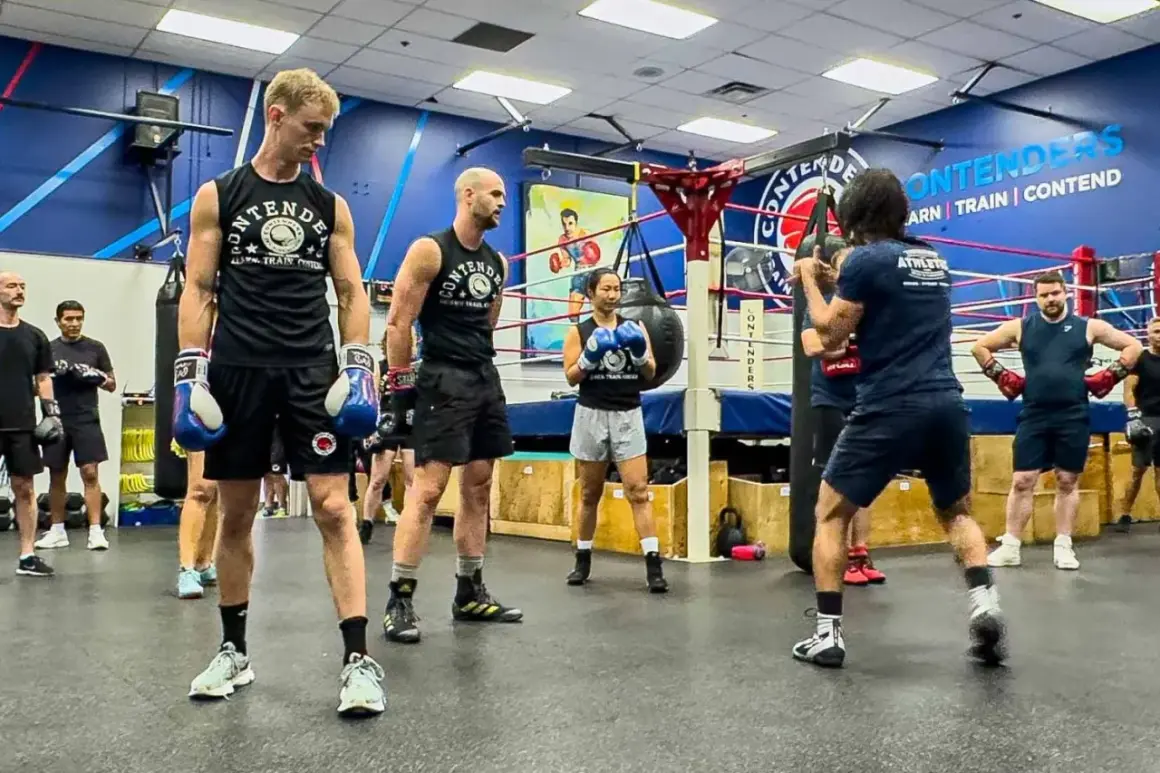
Learning how to box is less about throwing hard shots and more about building a system you can trust under pressure. The basics are simple on paper, but they only work when stance, guard, footwork, and punch timing all line up. I’m going to walk through those pieces in the order that actually helps beginners train better.
The main things that make early boxing training work
- Balance comes first: a stable stance and guard matter more than power in the early stages.
- Start with a small punch menu: jab, cross, hook, and uppercut are enough to build real skill.
- Footwork is the engine: if your feet are late or crossed, your punches and defense both suffer.
- Train in rounds: short, structured work beats random hard efforts that break your form.
- Fix beginner habits early: reaching, squaring up, and dropping the rear hand slow progress fast.

Build a stance that keeps you balanced enough to attack
I always start here because everything else depends on it. A good boxing stance is not a pose; it is a ready position that lets you punch, defend, step, and pivot without having to reset your body first. If you are right-handed, you will usually start in an orthodox stance; if you are left-handed, southpaw is the mirror image.
The important thing is not the label. It is the shape. Your feet should be roughly shoulder-width apart, your lead foot slightly forward, your knees softly bent, and your weight centered enough that you can move in any direction without stumbling. I want the chin tucked, the rear heel light, and both hands high enough to protect the center line.
| Body position | What I want to see | Why it matters |
|---|---|---|
| Feet | Shoulder-width, lead foot a little forward | Keeps you stable and ready to step |
| Knees | Slight bend, not locked | Helps you move, pivot, and absorb force |
| Hands | Lead hand near eye level, rear hand near cheek | Protects the head while leaving room to punch |
| Chin | Slightly tucked | Reduces easy target exposure |
| Elbows | Close enough to cover the ribs | Makes body defense much cleaner |
The biggest beginner mistake is getting too square. That stance may feel strong, but it slows your pivots and opens the body. Once the base feels natural, the next step is learning which punches deserve your attention first.
Learn the punches that do most of the work
You do not need a huge arsenal on day one. I would rather see a beginner throw four punches well than ten punches badly. The goal is to understand what each shot does, where it lands best, and how it returns you to a safe position.
| Punch | What it does | Main cue | Common mistake |
|---|---|---|---|
| Jab | Measures distance, disrupts rhythm, sets up everything else | Snap it out and bring it straight back | Reaching too far and dropping the rear hand |
| Cross | Rear-hand straight shot with more commitment | Turn the hips and finish balanced | Falling forward after the punch |
| Lead hook | Hits around a guard at mid range | Rotate the torso instead of swinging the arm | Making it a wide baseball swing |
| Uppercut | Useful when range gets tight | Stay low, compact, and controlled | Loading it up from too far away |
The jab is the workhorse. The cross is the direct follow-up. Hooks and uppercuts matter, but only if you can still stay balanced after you throw them. I tell beginners to exhale on impact, return the hand to guard immediately, and never chase power at the expense of position. A clean 70 percent shot is usually more useful than an ugly 100 percent shot.
Move with control instead of bouncing for show
Footwork is what turns punches into boxing. If the hands are the engine, the feet are the steering wheel. You need to be able to move forward, back, left, and right without crossing your feet or killing your stance. That means step-and-drag mechanics, not random hopping.
Step forward with the lead foot first and let the rear foot follow. Step back with the rear foot first and let the lead foot follow. When you pivot, keep one foot planted long enough to turn the angle without drifting out of shape. If your feet click together or cross over, the step is too big or the pace is too fast.
- Line drill: 3 rounds of 2 minutes, stepping forward and back without letting the feet cross.
- Box step: 3 rounds of 2 minutes, moving in a square and keeping your stance width intact.
- Shadowboxing with pivots: 2 to 3 rounds of 2 minutes, adding a small angle change after each combination.
I like this order because it teaches control before speed. Once the feet stay under you, combinations become much easier to land and much harder to counter. That is the point where the work starts to feel like boxing instead of isolated drills.
Put punches together without losing the exit
Combinations should do more than look busy. They should force a reaction, create a lane, or open a second target. The cleanest beginner combinations are simple enough to repeat, but useful enough to teach distance, timing, and recovery.
| Combination | Why it works | What to watch |
|---|---|---|
| Jab-cross | Builds range, timing, and direct entry | Reset your feet after the cross |
| Double jab-cross | Breaks rhythm and helps you close distance | Do not let the second jab become a push |
| Jab-cross-hook | Changes the line after the opponent shells up | Keep the hook tight, not wide |
| Jab to the body, cross to the head | Forces level change and opens guard reactions | Bend the knees instead of folding at the waist |
The habit I want most here is the exit. After every combination, either step out, pivot, or re-establish guard. A combination without an exit is just an invitation to get countered. If a beginner can do a clean 1-2, then a 1-2-3, and still leave the exchange in balance, that is real progress.
Train boxing like a skill, not a random workout
The fastest way to improve is to make training structured enough that you can repeat quality under fatigue. For most beginners, 3 sessions a week is enough to build skill without burying recovery. If you can only train twice, that is still fine, but each session needs a purpose.
I prefer sessions in the 45 to 75 minute range. In the beginning, 2-minute rounds are easier to keep technical than full 3-minute rounds, although 3 minutes becomes useful once form stops falling apart. The bag is helpful, but it should support skill work instead of replacing it.
| Training block | Time | Goal |
|---|---|---|
| Warm-up | 10 to 15 minutes | Raise temperature, loosen joints, get the feet awake |
| Technique work | 15 to 20 minutes | Stance, guard, jab, cross, and foot placement |
| Round work | 15 to 25 minutes | Shadowboxing, bag work, or mitts in short rounds |
| Conditioning | 8 to 12 minutes | Improve work capacity without ruining mechanics |
| Cooldown | 5 minutes | Bring the body back down and release tension |
I would rather see six controlled rounds than three hard rounds that turn sloppy by minute two. If the guard drops, the stance gets square, or the feet start crossing, the round has already become too fast. That is not a fitness failure; it is a signal to slow down and keep the pattern clean. From there, the real danger is letting small mistakes become habits.
The errors that slow beginners down fastest
The best thing you can do early is remove obvious leaks. Most beginner mistakes are not mysterious; they are small technical habits that compound under pressure. If I were coaching a fresh boxer, I would focus first on the errors that distort balance, timing, and defense all at once.
| Mistake | Why it hurts | Better cue |
|---|---|---|
| Reaching with the jab | Pulls the head off line and makes counters easier | Step first, then punch |
| Crossing the feet while moving | Breaks balance and slows defense | Use a step-and-drag pattern |
| Dropping the rear hand after punching | Leaves the head open on the center line | Bring the hand straight back to guard |
| Standing too square | Makes pivots clumsy and the body easy to hit | Keep the lead shoulder slightly forward |
| Throwing every punch at full power | Destroys rhythm and shortens the round | Use controlled speed before heavy power |
| Ignoring defense after offense | Teaches bad recovery habits | Finish every combo with a guard reset or exit |
Fixing even two or three of these usually makes a beginner look dramatically better. More important, it makes training safer and easier to build on. Once the mistakes are under control, the next question is not whether you are “good” yet, but whether your progress is actually measurable.
What solid early progress looks like after 4 to 8 weeks
Good early boxing progress is fairly easy to spot if you know what to look for. After a month or two, you should not be trying to invent new tricks. You should be able to hold a stable stance, throw a clean jab-cross, and move without your feet falling apart.
Here is the standard I use with beginners: you can shadowbox for 3 rounds without your guard collapsing, your jab no longer throws you off balance, and you can step out after a combination without feeling rushed. That is enough control to justify adding more layers, like basic head movement, light defensive drills, or supervised sparring. I do not use sparring to learn the basics; I use it to test them.
If I were starting from zero again, I would spend the first month on stance, jab, cross, footwork, and short technical rounds. That approach looks simple because it is simple, and that is exactly why it works. Strong boxing starts with repeatable basics, not with trying to look advanced too early.