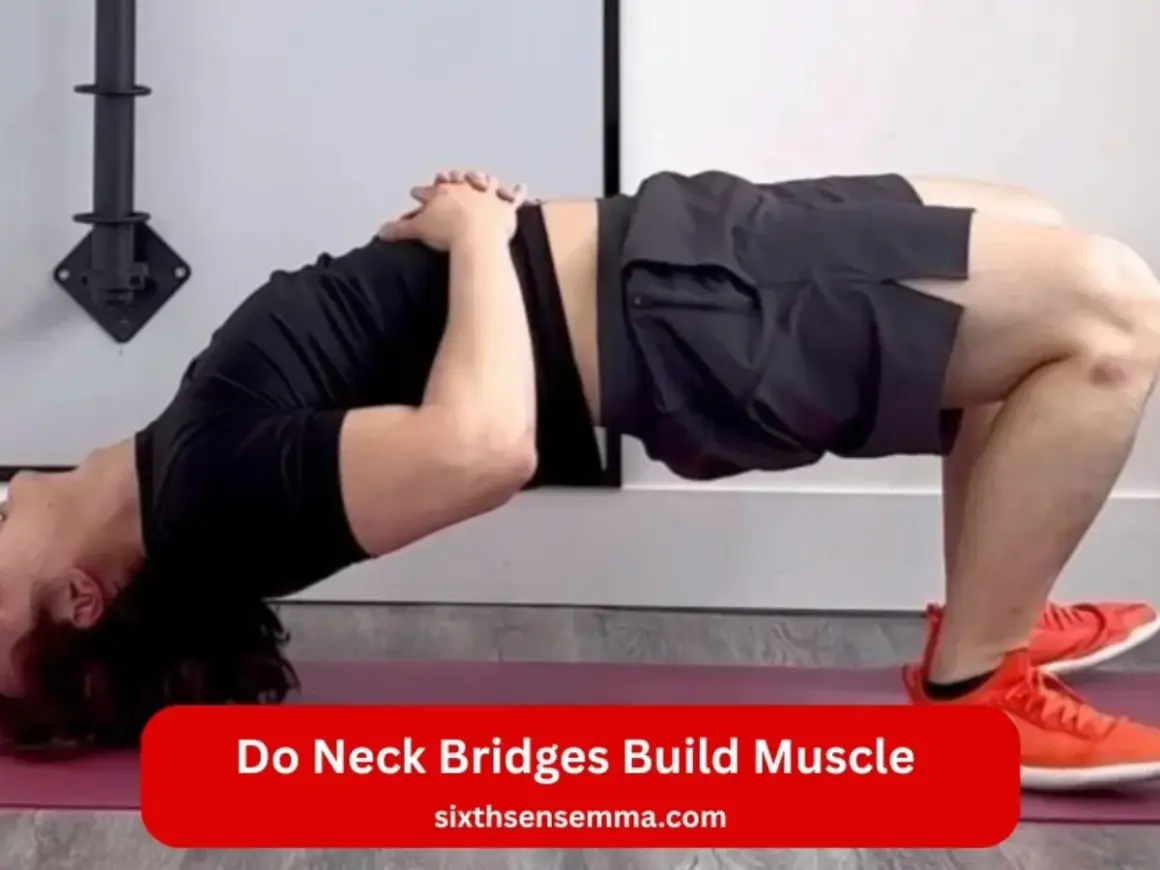
The neck bridges exercise is a demanding conditioning drill that shows up most often in wrestling, grappling, and other combat sports where head control matters. This article breaks down what it actually trains, how to build up to it without being reckless, where it helps, where the hype goes too far, and which safer neck-strength options still deliver real value.
What matters most before you load the neck
- A neck bridge loads the cervical spine in a very specific position, so it is a specialized drill rather than a general-purpose neck exercise.
- Most of the useful work comes from neck endurance, postural control, and tolerance under force, not from chasing a dramatic range of motion.
- I would not start with a full bridge. Build first with isometrics, head lifts, and supported progressions.
- The evidence for injury prevention is mixed, so I treat the bridge as one tool inside a broader conditioning plan.
- If you have radiating pain, numbness, tingling, dizziness, or a recent neck injury, skip it and get cleared first.
What the neck bridge actually trains
Most people mean a wrestling-style back bridge when they talk about neck bridging: the body arches while the head, feet, and sometimes the hands share the load. That position asks the neck to resist extension under compression, which is very different from a chin tuck, a light isometric, or a simple stretch. In practice, the drill targets the cervical extensors, deep stabilizers, upper traps, levator scapulae, and the tissues that keep the head from collapsing when force moves through the body.
Which muscles matter most
The posterior neck does most of the obvious work, but the real value is broader than that. The deep neck flexors help control head position, the superficial flexors and extensors provide gross force, and the upper back helps stabilize the whole structure so the neck is not working alone. If the shoulders and thoracic spine are stiff, the bridge usually feels harsher than it should, because the load has nowhere efficient to go.
Why combat athletes still use it
For wrestlers, judoka, MMA athletes, and anyone who spends time in clinches or scrambles, a stronger neck can make head position feel less fragile. I like the bridge for experienced athletes because it exposes weak links fast: if your torso twists, your breathing locks up, or your neck gets pinchy, the drill tells you immediately that your base is not ready yet. That makes it useful, but it also means you need to respect it.
That is why I treat it as a specific conditioning tool, not a default neck-builder for everyone. The next question is how to earn the position safely before you ask the neck to support real bodyweight.
How to build up to it without gambling on your neck
I would not jump straight into a full bridge, especially with no wrestling background. The better approach is to build tolerance in layers: first control, then strength, then positional loading. This is the part most people rush, and it is usually where problems start.
- Start with simple neck isometrics in neutral: push your forehead, the back of your head, and each side of your head into your hand without letting the neck move.
- Add supine and prone head lifts on a firm mat, keeping the motion slow and controlled.
- Try a supported bridge with your hands available to help unload the neck.
- Only after that should you reduce support and increase the amount of bodyweight the neck has to manage.
Read Also: Shoulder Endurance - Build Stamina, Not Just Burn
What a good rep feels like
A good rep feels like muscular work, not a sharp joint crunch or a strained pinch in the front of the neck. You should be able to breathe steadily, keep the jaw relaxed, and lower out of the position under control. If you have to thrash into the bridge or hold your breath just to survive the position, the load is too high for where you are right now.
For most athletes, shorter exposures are smarter. I prefer a few crisp holds over long, sloppy hangs, because the neck usually adapts better to repeated clean tension than to one ugly grind. Once the setup is sound, the real question becomes whether the payoff matches the risk.
Where it helps and where the hype goes too far
The bridge can be useful, but the claims around it often outrun the evidence. A recent systematic review found limited evidence that neck-strengthening work on its own reduces impact injury risk, so I would not sell the bridge as a concussion shield or a guaranteed injury-prevention tool. It may help an athlete tolerate force better, but it does not replace good head movement, defensive skill, posture, or smart sparring habits.
| Potential upside | Real limitation |
|---|---|
| Better neck endurance under clinch and scramble pressure | Does not automatically make you harder to hurt or knock out |
| More awareness of head and neck position under load | Can be overdone if you chase range instead of control |
| Useful final-stage drill for advanced combat-sport athletes | Not necessary for general fitness or beginner strength work |
| Can expose weak links in the upper back and core | That same exposure makes it easy to irritate a sensitive neck |
That is the honest version: the bridge can be a valid part of conditioning, but it is not magic and it is not mandatory. Once you accept that, choosing who should avoid it becomes much easier.
Who should skip it, and the warning signs to respect
If I am dealing with a fresh neck injury, recent whiplash, disc symptoms, or a history of nerve irritation, I do not start with bridge work. I also avoid it when an athlete reports dizziness, headaches that spike with movement, arm numbness, tingling, weakness, or pain that shoots into the shoulder or down the arm. Mayo Clinic advises getting evaluated when neck pain radiates, worsens despite self-care, or comes with numbness or tingling, and that is exactly the kind of line I do not want athletes to cross in training.
- Recent trauma or fall
- Radiating arm pain
- Weakness, numbness, or tingling
- Dizziness or visual changes
- Severe headache with neck pain
- Known cervical disc or nerve issues unless cleared by a clinician
MedlinePlus also notes that starting strengthening too soon after a neck injury can make pain worse, which is why I prefer to earn the movement instead of forcing it. If any rep turns from work into a warning sign, the correct move is to stop, not to push through and hope the neck “adapts.”
Safer neck-strength options that still move the needle
If your real goal is a stronger, more reliable neck for combat sports, there are easier ways to get there first. These options build force production, endurance, and position control with less compression and less positional drama than a full bridge.
| Exercise | Best use | Why I like it first |
|---|---|---|
| Isometric neck presses | Building baseline strength in all directions | Low skill, low risk, easy to dose |
| Supine and prone head lifts | Improving endurance and control through small ranges | Teaches the neck to hold position without heavy compression |
| Band-resisted flexion, extension, and side bends | Progressing toward loaded movement | Lets you scale resistance gradually instead of all at once |
| Rows, carries, and scapular work | Supporting the upper back and posture | Helps the neck by improving the platform it sits on |
If I were coaching a newer fighter, I would spend time on the first three before I ever asked for a true bridge. That approach usually gives most of the benefit with less drama, and for many athletes that trade-off is worth making.
What I would build first before trusting a full bridge
My default weekly structure is simple: two neck-focused sessions, 10 to 15 total minutes each, separated by at least 48 hours. I would start with isometrics in all directions, add controlled head lifts, then layer in band work and upper-back work. Only when those feel boringly stable would I test a supported bridge, and even then I would keep the holds short and the total volume modest.
- Begin with 3 directions of isometric pressure for 10 seconds per hold.
- Add prone and supine head lifts for 5 to 8 controlled reps.
- Use bridge variations only after you can stay calm, breathe, and exit cleanly.
- Stop the set if form starts to wobble, not after the neck is already irritated.
The point of neck conditioning is not to prove toughness. It is to build a neck that stays useful when fatigue, contact, and awkward angles show up in real training. If you keep the goal that clear, the bridge becomes one option in a larger system rather than a stunt you feel pressured to earn.