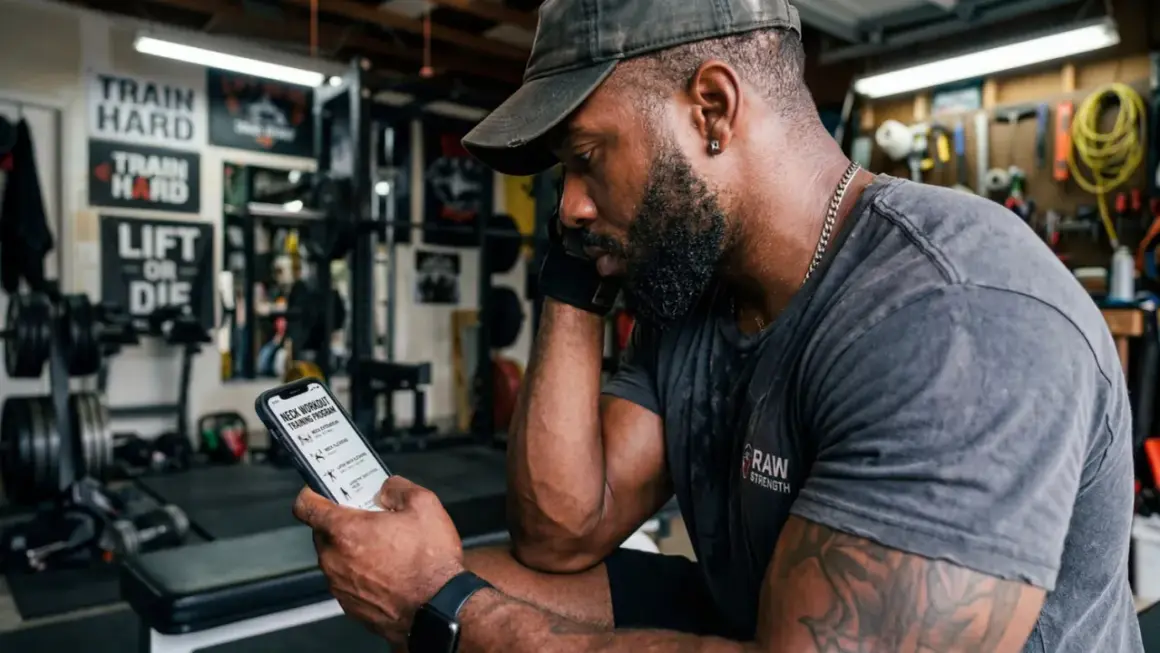
Neck harness exercises give you a direct way to load the muscles that stabilize the head, absorb force, and support posture under fatigue. In combat sports and functional conditioning, that matters more than most people admit: a stronger neck can improve control in the clinch, help you stay organized under impact, and reduce the feeling that your head is getting pulled around by every contact.
This guide covers neck harness exercises, how they work, which movements matter most, and how to program them for strength without turning your neck into a recovery problem. I’ll also show where the harness fits, where it does not, and what I would do first if I were building a neck program from scratch.What matters most before you start loading the neck
- Direct neck work is best treated as conditioning and support work, not a magic shield against injury.
- The harness is most useful for controlled flexion, extension, and side-flexion work.
- Most people do better with 2 sessions per week, small load jumps, and strict technique.
- If pain, tingling, dizziness, or headaches show up, the answer is not to push harder; it is to back off and get assessed.
- For fighters, wrestlers, and field athletes, a stronger neck often pays off first in posture, bracing, and fatigue resistance.
Why direct neck loading matters more than most lifters think
The neck is not one muscle, and that is why I prefer to think in patterns. The harness mainly challenges the cervical flexors and extensors, with the side muscles joining in when you move laterally. That matters because the head does not move in one neat plane in a fight or collision sport; it gets pushed, snapped, and stabilized from awkward angles.
Evidence is still mixed, so I do not oversell it. One study in high school athletes found concussion odds dropped by about 5 percent for every extra pound of measured neck strength, but later reviews still describe the overall evidence as low certainty. My read is simple: stronger neck muscles are a useful piece of conditioning, especially when the goal is better head control and less sloppy movement, but they are not a guarantee.That is also why I care more about isometric neck strength and control than simply having a thick-looking neck. Size can help, but control is what keeps the head from whipping around when fatigue shows up. From here, the question becomes how to train the movements cleanly.
The main harness movements and how to cue them
Most setups are best used for three basic patterns: flexion, extension, and side flexion. I do not chase rotation very aggressively with a basic harness unless the equipment is built for it; most athletes get more value from cleaner reps in the simpler patterns first.
| Movement | What it emphasizes | Best use | Common mistake |
|---|---|---|---|
| Neck flexion | Front of the neck and deep flexors | Posture, chin-tuck strength, balanced anterior work | Pulling with the torso instead of the neck |
| Neck extension | Posterior neck and upper cervical support | Clinch resistance, head control, rear-chain balance | Rushing the lowering phase |
| Side flexion | Lateral stabilizers and anti-tilt control | Contact sports, carrying, uneven loading | Shrugging up and turning it into a trap exercise |
Neck flexion
This is the movement most people should learn first. I like it because it is easy to feel, easy to scale, and easy to keep honest. Set up so the load moves smoothly through the neck, not the shoulders, and think about bringing the chin slightly down and in rather than cranking the head forward.
The biggest technical cue is simple: keep the motion slow enough that you can own the bottom position. If your torso starts helping, the load is too heavy or the setup is wrong.
Neck extension
Extension is usually the one athletes ignore, even though it matters a lot in combat sports and grappling. This pattern builds the back side of the neck, which helps resist force when the head is driven forward or pulled down. It also tends to expose whether the athlete actually has control or is just moving through a partial range.
I prefer a smooth lowering phase and a short pause before coming back up. If the return starts with a jerk, that is your sign to drop the weight and clean it up.
Read Also: How Many Miles Do Boxers Run? The Smart Roadwork Guide
Side flexion
Side-to-side work is the missing piece for a lot of people. It is less glamorous than flexion or extension, but it is a useful way to build tolerance against lateral force, uneven posture, and the kind of awkward contact that shows up in clinches, scrambles, and carries.
Keep this one controlled and modest. I would rather see a clean, boring set of side flexion reps than a heavy set that turns the shoulders and upper traps into the main event.
Once the movement patterns are clear, the next step is programming them so they actually help instead of just creating soreness.
How to program it without wrecking your recovery
The simplest rule is the one I use most often: train the neck twice per week, keep the sessions short, and leave a little room in reserve. That is enough for most people to build strength without carrying neck fatigue into sparring, wrestling, or heavy upper-body work.
| Training level | Frequency | Sets and reps | Rest | Main goal |
|---|---|---|---|---|
| Beginner | 2 days per week | 2 sets of 10 to 15 reps | 45 to 60 seconds | Technique and tolerance |
| Intermediate | 2 days per week | 2 to 3 sets of 12 to 20 reps | 45 to 75 seconds | Strength and hypertrophy |
| Combat camp | 1 to 2 days per week | 1 to 2 sets of 8 to 12 reps | 60 seconds | Maintain strength without excess soreness |
I usually progress in small steps. If the last two reps stay smooth, I add a little load next session, often only 2.5 to 5 pounds. On a neck movement, that is not a trivial jump. Small increases work because the lever arm is short and the tissue does not love reckless loading.
I also place neck work after the main lifts or on a lighter accessory day. I do not like it right before sparring, live wrestling, or any session where head control matters. Fatigued neck muscles are not just weaker; they can make movement feel clumsy and slow.
A practical detail that gets ignored: stop each set before the rep speed changes dramatically. If you are grinding, arching, or shrugging to finish, the set is already too hard for the goal.
The mistakes that make neck training feel worse than it should
Most bad experiences with neck work come from the same few errors. The good news is that they are easy to fix once you know what to watch for.
- Loading too fast. The neck is small, and the response to a bad jump in resistance can be immediate. Start lighter than you think you need.
- Using the torso to cheat. If your ribs flare, your lower back arches, or your shoulders take over, the harness is no longer doing the job.
- Chasing failure. Neck work should be precise, not desperate. I would stop a set a rep or two before form breaks.
- Ignoring the side of the neck. Flexion and extension are useful, but lateral stability matters too, especially in combat sports.
- Training through warning signs. Sharp pain, tingling, numbness, dizziness, or headaches are not normal training discomfort.
- Doing too much before contact sessions. A neck that is tired before wrestling or sparring can make the rest of the session feel off.
There is also a mindset mistake that I see a lot: people expect neck work to feel dramatic. It usually should not. The best sessions are often almost boring, because boring is what controlled progress looks like.
Which tool fits your goal best
The harness is a useful tool, but it is not the only way to train the neck. I choose the tool based on the athlete, their injury history, and how much direct load they actually need.
| Tool | Best for | Main advantage | Main drawback |
|---|---|---|---|
| Neck harness | Direct loading and measurable progression | Simple, effective, easy to load in small steps | Can be too much too soon if the athlete lacks control |
| Manual resistance or bands | Beginners, warm-ups, rehab-adjacent work | Very scalable and usually joint-friendly | Harder to track precisely from session to session |
| Bodyweight bridges | Advanced grapplers with sport-specific need | High specificity for wrestling-style positions | More technical and less forgiving than most people realize |
| Dedicated neck machine or 360-style device | Multi-directional strength work | Broad loading options with a stable setup | Cost, space, and setup complexity |
If I were building a home setup for most fighters, I would start with a harness plus a light band option. That combination covers most needs without turning the neck into a specialty project. If there is a history of neck pain, disc symptoms, recent whiplash, or post-concussion issues, I would want a clinician involved before I loaded the neck aggressively.
The decision is less about the fanciest tool and more about how well the tool matches the athlete’s current tolerance.
A simple 10-minute neck block I would actually use
This is the kind of session I like because it is short, repeatable, and easy to recover from. It works best after a main strength session or on a separate accessory day.
- Warm-up for 1 to 2 minutes. Do gentle chin tucks, slow nods, and a few controlled neck motions without load. The goal is to wake up the pattern, not stretch aggressively.
- Harness flexion for 2 sets of 10 to 15 reps. Keep the motion smooth and stop before the shoulders want to help.
- Harness extension for 2 sets of 10 to 15 reps. Lower under control and avoid snapping back to the start.
- Side flexion for 1 to 2 sets of 8 to 12 reps each side. Use a lighter load than you think and keep the head tracking clean.
- Optional isometric holds for 2 sets of 10 to 20 seconds. Push gently in each direction against a hand or band to build positional control.
If you are in a hard sparring block or wrestling camp, I would usually cut the volume before I cut the quality. Two crisp sets beat a sloppy high-volume session every time. The neck should feel trained, not punished.
A useful rule: if the session leaves you stiff for more than a day and a half, it was probably too much for your current level. That is the point where I would reduce load, shorten the range, or trim one set from each movement.
The rules I keep when neck work becomes part of a real program
The best neck training is not complicated. I would rather see someone build a neck they can use than a neck they only admire in the mirror.
- Start with control, then add resistance.
- Keep the range smooth and honest.
- Train it often enough to adapt, but not so often that it gets cranky.
- Pair direct neck work with rows, carries, and upper-back training so the whole system supports the head better.
- Treat unusual symptoms as a stop sign, not a challenge.
If I had to simplify the whole topic, I would say this: use the harness to build measured strength, not ego, and keep the work specific enough to help your sport or training without stealing recovery from everything else. That approach tends to produce the kind of neck that stays useful when the session gets chaotic, which is the real test that matters.