
So, do boxers do calisthenics? Yes, but the useful answer is more specific than a simple yes or no. In boxing, bodyweight training is usually a conditioning tool that supports punching power, trunk control, shoulder endurance, footwork, and recovery between hard efforts. I’m going to break down where it fits, which movements matter, and when it stops being enough on its own.
What matters most for boxing conditioning
- Boxers use calisthenics to build repeatable work capacity, not just to “get tired.”
- The best bodyweight work for fighters usually includes push-ups, pull-ups or rows, split squats, lunges, planks, and jump variations.
- It fits best in warm-ups, post-technical work, travel weeks, and conditioning circuits that do not wreck sparring.
- Calisthenics improves relative strength and durability, but loaded strength work still matters when you want a higher ceiling.
- A good boxer session is short, controlled, and specific, usually 20 to 35 minutes rather than an endless burnout.
Yes, boxers do use calisthenics, but it has a job
In a boxing gym, calisthenics is rarely there for show. It helps build the kind of strength that shows up when the body has to stay organized under fatigue: stable shoulders, a braced midsection, and legs that can keep producing force after several hard rounds. That is why bodyweight work shows up so often in fighter conditioning. It is efficient, it is easy to dose, and it can be scaled without needing much equipment.
I think of it as support work for the fight engine. A boxer needs relative strength, which simply means strength compared with bodyweight, because carrying extra mass that does not translate into usable force is a bad trade in most weight classes. Calisthenics also helps with the kinetic chain, the sequence of force transfer from the floor through the hips and torso to the fist. Boxing Science puts a lot of emphasis on lower-body force, push and pull strength, and single-leg control; when I strip that idea down to bodyweight terms, the logic is the same.
That is also why bodyweight training works well for boxers who are already doing plenty of skill work. It can add conditioning without the recovery cost of heavier loading, as long as the session is programmed with discipline. That leads directly to the bigger question: where should it sit inside a boxer’s week?
Where bodyweight work fits in a boxer’s conditioning week
The answer depends on the phase of camp, but the pattern is pretty consistent. I usually like bodyweight work in one of four places: a warm-up, a short conditioning block after skill work, a low-equipment maintenance session, or a travel week where the athlete still needs a useful stimulus. What I avoid is throwing a hard calisthenics circuit on top of a heavy sparring day just because it looks athletic.
USA Boxing’s conditioning plans use that same logic in practice, pairing jump rope with push-ups, pull-ups, squats, lunges, and jump squats. That is not random. Those movements are simple, scalable, and easy to line up with the demands of boxing without draining a fighter completely.
| Training window | Best use | What I would avoid |
|---|---|---|
| Warm-up | Activation, mobility, light plyometrics, posture | Failure sets or long burnouts |
| After technical work | Short conditioning circuit, trunk endurance, leg stamina | Anything that ruins pad work or sparring quality later |
| Conditioning day | 3 to 5 movement circuits with controlled rest | Random exercise spam with no progression |
| Travel or deload week | Maintenance, mobility, low-friction volume | Trying to “make up” missed gym work all at once |
As a practical rule, I would usually keep bodyweight sessions in the 2 to 4 times per week range, depending on how much sparring, running, and pad work is already on the schedule. Once the placement is clear, the next step is choosing movements that actually carry over instead of just creating fatigue.
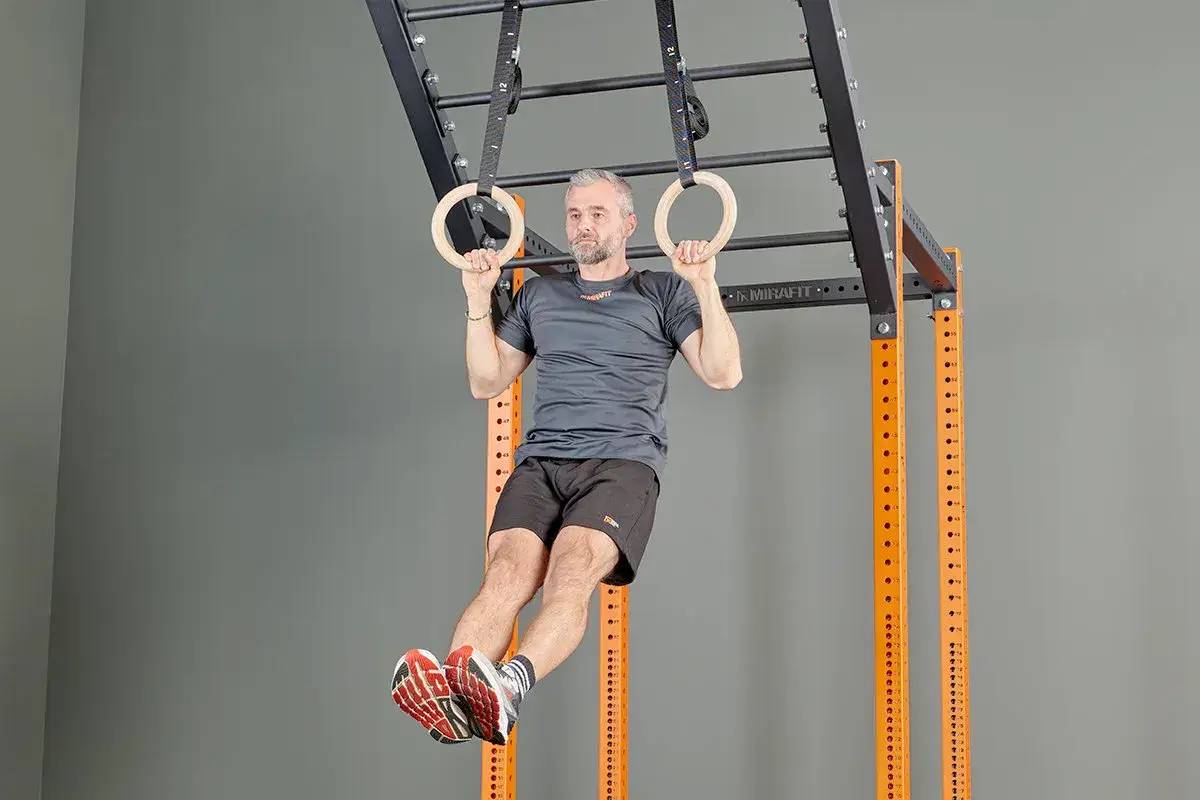
The bodyweight movements that actually matter in the ring
I would rather see five good movements than a 20-exercise circuit that turns into survival training. For boxing, the useful pattern is simple: one push, one pull, one leg pattern, one core pattern, and one explosive piece. That structure covers most of what a fighter needs from calisthenics.
| Movement | Why it matters for boxers | Common mistake |
|---|---|---|
| Push-ups and plyo push-ups | Shoulder endurance, trunk stiffness, explosive upper-body output | Letting the hips sag or chasing sloppy reps |
| Pull-ups or inverted rows | Balances punching volume and helps posture under fatigue | Ignoring pulling work and overtraining the front side |
| Split squats and lunges | Single-leg strength for stance, balance, and step-to-step power | Rushing reps and losing knee control |
| Planks, side planks, and dead bugs | Core endurance and anti-rotation control | Turning every core drill into a low-value crunch marathon |
| Squat jumps, pogo hops, and burpees | Elastic conditioning and repeatable explosiveness | Doing so many reps that speed disappears |
That also explains why flashy fitness trends often miss the mark. A fighter does not need every calisthenics trick in the book. He needs the few patterns that make him harder to move, harder to tire, and safer to train.
Where calisthenics beats weights, and where it does not
This is where the honest answer matters. Calisthenics is excellent for convenience, movement quality, and endurance, but it is not a complete replacement for loaded strength work if the goal is to maximize force output. Harvard Health describes calisthenics as bodyweight-based strength training that can improve strength, endurance, flexibility, and coordination, and that is exactly why fighters use it. The limitation is overload: once a push-up is too easy, the exercise stops giving you much back unless you make it harder.| Goal | Calisthenics is stronger when | Weights are stronger when |
|---|---|---|
| Convenience and recovery | You need low-friction work that does not require equipment | You have time, coaching, and recovery capacity for heavier sessions |
| Relative strength | You want to move your own body with control and speed | You need to build a bigger absolute strength base first |
| Shoulder and trunk endurance | You want long sets, holds, and posture under fatigue | You want to add load after the base is already there |
| Max strength ceiling | You can get a lot done, but progress eventually slows | Progress is usually easier to measure and extend |
| Travel or home training | You need something that works anywhere | You may not have access to the equipment you need |
My rule is simple: if bodyweight training still challenges position, tempo, and control, keep it. If the movement has become a warm-up, progress it with harder leverage, slower tempo, pauses, rings, unilateral variations, or a load vest. The mistake is not calisthenics itself; the mistake is letting it stagnate.
A boxer-style bodyweight session I would actually use
If I were writing a practical session for a fighter, I would keep it short, clear, and fight-relevant. The point is to raise conditioning without turning the athlete into a puddle before skill work. This version works well after technical training or on a separate conditioning day when the goal is to build work capacity without a lot of equipment.
- Jump rope for 3 minutes, then spend 2 minutes on hips, shoulders, and thoracic mobility.
- Do 3 rounds of this circuit with 60 seconds of rest between rounds: 10 push-ups, 8 pull-ups or inverted rows, 10 split squats per leg, 30 seconds of side plank per side, 12 squat jumps.
- Finish with 3 x 1 minute of fast shadowboxing at a relaxed but sharp pace, with 30 to 45 seconds of rest.
- Cool down with 2 minutes of nasal breathing and easy hip opening.
If a boxer is in camp, I would usually stop the session while the movement still looks clean. That may sound conservative, but it is the right tradeoff. The goal is not to chase exhaustion; it is to build the kind of repeatable output that still lets the hands go in round 8 or round 10.
Progression should also be boring on purpose. Add a round before you add chaos. Shorten rest before you turn every drill into a max-effort contest. If a fighter can do the session while keeping posture, breathing, and snap, the work is doing its job.
The smartest version leaves room for boxing itself
Bodyweight training is useful for boxers because it respects the realities of the sport: weight classes, frequent skill sessions, and the need to recover between hard efforts. But I would never let calisthenics crowd out sparring, pads, bag work, sprinting, or the loaded strength work that raises the ceiling for more advanced athletes. The best boxing programs do not ask one method to do everything.
If I had to simplify the whole idea, I would say this: use calisthenics to support the engine, not to become the engine. That keeps the training honest, keeps the athlete fresher, and makes the conditioning actually transfer when the bell rings.