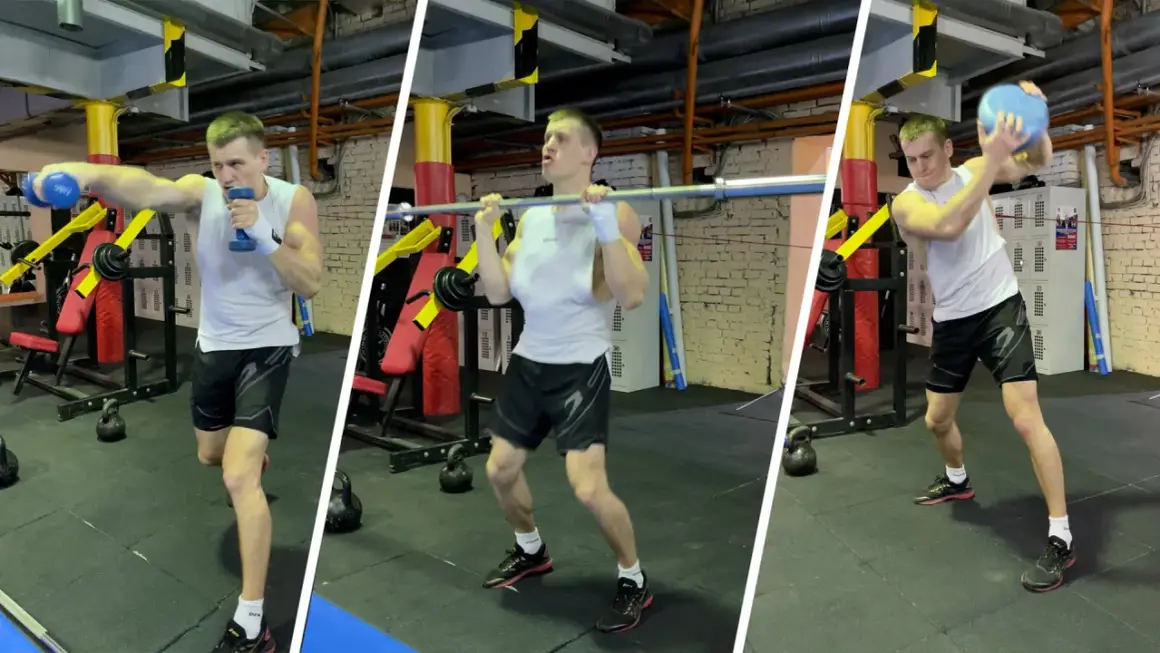
Boxers do lift weights, but the smarter question is what those weights are supposed to do. In serious training camps, lifting is there to raise force production, protect the body from repeated contact and training stress, and help fighters keep their speed when the pace climbs. I am going to break down how that works in practice, which lifts matter most, and where weight training starts to get in the way.
What matters most right away
- Yes, strength training belongs in boxing, but the goal is performance, not a bodybuilding look.
- A 2025 Journal of Strength and Conditioning Research survey found that most boxing practitioners used strength work to improve punching power, muscular endurance, and injury resistance.
- The best boxing programs usually blend max strength, power work, and a small amount of support lifting instead of chasing fatigue.
- Timing matters: lifting should support sparring and conditioning, not leave the fighter flat for the next quality session.
- In camp, the dose usually comes down; the closer you get to a bout, the more important recovery and sharpness become.
Why boxers lift weights, but not to look like bodybuilders
A 2025 Journal of Strength and Conditioning Research survey of boxing practitioners found that most of them used strength training to improve punching power, muscular endurance, and reduce the chance of injury. The same survey showed that many coaches recognize maximal-strength work as useful for punch power, even if they program it less often than boxing-specific drills. That tells me the sport is not anti-lifting. It is anti-useless lifting.The difference is the adaptation you are chasing. Maximal strength is the highest force you can produce. Rate of force development, or RFD, is how quickly you can express that force. Boxing needs both, because a punch has to arrive fast, not just be strong on paper. If you can add force without slowing the athlete down, the weight room has done its job.
That is also why boxers are often cautious about adding too much size. A heavier athlete is not automatically a better one if the extra mass makes weight management harder or blunts speed. The right question is never “Do boxers lift weights?” It is “Does this kind of lifting make the boxer more dangerous and more durable?” That leads directly to the bigger issue: which exercises actually earn their place.
What actually belongs in a boxing weight room
I think of boxing strength work in four buckets. The best programs usually borrow from each one instead of living in only one lane. USA Boxing’s 2026 International Open strength and conditioning plan is a good example of that approach, because it uses squats, jump squats, and single-leg work rather than bodybuilding-style isolation marathons.
| Training bucket | Examples | What it helps | Typical dose |
|---|---|---|---|
| Max strength | Front squat, trap-bar deadlift, weighted pull-up, landmine press | Raises the force ceiling so punches, clinch work, and movement feel easier | 3-5 sets of 2-5 reps at roughly 80-90% 1RM |
| Power | Medicine-ball throws, jump squats, push press, speed deadlift | Trains force to show up quickly, which matters for punch snap and footwork | 3-5 sets of 2-4 reps with fast intent |
| Support strength | Split squats, rows, Romanian deadlifts, carries, trunk work | Builds balance, posture, shoulder health, and tissue tolerance | 2-4 sets of 6-12 reps |
| Conditioning-compatible finishers | Sled pushes, bike intervals, short circuits | Adds work capacity without wrecking the nervous system | 6-12 minutes, kept controlled |
One note matters here: 1RM means one-rep max, the heaviest load you can move once with sound form. You do not need to test it often to train well. In fact, most boxers are better served by using it as a loading reference than by chasing a true max every few weeks. The real goal is repeatable, high-quality work that leaves enough in the tank for boxing itself. That gets us to the question of timing.
How to place lifting around sparring and conditioning
Weight training only works in boxing if it respects the rest of the week. Off-season or early base phase, I am comfortable seeing two or three strength sessions per week if the athlete has the recovery, the coaching, and the boxing volume to support it. During fight camp, I usually want one or two shorter sessions that maintain strength and power instead of trying to build everything at once.
The closer you get to sparring-heavy weeks, the more lifting should feel like a precision tool. A hard lower-body session two days before quality sparring is often a bad trade. The fighter may still complete the session, but the movement quality in the ring drops, and that is where the cost shows up. I would rather see a short, sharp session that keeps bar speed high than a long grind that steals spring from the legs.Conditioning still has to come from the boxing work itself. Rounds on the bag, pad sessions, sparring, and interval work are still the main engine for fight endurance. Lifting supports that engine, but it does not replace it. A useful rule is simple: if the weight room starts compromising the next boxing session, the dose is too high. The schedule is only half the equation, though, because exercise selection can still miss the mark.
The movements that transfer best to punch force
If I had to strip a boxing program down to the essentials, I would build around legs, trunk, and upper-back balance. The fighter does not need a circus of exercises. He or she needs movements that create force cleanly, recover well, and hold up under repeated rounds.
| Movement pattern | Examples | Why it matters in boxing |
|---|---|---|
| Lower-body force | Trap-bar deadlift, front squat, split squat | Improves drive off the floor and helps punches start from the legs |
| Upper-back pull | Rows, pull-ups, face pulls | Supports guard position, shoulder balance, and punch retraction |
| Pressing | Landmine press, dumbbell bench, push-up variations | Builds force delivery without overloading the shoulders as aggressively as some barbell work |
| Rotation and anti-rotation | Medicine-ball rotational throws, Pallof press, cable chops | Helps transfer force through the trunk while staying stable under contact |
| Reactive power | Jumps, bounds, low-volume plyometrics | Improves elastic strength, which shows up in footwork and quick bursts |
I rarely let a boxer spend a whole block on arm isolation work unless there is a specific rehab need or imbalance to fix. Curls and triceps work are not forbidden, but they are garnish, not the meal. The same goes for machines that look impressive but do not carry much over to the ring. The better the athlete, the more important it becomes to favor high-value movements over noisy ones. That still leaves one big risk: getting stronger in a way that actually makes the boxer worse.
How to lift without getting slower or heavier
The two common mistakes are easy to spot. First, boxers chase fatigue: too many sets, too much training to failure, and too much soreness right before sparring. Second, they chase size when what they really need is force. A little extra muscle can help, but only if it does not create a worse weight cut or dull the speed the boxer is trying to protect.My preference is to keep most working sets a few reps away from failure. Heavy work should look crisp, not desperate. Power work should look fast, not sloppy. If bar speed drops hard, the session has already gone far enough. The weight room should leave the athlete looking more prepared, not more flattened.
- Do not turn every lift into a max-effort test.
- Do use low-rep strength work and fast power work with clean technique.
- Do not add mass just because you can.
- Do keep an eye on bodyweight, recovery, and how the fighter moves in sparring.
That logic becomes easier to manage when the week is organized with purpose. A clear weekly template can stop lifting from competing with boxing and start making it support the whole camp.
A weekly template I would actually use
For a boxer who also has to spar, drill, and condition, simplicity wins. I would rather see two high-quality strength sessions than four half-done ones. The exact layout depends on the fighter, but this is a sensible starting point when the goal is performance instead of gym volume.
| Day | Main focus | What the lift session looks like |
|---|---|---|
| Monday | Strength plus technical work | Lower-body strength, one press, one pull, a small amount of trunk work |
| Tuesday | Skill and conditioning | Pads, bag intervals, footwork, or aerobic work |
| Wednesday | Sparring | No hard lifting afterward unless it is just a mobility or recovery add-on |
| Thursday | Power and upper-body balance | Medicine-ball throws, jumps, rows, landmine press, light accessories |
| Friday | Technical or recovery work | Easy rounds, movement, mobility, hands-feet coordination |
| Saturday | Sparring or hard conditioning | Keep the quality high and the junk volume low |
| Sunday | Rest | Sleep, food, rehab, and a full reset if the camp is intense |
For newer boxers, two full-body lifting sessions usually beat a more complicated split. For experienced fighters, the template often shifts toward fewer exercises, more intent, and a better fit with sparring load. The point is not to copy a generic gym program. The point is to keep the boxer sharp enough to box well. That brings me to the simplest practical answer I would give anyone starting now.
What matters most if you start this week
Begin with compound lifts, not fancy machines. Keep the sessions short enough that they do not bleed into boxing quality. Use the first month or two to learn positions, build tolerance, and see how the body responds to combined training. If the boxer is getting stronger, staying in class, and still looks fast in the ring, the plan is working.If I had to reduce the whole topic to one sentence, I would say this: lifting should help a boxer hit harder, stay fresher, and hold bodyweight under control. If it does not do those things, it is too much or too poorly placed. For most fighters, the answer is not no weights, it is the right weights, at the right dose, at the right time.