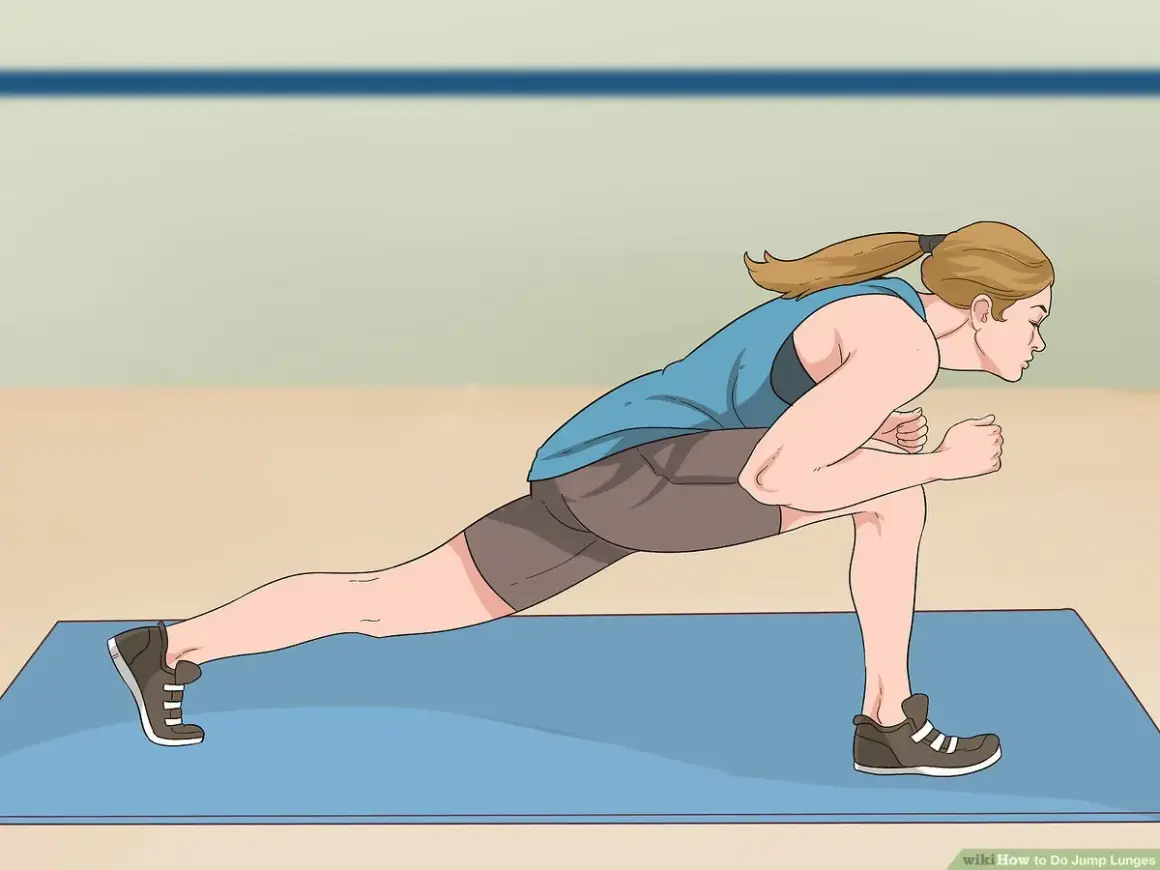
Jump lunges sit in a useful middle ground between strength work and true conditioning: they ask you to produce force quickly, absorb it cleanly, and repeat the pattern without letting your mechanics fall apart. I like them most when the goal is to build lower-body power, balance, and repeatable leg drive for combat sports or functional fitness, not just to make a workout feel brutal. This article breaks down what the movement trains, how to do it well, how to program it, and when a simpler lunge variation is the smarter choice.
Key points before you add jump lunges to conditioning
- They are an advanced plyometric drill, so clean landings matter more than speed.
- The main payoff is a blend of power, coordination, and high heart-rate demand.
- For power work, low volume wins: think 3-6 sets of 2-5 quality reps with full recovery.
- Two to three sessions per week is usually enough, with 48-72 hours between hard plyometric days.
- If the knees cave in, the torso collapses, or the landing gets loud, the set is over.
What the movement trains and why it matters
A jump lunge is not just a harder lunge. It is a unilateral power drill that forces the hips, knees, and ankles to coordinate under speed, which is why it feels more like athletic training than ordinary leg work. The exercise uses the stretch-shortening cycle, the quick lengthen-then-contract action that powers jumps, bounds, and cuts. In plain English, you are teaching the body to brake and re-accelerate fast.
That is the reason the drill fits conditioning so well. It raises heart rate while still demanding force production, timing, and balance, so you are not simply chasing fatigue. The legs have to load, stabilize, and push again with very little pause, and that repeated transition from deceleration to takeoff is a valuable pattern for fighters, runners, and field athletes.
I also like the movement because it exposes weak links quickly. If one side is less stable, the switch shows it. If the trunk is loose, the torso shows it. If the ankles are not contributing well, the landing gets noisy and unstable. That feedback is useful, because conditioning should reveal what still needs work, not hide it.
Once you understand the demand, the next step is learning the mechanics that keep the drill productive instead of chaotic.
How to perform it with clean mechanics
I coach jump lunges by starting with the landing, not the jump. If the landing is soft, balanced, and repeatable, the rep is usually worth keeping. If the landing is loud or rushed, I stop the set before fatigue rewires the pattern.
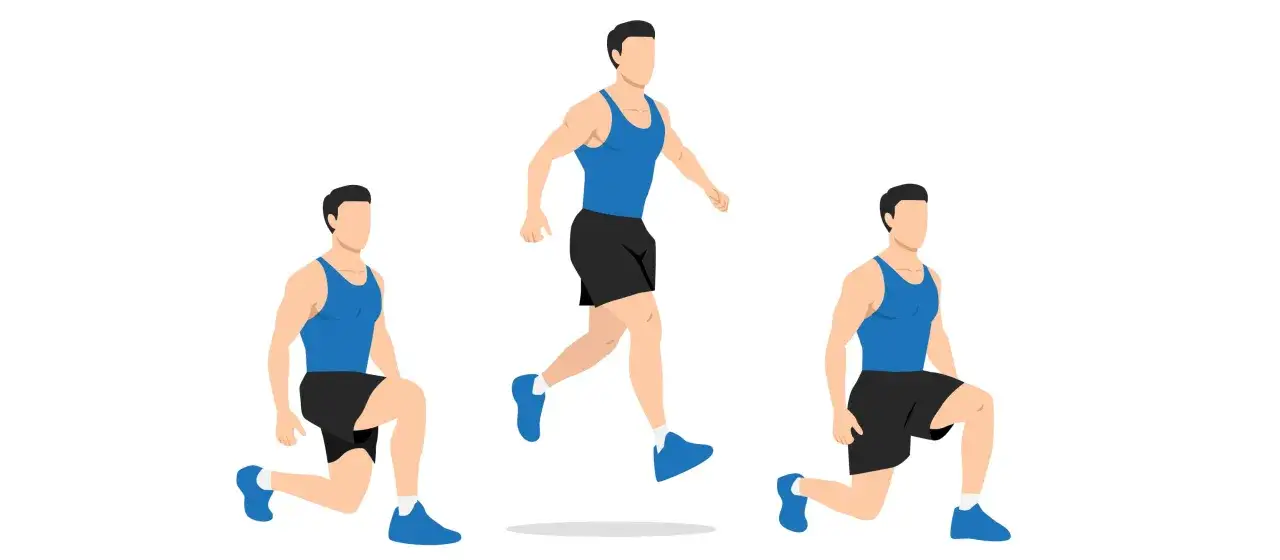
- Start in a split stance with your feet about hip-width apart, torso tall, and core braced.
- Lower into a controlled lunge until both knees are bent and your front shin stays roughly stacked over the foot.
- Drive through the floor and jump straight up, switching the legs in the air.
- Land softly in the opposite split stance with bent knees and level hips.
- Reset fast, but do not rush the next rep if the landing got messy.
Three cues matter most in my experience: quiet feet, level hips, and knees tracking over the toes. You do not need a huge jump height. You need enough height to switch legs cleanly and enough control to absorb the landing without collapsing inward or pitching the chest forward.
If you cannot hold the landing for a brief pause, the drill is too advanced for that day. That is a useful line in the sand, and it keeps the movement honest.
How to program it without turning it into sloppy cardio
Jump lunges are not the place to chase failure. The useful version is usually short, crisp, and well-rested. I prefer to place them after a warm-up and before fatigue-heavy conditioning, because once speed and alignment fade the drill stops teaching power and starts rehearsing bad landings.
| Goal | Set-up | Rest | What to watch |
|---|---|---|---|
| Power and explosiveness | 3-5 sets of 3-5 reps per side | 60-120 seconds | Jump height, landing quality, and symmetry |
| Conditioning finisher | 2-4 rounds of 10-15 seconds | 45-75 seconds | Breathing, posture, and whether the switch stays sharp |
| Mixed lower-body session | 3-4 sets of 4 reps per side | 90 seconds or more | Whether the drill still looks athletic under moderate fatigue |
For most athletes, two to three weekly exposures are enough, and I would leave 48-72 hours between hard plyometric sessions. That spacing gives the nervous system and connective tissue enough time to recover so the next session stays explosive instead of sloppy. A recent research trend is consistent on this point: short blocks of plyometrics, done a few times per week, are typically enough to improve power qualities without flooding the week with impact.
My practical rule is simple: if the drill no longer looks like a controlled switch and starts looking like survival, the set is done. Conditioning should build capacity, not reward breakdown.
How it compares with other lunge and jump options
Sometimes the real question is not whether jump lunges work, but whether they are the right tool for the athlete in front of you. I would rather keep someone on a simpler variation that they can own than force the more advanced move too early. The table below is the way I usually think about the options.
| Movement | Impact and complexity | Main payoff | Best use |
|---|---|---|---|
| Reverse lunge | Low impact, low-to-moderate complexity | Strength, balance, and clean single-leg patterning | Beginners, warm-ups, and rehab-friendly conditioning |
| Split squat jump | Moderate-to-high impact, moderate complexity | Explosive force from a fixed staggered stance | A good bridge between strength work and switching jumps |
| Jump lunge | High impact, higher coordination demand | Power, deceleration, and alternating-leg conditioning | Advanced athletes who already control landings well |
| Squat jump | High impact, simpler coordination | Vertical power from both legs at once | General power work when unilateral control is not the priority |
My rule is simple: use the simplest drill that still challenges the quality you want. If the goal is conditioning with clean mechanics, reverse lunges or split squat jumps may be enough. If the goal is to blend power with repeated switching under load, the jumping version earns its place.
Common mistakes and when I would scale it back
The biggest mistakes are usually not dramatic. They are small form leaks that get worse as fatigue builds. I see the same problems over and over: people try to turn the movement into a height contest, or they keep going long after the landing quality has already dropped.
- Landing loudly instead of absorbing the force.
- Letting the front knee collapse inward.
- Trying to jump higher instead of switching cleaner.
- Letting the torso fold forward or twist on the landing.
- Using the drill after you are already completely gassed.
If any of those show up, I regress the movement immediately. The safest simplifications are reverse lunges, static split squats, and low-amplitude landing drills such as snap-downs or small pogo hops. I would also hold off on jump lunges if you have current knee pain, a cranky Achilles, a fresh ankle sprain, or you cannot control a basic split squat without wobbling.
That is not a failure. It is just the right sequence. Earn the switch, then keep the switch sharp.
A practical first-week setup for fighters and functional athletes
If I were introducing jump lunges in a conditioning block, I would keep the first week simple and strict. The goal is not to see how exhausted the athlete can get. The goal is to see whether the pattern stays crisp as the body starts to breathe harder.
- Day 1: 2 sets of 4 reps per side, full recovery, focus only on quiet landings.
- Day 3: 3 sets of 3 reps per side, slightly more intent, but no chasing height.
- Day 5: 2 short rounds of 10-15 seconds if the landings still look clean.
For combat sports or functional fitness, I like this approach because it respects the difference between conditioning and junk fatigue. The better test is not how miserable the set feels. It is whether the athlete can still land with the same shape on rep six that they had on rep one. If that stays true, the drill is doing its job.
Use it as a power tool first and a conditioning tool second, and it becomes much more useful. The best version of the movement is not the one that breaks you down fastest; it is the one you can repeat with the same control, even when the heart rate is up.