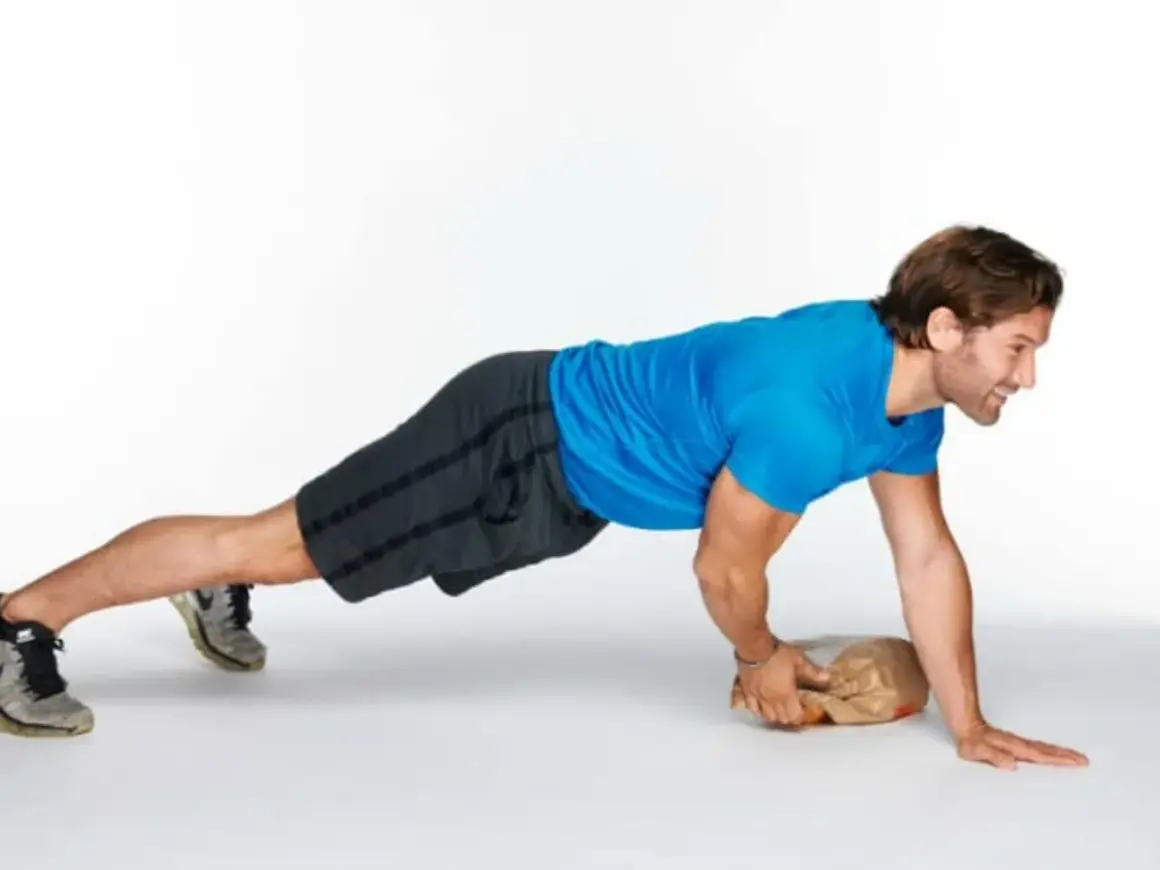
A strong core matters most when the torso has to stay organized while the limbs are moving. The around the world plank is useful for that exact reason: it teaches you to resist rotation, keep the shoulders steady, and hold position while one limb traces a controlled path. In the sections below I break down what it trains, how to do it cleanly, how to program it, and how to tell whether it is helping or just making you shake.
What matters before you start
- This drill builds anti-rotation strength, trunk endurance, and shoulder stability more than pure ab size.
- A slightly wider base, stacked ribs, and quiet hips matter more than how long you can suffer.
- The moving limb should trace a small, controlled path; if the torso follows it, the set is too big.
- For most athletes, 2 to 4 sets of 4 to 8 controlled circles per side is enough.
- If you cannot stay square, regress to a dead bug, shoulder tap plank, or incline plank first.
What this plank variation trains
I treat this as an anti-rotation drill first and an ab exercise second. Anti-rotation means resisting twisting force, and that is where the obliques, the transverse abdominis (the deep abdominal layer that helps brace the trunk), the glutes, and the shoulder stabilizers earn their keep. In conditioning work, that matters because real movement rarely happens from a perfectly symmetrical position.
For fighters, lifters, and field athletes, that is the point. You are not just teaching the body to hold still; you are teaching it to stay organized while one side moves and the other side has to keep the spine, pelvis, and shoulder girdle from drifting. I like drills like this because they expose whether an athlete can stay tight when the base of support changes.
| Quality | What it means | Why it matters in conditioning |
|---|---|---|
| Anti-rotation | Resisting twist through the trunk | Helps when striking, changing direction, or absorbing contact |
| Shoulder stability | The supporting shoulder stays packed and centered | Improves control during pressing, framing, and ground work |
| Trunk endurance | Maintaining position across repeated reps | Useful when posture starts to fade late in a round or circuit |
| Coordination | One limb moves without dragging the torso with it | Builds cleaner movement under fatigue |
If the set turns into hip sway and shoulder shrugging, the exercise is no longer training what you think it is. Once you know the target, the next step is learning the version that actually delivers it.
How to perform it with clean mechanics
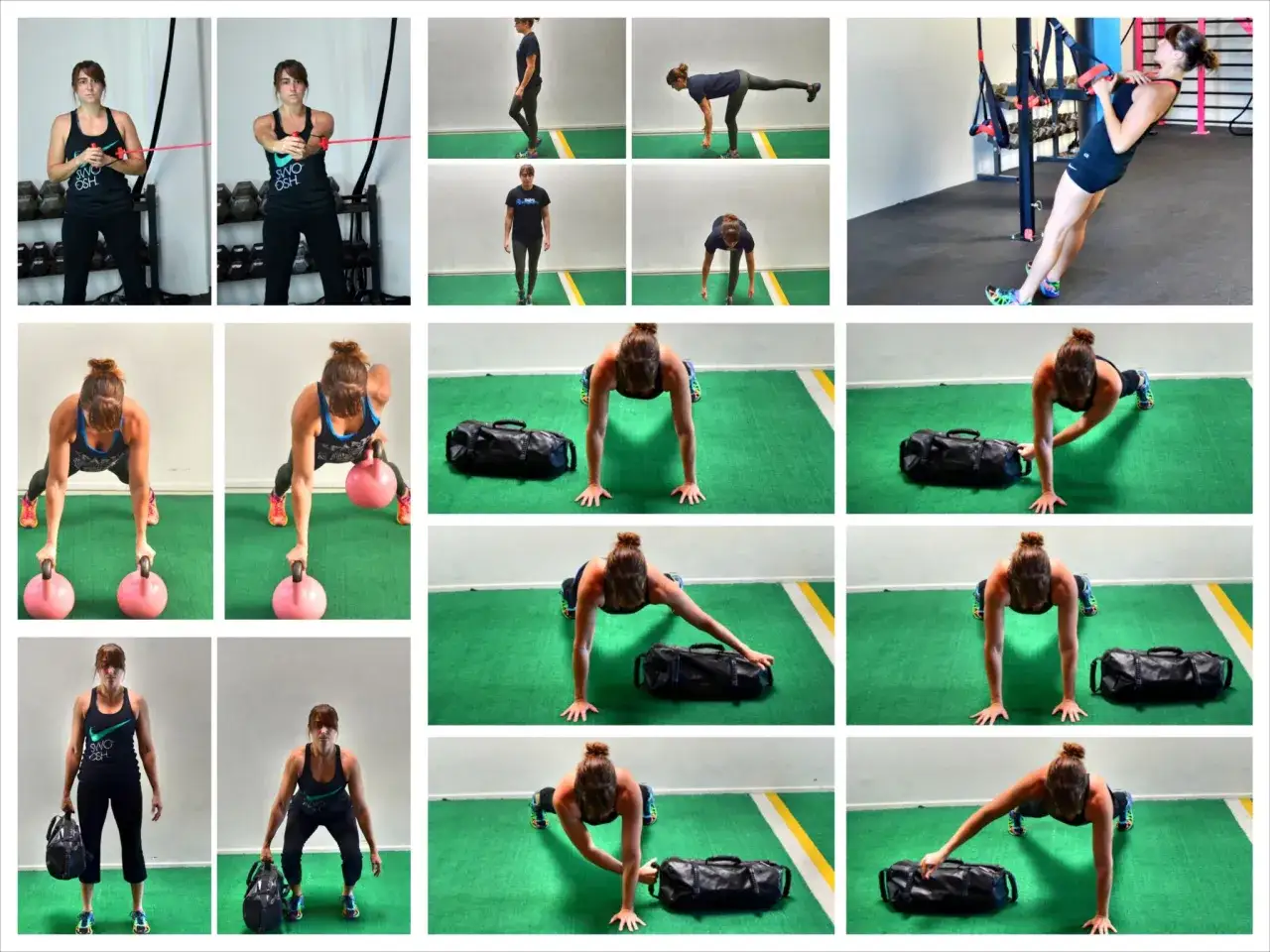
If your coach teaches a clock-face or circle pattern, the movement should feel small, deliberate, and almost boring. That is not a flaw. It is the whole point. The torso should stay square while one hand or foot traces a controlled path, and the rest of the body should look like it is refusing to react.
Set the base first
Start in a high plank with your hands under your shoulders and your feet slightly wider than hip width. I usually want the ribs stacked over the pelvis, the glutes on, and the neck long. Press the floor away so the shoulder blades do not sink, and keep the gaze a few feet in front of your hands rather than cranking the head up.
Trace a small path, not a dramatic one
Move one limb through a short, controlled arc. In the common clock-face version, that means a hand or foot travels forward, out, and back around the body. If your version uses a simple lift-and-return pattern, the same rule applies: the limb moves, but the hips do not chase it. I would rather see a tiny, clean circle than a big sloppy one that teaches compensation.
Breathe behind the brace
Do not hold your breath until the set becomes a struggle. Exhale through the hard part of the reach, reset the brace, then move again. If the motion makes you twist, widen your stance slightly and shorten the reach. A good rep looks controlled from the first inch to the last.
When the movement pattern is clean, the drill becomes useful as conditioning instead of just looking hard. That is where programming matters.
Where it fits in a conditioning block
I like using this drill in three places: as a warm-up activation, as a core accessory after the main work, or as a short finisher when the session has already done most of the heavy lifting. What I do not like is stuffing it into a circuit so dense that the body position collapses on rep two. Once the hips start to rock, the set stops paying dividends.
| Goal | Dose | Rest | Best use |
|---|---|---|---|
| Warm-up | 1 to 2 sets of 3 to 4 circles per side | 15 to 30 seconds | Activation and movement prep |
| Accessory work | 2 to 4 sets of 4 to 6 circles per side | 30 to 45 seconds | Most athletes |
| Finisher | 2 to 3 rounds of 20 to 30 seconds total work | 45 to 60 seconds | Only if form stays square |
For fighters, I like it after pad rounds, bag intervals, or upper-body strength work, when the trunk has already been asked to stabilize under some fatigue. For lifters, it pairs well after presses, rows, or carries because the shoulders and core have already been reminded to work together. If the goal is heart-rate conditioning, this drill should support the session, not replace sleds, intervals, or bag rounds.
That distinction matters. This is not a brute-force cardio tool. It is a trunk-control drill that earns its place by keeping the body organized while the session gets harder.
How it compares with other core drills
People often assume every core drill does the same thing. It does not. The best choice depends on whether you need more control, more resistance, or more complexity. I use the comparison below to decide what fits a session instead of forcing one exercise to do everything.
| Drill | Best use | Why I pick it |
|---|---|---|
| Dead bug | Learning rib-and-pelvis control | Easier to master when the low back keeps arching |
| Pallof press | Pure anti-rotation strength | Cleaner external load if you want the trunk to resist a band or cable |
| Shoulder tap plank | Simple progression from a basic plank | Less complex than circles, but still challenges hip control |
| This variation | Coordination under load | Harder because the limb travels while the torso stays square |
If someone cannot keep a shoulder tap clean, I do not rush them into circles. If someone already owns the plank but needs more challenge without adding equipment, this is a smarter step. The best drill is the one that matches the weakness you are trying to fix.
Common mistakes and the fixes that matter
The same flaws show up again and again, and they are easy to spot once you know what to look for. More importantly, they tell you exactly what to change instead of just saying the exercise feels hard.
Mistakes I watch for
- Making the path too large and turning the drill into a balance circus.
- Letting the hips sway or open when the limb moves.
- Shrugging the shoulders toward the ears instead of keeping them packed.
- Holding the breath until the set becomes a grimace.
- Rushing the cadence just to get through the work.
Read Also: Light Dumbbell Punches - Real Boxing Conditioning Benefits
Smarter regressions and progressions
- Regression: incline plank with the same reaching pattern.
- Regression: knee plank if the low back cannot stay quiet.
- Regression: dead bug or bird dog if you need to rebuild position first.
- Progression: narrower base, slower tempo, or a pause at the longest reach.
- Progression: light band resistance if the body position is already clean.
I would rather see a smaller, cleaner circle than a bigger, uglier one. If one side collapses earlier, that asymmetry is useful information, not a reason to force more reps.
The small details that keep it useful under fatigue
This is the part that turns a novelty drill into real conditioning. Keep the feet slightly wider if you need more stability. Keep the glutes switched on, the ribs stacked over the pelvis, and the neck neutral. If the torso starts to rotate, the rep is over. More fatigue is not the same thing as more training.
My preferred prescription for most athletes is simple: 4 to 6 slow circles per side, with enough rest to keep every rep sharp. That keeps the exercise honest. It also keeps it from becoming a frantic plank contest that teaches the body to compensate under stress instead of control under stress.
If your goal is conditioning that transfers to striking, grappling, lifting, or even day-to-day bracing, this drill earns a place. Keep the path small, the breathing steady, and the torso quiet, and it becomes a solid piece of work instead of just another way to wobble on the floor.