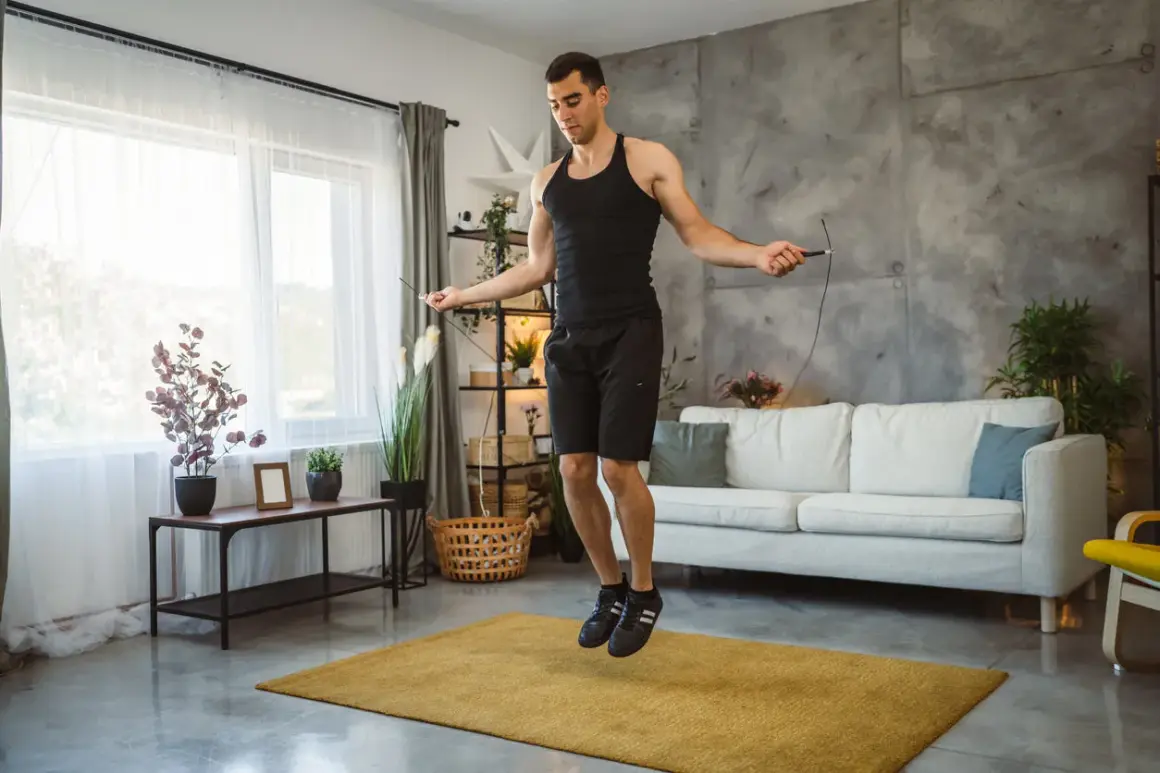
Burpees and jump rope both deliver fast conditioning, but they do it through very different stress patterns. The burpees vs jump rope comparison matters if you care about gas tank development, footwork, recovery, or how well your conditioning carries into combat sports and functional fitness. I’m going to break down what each exercise trains, where each one falls short, and how I would program them in real training.
Key takeaways before you choose
- Jump rope is usually the better tool for building repeatable cardio, footwork rhythm, and longer conditioning blocks.
- Burpees create more whole-body fatigue per rep, so they work better as a short, hard finisher or stress test.
- Harvard Health’s activity table puts fast rope jumping at about 340, 421, or 503 calories in 30 minutes for 125-, 155-, and 185-pound people.
- The CDC says adults should aim for at least 150 minutes a week of moderate activity and at least 2 days a week of muscle-strengthening work.
- If your form falls apart quickly, the real question is not which exercise is harsher, but which one you can repeat with quality.
- For fighters and other functional athletes, the best answer is often the tool that matches the energy system you actually need.
What each exercise trains under fatigue
Burpees and rope work both raise the heart rate, but they stress the body in different ways. That difference is why one can be a better base-building tool, while the other is better at exposing weak links fast.
Burpees punish the whole chain
Burpees combine a squat, a plank, a push-up pattern, and a jump. That makes them a true full-body conditioning drill, not just a cardio movement. They challenge the legs, trunk, shoulders, and the ability to move from the floor back to standing without losing shape.
In practical terms, burpees are useful when I want to build repeat-effort strength, which is the ability to produce force again and again while tired. They also push lactate tolerance, meaning the ability to keep working when the burn rises and pace starts to slip.
Jump rope builds repeatable rhythm
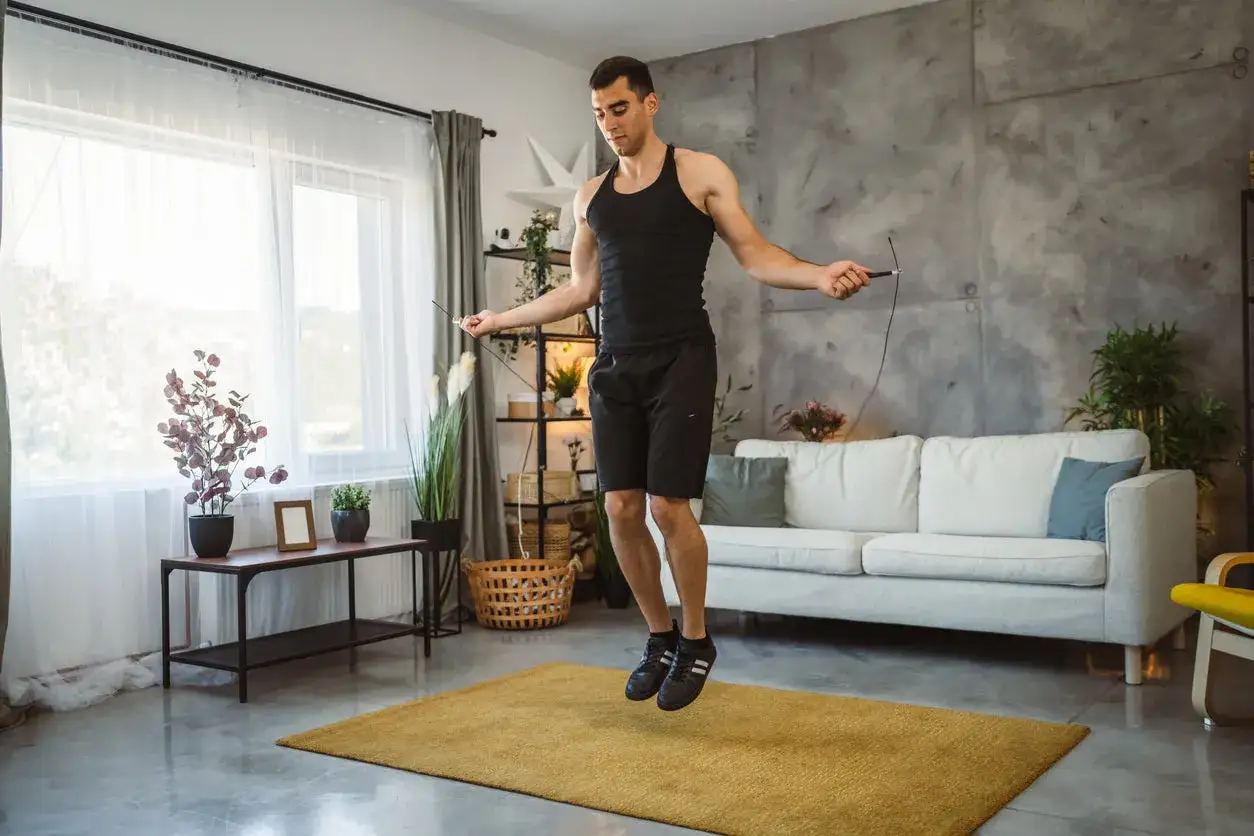
Jump rope is simpler in shape, but that simplicity is a strength. It trains timing, foot speed, ankle stiffness, coordination, and a steady aerobic output that is easier to hold for longer periods. For combat athletes, that rhythm matters because it looks a lot like staying light, relaxed, and efficient under pressure.
I like rope work because it lets me accumulate conditioning without forcing a form breakdown every few reps. The heart rate climbs, the calves and shoulders work, and the athlete still has room to stay technically clean. That makes it a better tool for volume.The main difference is simple: burpees make the body solve a harder problem each rep, while jump rope lets you accumulate high-quality work for longer. That difference becomes obvious once you compare them side by side.
How burpees and jump rope compare in the metrics that matter
When people compare conditioning drills, they usually focus on what feels hardest. I think that is the wrong filter. The better question is which exercise gives you the right mix of stress, repeatability, and transfer.
| Factor | Burpees | Jump rope | Practical edge |
|---|---|---|---|
| Main demand | Full-body strength endurance with repeated floor-to-stand transitions | Steady cardiovascular output with rhythm and coordination | Burpees for intensity, rope for volume |
| Skill requirement | Low to moderate, but technique can collapse when fatigue spikes | Moderate, because timing and rope control matter | Burpees are easier to start, rope is easier to refine |
| Fatigue pattern | Sharp, local, and systemic at the same time | More even and repeatable across a longer set | Rope is easier to sustain |
| Joint stress | Higher load on wrists, shoulders, and landing mechanics if form degrades | More repetitive stress on calves, Achilles, and shins if volume jumps too fast | Neither is free, but the stress is different |
| Space and equipment | Needs only floor space | Needs a rope and enough clearance to skip comfortably | Burpees are the simplest no-gear option |
| Best use | Short finishers, tests, and fight-style fatigue work | Warm-ups, aerobic base work, and longer conditioning rounds | Jump rope wins for repeatable session design |
Harvard Health’s calorie table gives fast rope jumping a clear benchmark, and I use it as a rough reference rather than a promise. Burpees are harder to pin to a clean calorie number because pace, range of motion, and how much rest you sneak in change the output a lot more than people expect.
The practical read is this: if you want a movement you can keep repeating without much setup and without much technical decay, rope wins. If you want a movement that escalates fatigue fast and exposes weak links in your trunk, shoulders, and landing mechanics, burpees win. That leads straight into the part most people ignore, which is breakdown.
Where each movement breaks down first
When an exercise stops looking crisp, the value drops fast. At that point you are not just training conditioning, you are rehearsing sloppy movement under fatigue, and that has a cost.
Common burpee mistakes
- Letting the lower back sag as the body hits the floor.
- Throwing the feet back and forward so aggressively that the landing gets noisy and unstable.
- Turning every rep into a frantic jump instead of a controlled, repeatable effort.
- Forcing full push-ups when the shoulders or wrists are already failing.
Burpees are rougher on the wrists, shoulders, and lower back when reps get ugly. If I see the chest collapsing or the landing turning stiff, I shorten the set immediately. A good burpee set should look like work, not a breakdown test.
Read Also: Punch Harder - Muscles That Boost Punching Power
Common jump rope mistakes
- Jumping too high, which wastes energy and slows cadence.
- Swinging the rope from the shoulders instead of the wrists.
- Landing flat-footed and heavy instead of quiet and springy.
- Ramping volume too fast and irritating the calves, Achilles, or shins.
Jump rope rewards economy. The more you waste motion, the less useful the session becomes. The rope should feel quick and efficient, not bouncy and frantic.
If a movement starts forcing you into ugly mechanics after a minute or two, it is no longer giving clean conditioning. The next step is deciding how much of that fatigue you actually want inside the session.
How I would program them for real conditioning
Programming matters more than loyalty to one exercise. A badly planned rope session can be less useful than a short, well-dosed burpee block, and the reverse is also true. I usually organize the work around the goal, not the exercise label.
| Goal | Better choice | Sample dose | Why it works |
|---|---|---|---|
| Aerobic base | Jump rope | 10 rounds of 1 minute on, 30 seconds easy | Builds repeatable cardio without destroying form |
| Short hard finisher | Burpees | 6 to 8 rounds of 6 to 10 clean reps | Creates strong whole-body fatigue in a small dose |
| Fight-round conditioning | Both | 3 minutes rope, then 6 burpees, then 60 seconds rest | Combines rhythm, output, and transition stress |
| Home workout with little space | Burpees or shadow rope | 5 to 12 minutes in small repeatable clusters | Easy to scale when equipment or room is limited |
For rope work, I prefer intervals that keep the movement smooth. Ten to twenty minutes is often enough if the pace is honest. For burpees, I usually keep the sets shorter, because quality drops faster and the rep cost climbs quickly once fatigue takes over.
My rule is simple: if the landing gets sloppy or the rope rhythm turns chaotic, the set is too long or too hard. Conditioning should sharpen your work capacity, not turn every session into a survival drill. Once that is clear, the choice becomes easier for different athletes.
Which one I choose for fighters and functional athletes
For boxing, MMA, kickboxing, and similar sports, jump rope usually belongs closer to the center of the plan. It reinforces foot rhythm, light contact with the floor, and relaxed upper-body tension. Those qualities matter when you are moving, feinting, and recovering between exchanges.
Burpees have a place too, but I like them more as a stress tool than as a daily staple. They are especially useful when I want to tax the transition from ground to standing, or when I want a finisher that forces the athlete to keep moving after the legs are already full of acid. That kind of stress can be valuable, but only in doses that the athlete can repeat without trashing mechanics.
- For beginners, I would start with jump rope intervals or step-back burpees, not full-speed chaos.
- For general fitness, I would pick the movement the person can repeat two to four times a week without dreading recovery.
- For fat loss, the exercise matters less than total weekly output, consistency, and diet, so the better choice is usually the one that can be sustained.
- For fight camps, I would use rope as the base and burpees as a targeted stressor, not the other way around.
There is one exception I make often: if an athlete cannot skip cleanly yet, I do not force long rope volumes just because they look good on paper. In that case, I build the rhythm gradually and use burpees or other bodyweight intervals to bridge the conditioning gap. The point is to improve the engine, not to defend the exercise.
A simple hybrid session that gives you both sides
If I had to build one practical session for a fighter or functional athlete, I would keep it simple and repeatable. The goal is to get aerobic work, some higher-end stress, and enough skill practice to make the session useful on the next outing too.
- 5 minutes of easy jump rope as a warm-up.
- 5 rounds of 90 seconds moderate rope.
- 6 burpees after each rope round, done cleanly and at a controlled pace.
- 60 to 90 seconds of rest between rounds.
- Optional finisher: 3 rounds of 20 seconds fast rope and 40 seconds easy rope.
For a beginner, I would cut the burpees to 3 or 4 and keep the rope pace conversational. For a more advanced athlete, I would keep the rope crisp and the burpees explosive, but still stop before posture starts to leak. That is how I blend the two without turning the session into random suffering.
In practice, the best answer to burpees vs jump rope is to build your base with rope, use burpees for sharper stress, and let the round structure match the goal. Once that order is clear, the comparison stops being a debate and starts being a programming decision.