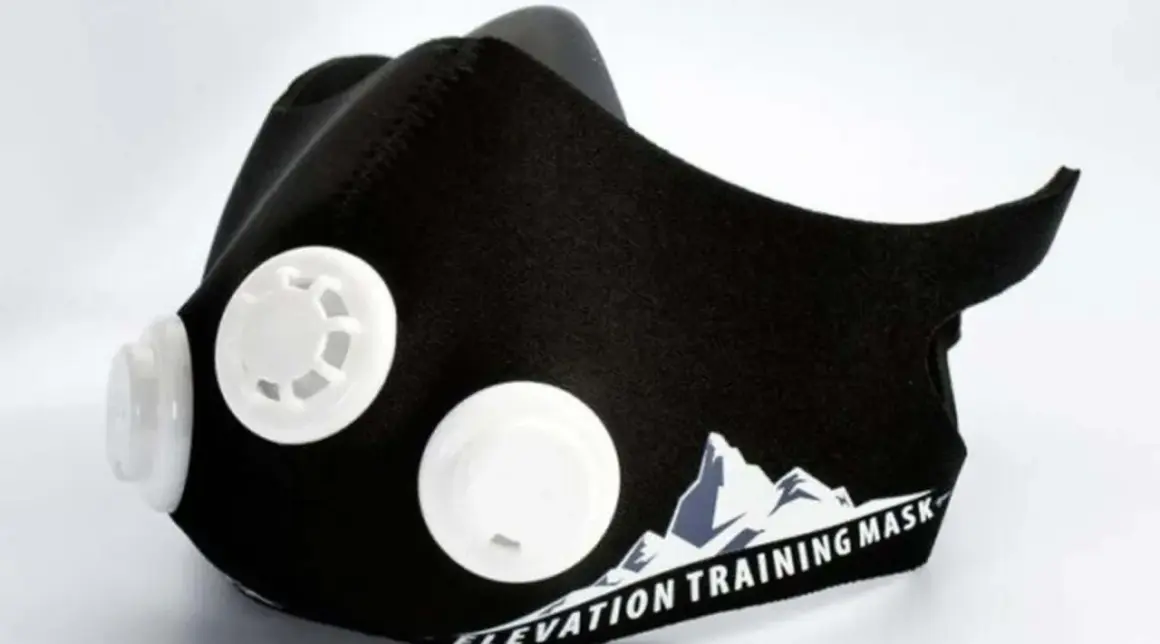
The practical case for a training mask is narrower than most marketing suggests. The real training mask benefits come from added breathing resistance, a higher perceived effort, and a slightly different conditioning stimulus, not from a magical altitude simulation. In this article, I break down what it actually does, where it can help, where it falls short, and how I would use it in combat sports and functional conditioning.
What matters most about training masks
- A training mask makes breathing harder, so the same pace feels more demanding.
- It may help some athletes train respiratory effort tolerance during conditioning work.
- It does not reliably recreate altitude training or trigger the same blood adaptations.
- It can reduce session quality if you use it during technical, maximal, or chaotic efforts.
- The best use case is controlled conditioning, not every workout.

What a training mask actually changes
A training mask is basically a breathing resistor. It does not lower the oxygen percentage in the air the way real altitude does; it simply makes air intake feel more difficult, which raises the respiratory load during exercise. In plain terms, you work harder to breathe, and that can make a normal conditioning session feel more like a red-line effort.
That distinction matters. If your goal is to simulate mountain training, the mask is the wrong tool. If your goal is to make a cardio block feel harsher without adding speed, weight, or total volume, then it can have a place. I view it as a load-management tool for breathing, not a shortcut to better endurance.
The upside you can realistically expect in conditioning
When athletes ask me about the upside, I keep the answer simple: it can make conditioning more demanding in a controlled way. That alone can be useful, especially in combat sports and functional fitness, where the ability to stay composed under respiratory stress matters almost as much as raw engine.
- Higher internal load at the same external pace. If you keep the bike, rower, sled, or circuit speed the same, the session can still feel harder.
- More breathing-muscle work. The diaphragm and intercostals have to work against more resistance, which may improve the sense of respiratory effort tolerance.
- Better discomfort management. Some athletes use it as a way to practice staying calm when breathing gets ugly in later rounds or late intervals.
- Useful on low-skill conditioning days. It fits better on steady intervals, machine work, or simple circuits than on sessions where coordination is the priority.
That is why I think the most honest framing is not “Does it make you fitter overnight?” but “Does it help me target breathing stress in a session that already has a conditioning purpose?” Once you ask the question that way, the next issue becomes what the research actually supports.
Where the evidence draws a hard line
This is the part that gets overstated most often. A training mask can change how hard a workout feels, but the evidence does not consistently show that it improves performance in a way that matches the hype. A PubMed-indexed trial on high-intensity interval training found no 5K performance advantage from adding a flow-restrictive mask, and other studies have reported no meaningful change in lung function, inspiratory strength, or blood markers tied to altitude adaptation.
That does not mean every study is negative. A few newer trials report modest improvements in pulmonary function or peak fitness measures, but the results are mixed enough that I would not call the mask a dependable performance driver. As of 2026, I treat it as a niche conditioning accessory, not a core adaptation tool.
| Claim | What usually happens | Why it matters |
|---|---|---|
| “It simulates altitude” | Not really | The mask restricts airflow, but it does not reproduce true altitude physiology. |
| “It boosts red blood cells” | Not reliably | Blood adaptations seen with real altitude exposure are not consistently seen with masks. |
| “It improves performance” | Sometimes, but inconsistently | Any benefit depends heavily on the athlete, the session, and the training plan. |
| “It makes breathing harder” | Yes | This is the most reliable effect, and it is the main reason athletes use it. |
The cleanest takeaway is this: difficulty is not the same as adaptation. Making a session feel harder can be useful, but only if it improves the right qualities without degrading the work you actually need to do.
How I would use one in a real conditioning session
If I were programming with a mask, I would keep it away from maximal strength work, technical sparring, and any session where timing or movement quality is the real goal. I would use it on low-skill conditioning pieces where the main target is aerobic strain, breathing tolerance, or late-session grit.
- Start with normal warm-up work and test the day without the mask first.
- Use it on short conditioning blocks, not the entire session.
- Keep the first exposures conservative so technique, stride, and posture stay clean.
- Prefer cyclical work such as bike intervals, rower pieces, sled pushes, carries, or simple circuits.
- Remove it immediately if dizziness, headache, chest tightness, or loss of control shows up.
For fighters, that means I would rather see it on a controlled conditioning block than during hard rounds where sloppy breathing can spill into sloppy movement. If the mask changes the quality of the work in a bad way, it has crossed the line from stimulus to distraction.
Training mask, inspiratory trainer, or altitude exposure
This is where a lot of confusion comes from, because people lump three different tools into the same category. They are not the same. A training mask increases airflow resistance during exercise. An inspiratory muscle trainer targets the breathing muscles directly. Actual altitude exposure changes the oxygen environment itself.
| Tool | Main stimulus | Best use case | Main limitation |
|---|---|---|---|
| Training mask | Breathing resistance during movement | Making conditioning feel harder in a controlled way | Performance transfer is inconsistent |
| Inspiratory muscle trainer | Direct resistance for inhalation | Targeted breathing-muscle strengthening | Not a full conditioning session by itself |
| Altitude exposure | Lower ambient oxygen | True acclimatization goals | Expensive, logistically difficult, and not always practical |
If the goal is breathing strength, I prefer a dedicated inspiratory trainer. If the goal is to make a conditioning block nastier without changing the workout structure, the mask can work. If the goal is actual altitude adaptation, only real altitude exposure does that job properly.
Who should skip it and what to use instead
I would be cautious with training masks for anyone who already struggles with breathing restriction, dizziness, or cardiovascular stress. That includes athletes with asthma, COPD, unexplained shortness of breath, a history of fainting, or poor tolerance for hard ventilation. In those cases, the problem is not motivation; it is that the tool may add risk without adding much value.
- Skip it during max-effort lifts, sprint testing, or heavy technical sessions.
- Skip it in hot, humid, or already fatiguing environments unless you have a very specific reason and good coaching control.
- Skip it if it changes posture, bracing, stride mechanics, or throwing mechanics.
- Skip it if you are using it as a substitute for real conditioning work.
Better alternatives are threshold intervals, sled work, repeated efforts on a bike or rower, and, when breathing strength is the actual objective, a structured inspiratory muscle program. Those tools are usually cleaner, easier to measure, and less likely to distort the session.
The version of conditioning I would trust first
If I were building a conditioning block from scratch, I would start with the basics: the right work-to-rest ratio, the right modality, and the right total weekly load. That is what drives adaptation. A training mask can sit on top of that structure, but it should never replace it.
My practical rule is simple. Use the mask only when it supports the purpose of the session, not when it becomes the purpose of the session. That is the point where it stops being a gimmick and becomes a controlled stressor with a job to do. If it helps you train harder without wrecking mechanics or recovery, it has a place; if not, I would leave it out and keep the conditioning more honest.