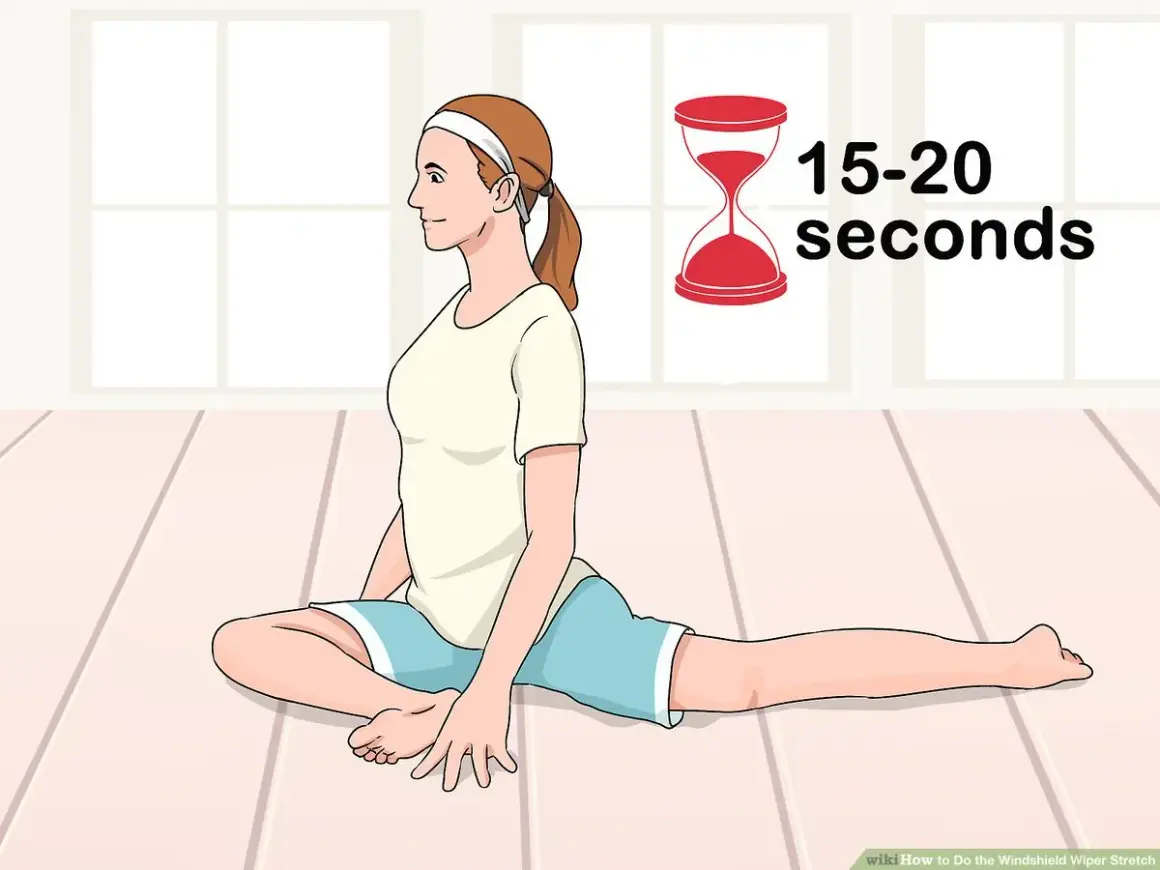
The windshield wipers workout is a rotational core drill that looks simple until you try to keep your torso quiet through the whole arc. I use it when I want obliques, deep abdominal control, and hip movement to work together, especially in conditioning blocks for combat sports and functional training. In this article, I’ll break down what it actually trains, how to do it cleanly, which variation fits your level, and how to program it without turning it into a sloppy lower-back exercise.
The drill works best when control leads the motion
- It trains the obliques, deep core, and hip control more than raw ab burn.
- Bent-knee floor reps are the safest place to start for most people.
- Hanging versions add grip and shoulder demand, but they are not beginner-friendly.
- Quality reps matter more than high reps; once the pelvis starts to yank, the set is over.
- For conditioning, it works best as a short finisher or circuit piece, not a marathon set.
- If your lower back complains, shorten the range or regress the variation immediately.
What this movement really trains
The name comes from the side-to-side sweep, but the real job of the drill is more specific: resisting uncontrolled trunk movement while the legs travel. That means the obliques are doing a lot of the visible work, but the deeper core muscles are helping keep the ribs stacked and the pelvis from spilling open.
In practice, I think of it as a blend of rotation control and anti-extension. Anti-extension simply means keeping the lower back from arching as the legs move away from center. That matters in conditioning because fatigue makes people lose position before they lose effort, and this drill exposes that quickly.
- Obliques help control the drop from side to side.
- Transverse abdominis helps brace the midsection and stabilize the trunk.
- Rectus abdominis keeps the rib cage from flaring and the pelvis from tilting too far forward.
- Hip flexors and adductors help manage the leg position, especially in tighter variations.
- Lats and grip become more relevant in the hanging version.
That is why I like this drill for athletes who need a core that can actually hold shape under movement, not just burn on a mat. Once you understand that goal, form matters more than range, which is where most people go wrong.
How to perform it with clean mechanics
The floor version is the place to learn the pattern. I want the movement slow, deliberate, and symmetrical. One complete left-right cycle counts as one rep, and if you cannot control the arc on the way down, the set is too hard for now.
- Lie on your back with your arms out in a T position for support.
- Lift your legs so the hips and knees are near 90 degrees, or keep the knees bent if you are scaling the drill.
- Brace the midsection before you start the drop.
- Lower both legs toward one side without letting the opposite shoulder fly off the floor.
- Pause briefly, then return through center and repeat to the other side.
- Stop the set the moment your lower back starts to take over or the motion turns into a swing.
I cue athletes to keep the ribs heavy and the movement smooth. A controlled two- to three-second descent is usually a better target than chasing speed, and breathing should stay active instead of locked down. If your shoulders pop up, your arc is too big. If your lower back feels pinched, the lever is too long.
That is the version that teaches control without chaos. If it still feels rough, the right move is not to grind harder; it is to choose a better variation.
Which variation fits your level
There is no reason to start everyone on the same version. I usually match the variation to the athlete’s trunk control, hip mobility, and pull strength rather than trying to force a single standard.
| Variation | Best for | Main benefit | Main limitation |
|---|---|---|---|
| Bent-knee floor version | Beginners and anyone rebuilding control | Lets you learn the pattern with less spinal stress | Lower load and a shorter lever |
| Straight-leg floor version | Intermediate trainees | Longer lever, more demand on the obliques and abs | Easier to cheat with momentum |
| Hanging knee version | Advanced athletes with solid grip and shoulder control | Adds anti-swing work and stronger core tension | Grip and shoulders fatigue fast |
| Hanging straight-leg version | Very advanced trainees | Highest core and leverage challenge | Easy to lose position and overuse momentum |
I rarely start an athlete on the hanging straight-leg version unless pull-up strength, hanging leg raises, and trunk control are already there. The floor version teaches the same idea with much less noise, and that usually leads to better progress over time.
How I program it for conditioning
For conditioning work, the drill should feel demanding but still precise. The best set is not the one that makes you collapse on the floor; it is the one that keeps the reps honest while your breathing rate climbs.
Here is how I like to place it:
- Warm-up or prep: 1 to 2 sets of 5 to 6 slow cycles with bent knees.
- Accessory core work: 2 to 4 sets of 6 to 10 controlled cycles with 30 to 60 seconds of rest.
- Conditioning finisher: 20 to 30 seconds of work, 30 to 45 seconds of rest, for 3 to 5 rounds.
- Advanced hanging work: 3 to 5 sets of 4 to 8 clean cycles, with longer rest if grip or shoulder position starts to slip.
For combat sports, I like pairing it with drills that punish sloppy trunk control in a different way. A simple sequence is windshield wipers, suitcase carries, and short shadowboxing bursts. That keeps the core under tension without turning the whole session into a random ab circuit.
One rule I keep in mind: conditioning should never excuse bad mechanics. If the exercise only works when you rush it, the dose is wrong. I would rather have fewer controlled reps than a pile of fast ones that teach the body to compensate.
Common mistakes that steal the effect
This drill is straightforward, which is exactly why people make the same errors over and over. The problem is not usually lack of effort; it is usually too much effort in the wrong place.
- Using momentum instead of control: slow the descent and shorten the arc.
- Letting the shoulders lift: keep the upper back anchored to the floor.
- Turning it into a hip flexor swing: reset the brace before every rep.
- Dropping too far too soon: reduce range before you reduce tempo.
- Progressing to hanging reps too early: earn the floor version first.
- Holding your breath: exhale under control so the trunk stays organized.
If the lower back starts to pinch, the answer is not to grind through it. Shorten the lever, bend the knees more, or stop the set. That is not being conservative; it is how you keep the drill useful instead of irritating.
The version I’d choose for most athletes
For most people in functional fitness or combat sports, I would start with the bent-knee floor variation twice a week. It gives you the pattern, the trunk control, and enough fatigue to matter without asking the body to stabilize more load than it can currently handle.
When that version stays smooth for several sessions, I would progress to straighter legs or to a hanging knee variation, but only if the athlete can keep the pelvis stable and the shoulders quiet. If the person already has a lot of rotational work in the week from striking, med-ball throws, or heavy unilateral carries, I would keep the volume modest and use the drill as a precision tool rather than a burnout.
The bottom line is simple: the drill earns its place when it builds control under fatigue, not when it just makes the abs sore. If the rep looks clean, the movement is doing its job; if it looks forced, the best progression is usually a smaller arc and a stricter brace.