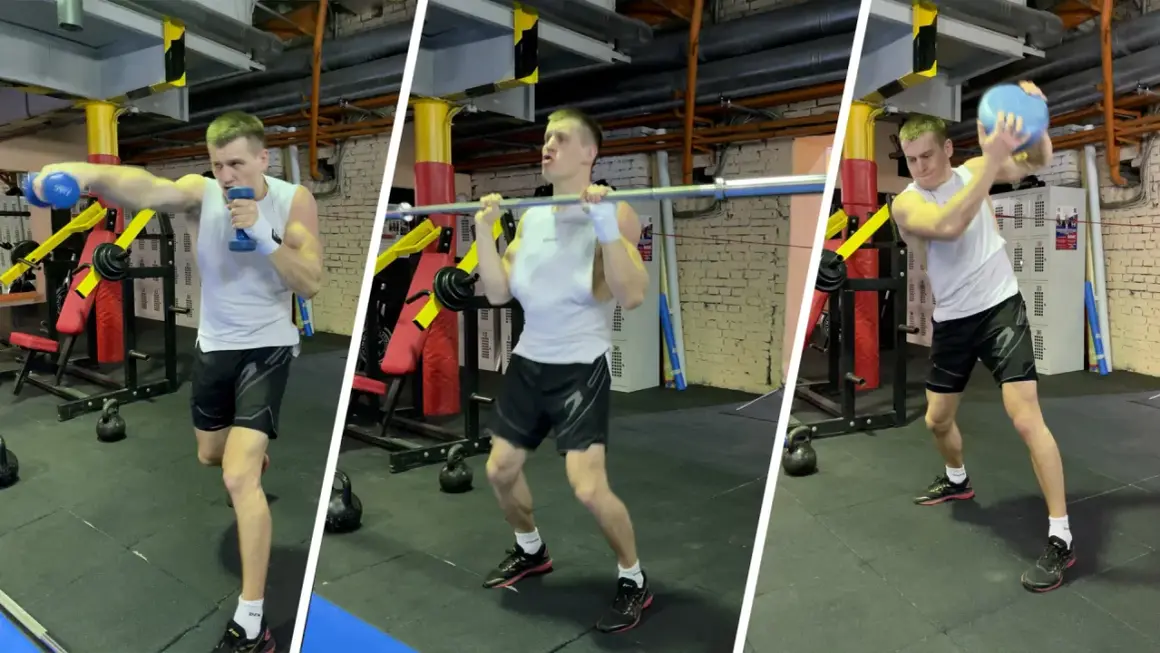
Building punch strength is less about one big muscle and more about how efficiently the whole body delivers force. In this article I break down what actually makes punches feel heavy, which conditioning qualities matter most, which drills carry over, and how to program them without turning training into random exhaustion.
What matters most if you want harder, cleaner punches
- Force starts below the waist. The floor, legs, and hips drive most of the usable output.
- Rotation has to be organized. A strong trunk transfers force; a loose trunk leaks it.
- Speed matters, but only after force is available. Fast technique without a force base usually plateaus.
- Power work needs freshness. If every rep is a grind, you are training fatigue, not explosiveness.
- Conditioning should preserve mechanics. The right work lets you keep form under pressure instead of collapsing late in rounds.
What actually creates punch force
When I look at a hard punch, I do not see an arm action. I see a transfer problem. The force begins with the feet, travels through the legs and hips, gets organized by the trunk, and ends at the fist. If any link is weak, the shot looks busy but lands soft.
That is why the best fighters usually have more than raw upper-body strength. They know how to brace, rotate, and release at the right moment. Timing matters as much as force production, because the goal is not just to push harder, but to deliver that force in a very short window.
In practice, the body behaves like a chain of accelerators and brakes. The lead leg stabilizes, the rear leg drives, the pelvis and torso rotate, and the shoulder and arm transmit what has already been built. A clean punch does not waste energy in extra movement. It stacks force efficiently and sends it forward. That distinction matters, because the next step is training the qualities that make that chain work under pressure.
The conditioning qualities that carry over
If the goal is harder shots, I focus on four things: maximal strength, rate of force development, trunk stiffness, and repeatability. Each one does a different job. Together, they make a punch feel both heavy and sharp.
Maximal strength
Maximal strength is the ceiling. It gives the athlete more force to work with in the first place. I care more about lower-body and total-body strength than endless pressing volume, because the legs and hips are where much of the useful punching force begins. Heavy squats, trap-bar deadlifts, split squats, rows, and controlled pressing all have a place, but they should build a stronger platform, not turn a fighter into a slow lifter.
Rate of force development
Rate of force development, or RFD, is how quickly force shows up. In combat sports, that matters because you rarely have time to ramp up slowly. A fighter who can produce force fast usually hits with more snap and gets to the target before the opponent can reset. This is where jumps, throws, swings, and fast barbell work become useful, provided the speed stays high and the reps stay crisp.
Trunk stiffness and mobility
The trunk has to do two jobs at once: rotate and stay stable. If it is too soft, force leaks. If it is too rigid, rotation gets blocked. I like to think of it as controlled stiffness, not tension for its own sake. Anti-rotation presses, carries, med-ball catches, and well-coached rotational work help build that balance. They teach the body to stay organized while the strike unfolds.
Read Also: Stronger Arms at Home for Women - Your Complete Guide
Repeatability under fatigue
One heavy punch is useful; a hard punch in round five is more valuable. That is where conditioning earns its keep. The right conditioning work helps the athlete repeat output without turning sloppy. I prefer intervals that respect the demands of the sport: short explosive efforts, round-based intervals, and just enough fatigue to challenge recovery without wrecking mechanics. If the speed disappears, the session has gone too far.
Once these qualities are understood, the next question is simple: which drills actually build them without stealing speed from the fight itself?
Exercises and drills I trust most
I do not believe in a magic exercise for harder shots. I do believe in a small group of drills that consistently transfer well when they are programmed with intent.
| Method | What it improves | Example dose | When I use it |
|---|---|---|---|
| Trap-bar deadlift or front squat | Global force production | 3-5 sets of 3-5 reps | Early in a strength block |
| Split squat or rear-foot elevated split squat | Single-leg drive and pelvis control | 3-4 sets of 4-6 reps per side | When stance stability and leg drive need work |
| Medicine ball rotational throw | Explosive rotation | 4-6 sets of 3-5 throws per side | For hooks, crosses, and general snap |
| Push press or landmine press | Upper-body power without slow grinding reps | 3-5 sets of 2-4 reps | When I want force with speed |
| Isometric split squat or anti-rotation press | Bracing and force transfer | 3-5 holds of 10-20 seconds | When the trunk collapses under load |
| Short sprints or sled pushes | Alactic power and repeatability | 6-10 efforts of 5-15 seconds | When conditioning must stay explosive |
The rule is simple: if bar speed drops, cut the set. If technique changes, cut the volume. Power work is about quality, not punishment. I rarely want a fighter turning med-ball throws into a cardio circuit, because the carryover drops fast once the reps become sloppy. The best sessions leave the athlete feeling sharper, not just more tired.
That same idea should shape the week as a whole, because even good drills can be badly arranged.
How I would structure a week
For most fighters, I prefer two strength sessions, one dedicated power session, and one or two conditioning sessions that match the sport instead of drowning it in fatigue. The exact split changes with the phase of training, but the principle stays the same: protect quality and place the hardest work where it can actually be expressed.
- Monday - Heavy lower-body work, pulls, and a few low-volume med-ball throws.
- Tuesday - Skill work and easy aerobic recovery.
- Wednesday - Rotational power plus short sprints or sled work.
- Thursday - Technical boxing or sparring.
- Friday - Full-body strength with moderate volume and one or two explosive lifts.
- Saturday - Round-based conditioning, kept sharp rather than sloppy.
- Sunday - Off or light mobility.
The bigger mistake is not the exact split; it is stacking too many high-fatigue sessions back to back. If the goal is performance, I want enough recovery for bar speed, footwork, and reaction time to stay alive. During camp, that usually means fewer total hard days than people expect, but better ones. In the off-season, I can push volume a little higher, yet I still avoid turning every session into a test of survival. That sets up the next issue, which is why many athletes train hard and still hit softer than they should.
Mistakes that quietly reduce punching power
Most fighters do not lack effort. They leak force in predictable ways. These are the mistakes I see most often.
- Training the arms as if they are the engine. Too much isolation work can inflate fatigue without improving transfer from the ground.
- Turning all conditioning into suffering. If every session is a burn-fest, the nervous system never gets enough freshness to express power.
- Living in the middle rep range for everything. Sets of 8-15 can build useful tissue, but they are a poor default for explosiveness work.
- Using too much load on speed drills. Once mechanics slow down, the drill stops teaching the quality you wanted.
- Ignoring recovery and bodyweight control. Sleep, calories, and shoulder and hip health all affect how hard an athlete can hit on any given day.
The common thread is that fatigue often hides as productivity. The session feels hard, so it must be working. I would rather see a fighter do less work with better intent than more work with broken mechanics. That becomes even clearer when you compare straight punches with hooks and overhands.
Straight shots, hooks, and why the same plan does not fit both
Not every punch asks the body for the same thing. A straight shot rewards linear force transfer and alignment. A hook asks for more rotation, more trunk control, and a cleaner connection between the lead leg, the hips, and the shoulder. Overhands sit somewhere in between, with more vertical drop and a little less obvious linear path.
| Punch type | Main physical demand | Best support work |
|---|---|---|
| Straight punch | Linear force transfer and timing | Squats, split squats, pressing strength, fast straight-line throws |
| Hook | Rotational force and trunk stiffness | Rotational throws, cable chops, anti-rotation work, side-loaded carries |
| Overhand | Angle change and force delivery from above | Landmine presses, med-ball slams, shoulder control, hip-to-hand sequencing |
I do not program all three the same way. Straight punches tend to benefit more from clean leg drive and timing. Hooks need more rotational quality and controlled force through the torso. Once a fighter understands that difference, the training stops feeling random and starts matching the shot they actually want to land. From there, the final step is deciding what to prioritize first so the work compounds instead of competing with itself.
What I would prioritize first in a real training block
If I had to rank the essentials, I would start with mechanics, then force production, then speed expression, then conditioning, and finally recovery support. That order is not glamorous, but it works because it respects how the body actually builds a harder punch.
- Clean technique under low fatigue. If the pattern is wrong, strength only makes the wrong pattern stronger.
- Lower-body strength twice a week. This gives the chain a stronger foundation without overwhelming the athlete.
- Rotational throws and jumps with full recovery. These teach the body to express force quickly.
- Conditioning that preserves speed. Short intervals and round-based work should keep output high, not flatten it.
- Recovery that matches the workload. Sleep, food, and mobility are not extras when power is the target.
If I had to reduce punch strength to one rule, it would be this: build the chain, teach it to fire fast, and keep it fresh enough to work when it matters. That is the difference between looking strong in the gym and landing with real authority in the ring or cage.