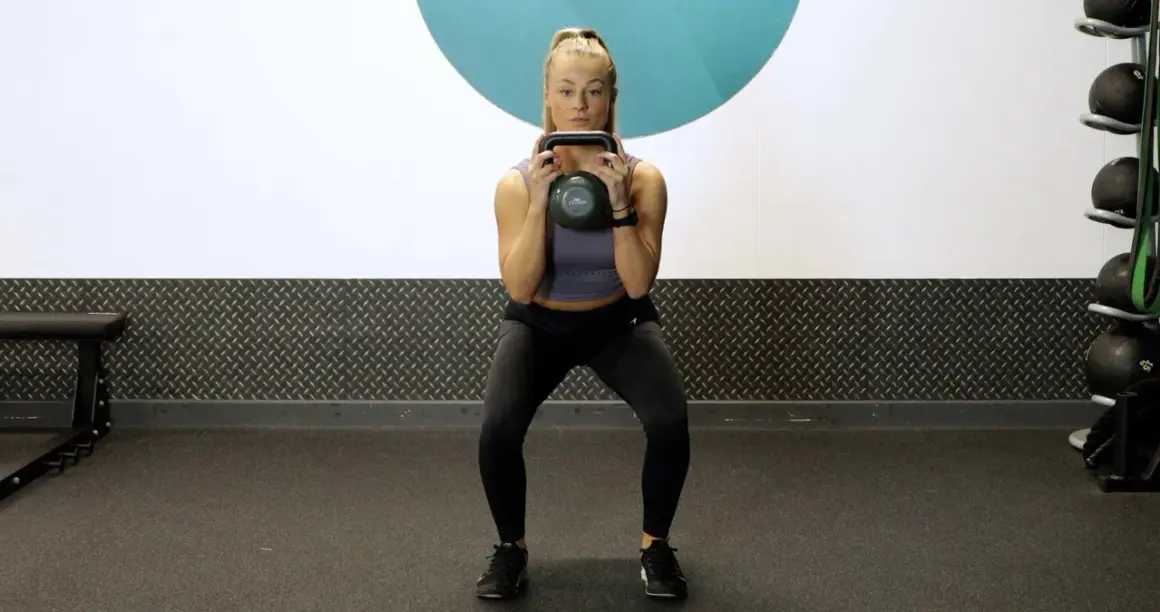
Squat pulses are a small-range squat variation that keeps the legs under tension instead of letting you stand all the way back up between reps. Used well, they are a practical conditioning tool for building local leg endurance, improving control in the bottom position, and finishing a workout without needing equipment. Used badly, they turn into sloppy half-reps that irritate the knees and add very little value.
What matters most before you add pulsing squats to a session
- They are best treated as a conditioning and endurance drill, not as a main strength lift.
- The constant tension makes the quads, glutes, adductors, and trunk work harder for longer.
- Clean range and posture matter more than speed, burn, or rep count.
- They fit well at the end of a lower-body session, in circuits, or as a short finisher after fight conditioning.
- If your torso collapses or your knees cave inward, the set is already too hard.
- For most people, short sets with controlled rest beat endless reps every time.
How squat pulses load the legs differently
The first thing I tell athletes is simple: this drill changes the time under tension. That means the muscles stay active longer because you never fully stand up and unload between reps. The result is a deep, local burn in the quads and glutes, plus a meaningful demand on the core and hip stabilizers.
Compared with full squats, the pulsing version is less about total force production and more about fatigue tolerance. You are training the body to keep position under discomfort, which is useful in conditioning blocks, barre-style work, and fight camps where repeated effort matters more than a single heavy rep.
That difference is why the movement feels more like a burn builder than a strength test, which leads straight into where it actually belongs in a program.
Why they fit conditioning work so well
For conditioning, I like exercises that are simple, repeatable, and easy to scale. Pulsed squats check all three boxes. They raise local muscular fatigue quickly, they can be done anywhere, and they do not require technical setup the way loaded barbell work does.
They also pair well with the kind of fatigue athletes feel in real training. In combat sports, your legs rarely get to be fresh for long. You may be moving, bracing, changing level, and re-setting over and over. Small-range squat work trains that exact idea: hold shape, keep breathing, keep moving.
| Drill | Best use | Main upside | Main limit |
|---|---|---|---|
| Pulsed squats | Finishers, circuits, leg endurance | High time under tension and strong local burn | Limited carryover to maximal strength |
| Full squats | Strength and skill development | Better load progression and movement transfer | Needs more recovery and setup |
| Wall sits | Isometric quad endurance | Simple and very joint-friendly for some athletes | Less dynamic and less carryover to standing movement |
I use that comparison a lot because it keeps expectations realistic. If your goal is brute lower-body strength, this is not your primary tool. If your goal is to keep the legs working hard while the heart rate climbs, it makes a lot more sense.
How to do them with clean mechanics
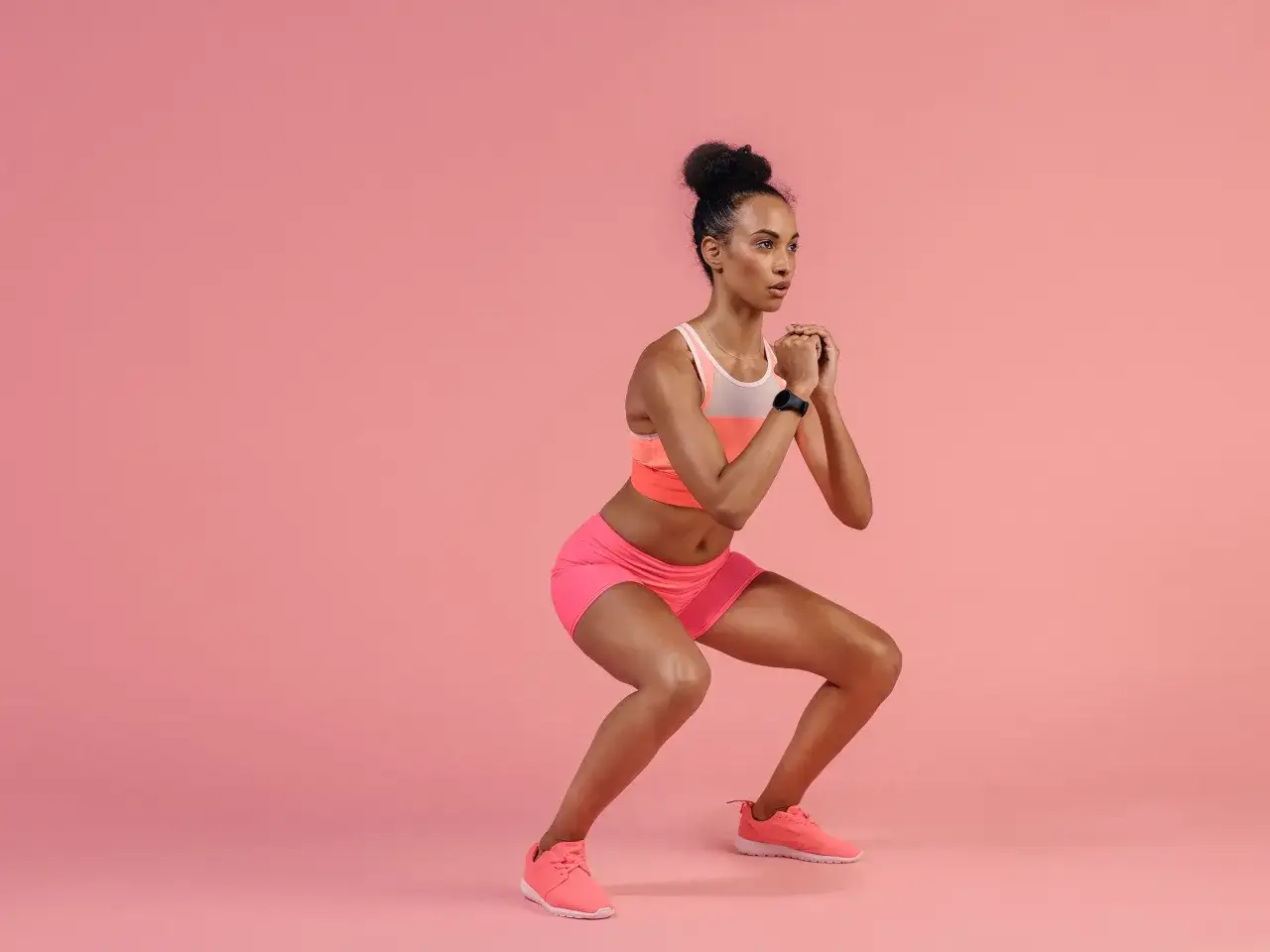
Technique matters more than range. The goal is not to bounce yourself into a deeper mess. It is to stay controlled in the part of the squat where the muscles are working hardest.
- Stand with feet about shoulder-width apart, toes slightly turned out if that feels natural.
- Descend into a squat until your thighs are roughly parallel or just below, depending on your mobility.
- Keep the chest proud, ribs stacked over the pelvis, and pressure spread through the whole foot.
- Move up only a few inches, then lower back down under control.
- Repeat in a steady rhythm without locking out at the top.
- Stop the set when your posture changes, not when your ego says you should keep going.
I prefer a slower pulse pace for most people because it exposes weak positions faster. If the knees drift in or the heels lift, the variation is too aggressive right now or the athlete is trying to rush it. That is a cue to shorten the set, not to force more reps.
How to program them without turning them into junk volume
There is a sweet spot here, and it is smaller than most people think. I usually start with 2 to 4 sets of 8 to 20 pulses, or roughly 20 to 40 seconds of work per set, with 30 to 60 seconds of rest. That is enough to create a strong conditioning effect without turning every set into a form breakdown.
For athletes, I like them in one of three places: after the main lift, inside a circuit, or at the end of a session as a finisher. They are most useful when the legs are already warm and the movement pattern has been trained in a fuller range earlier in the workout.
| Scenario | Suggested dose | Why it works |
|---|---|---|
| Beginner | 1 to 2 sets of 8 to 12 pulses | Enough to learn position without overload |
| General conditioning | 2 to 3 sets of 12 to 20 pulses | Builds local endurance and a measurable burn |
| Fight-camp finisher | 30 to 40 seconds per round for 2 to 4 rounds | Fits the “work while fatigued” demand athletes actually face |
If you want the simplest rule, use time instead of chasing huge rep counts. Once form starts to wobble, the set is over. That keeps the drill honest and leads directly to the mistakes most people make.
Common mistakes that make them less useful
The biggest problem is treating pulses like a loophole for skipping the hard part of the squat. That usually shows up as shallow range, fast bouncing, and a torso that drifts forward until the lower back starts doing the work.
- Bouncing instead of controlling turns the set into momentum, not muscle tension.
- Letting the knees cave inward shifts stress away from the hips and makes the rep look good only from a distance.
- Going too deep too soon can expose ankle, hip, or knee limitations before the athlete is ready.
- Chasing fatigue at all costs often means the set is too long for the training goal.
- Skipping the full squat elsewhere leaves you with a drill that burns but does not build much complete strength.
I think the most useful filter is this: if you cannot repeat the same position for most of the set, the drill has become conditioning in the worst sense, where form is the first thing sacrificed. That is the point where a regression is smarter than more grit.
Variations I actually use in conditioning blocks
Not every pulsing squat should look the same. Small changes in stance and load can shift the emphasis enough to make the drill fit a specific session better.
| Variation | Best for | What changes |
|---|---|---|
| Bodyweight pulses | Beginners and warm-up finishers | Lowest barrier to entry, easiest to monitor |
| Goblet pulses | Stronger lifters needing more trunk demand | Front-loaded position makes bracing more obvious |
| Wide-stance pulses | Inner thigh and glute emphasis | Usually feels more adductor-heavy |
| Split-stance pulses | Unilateral conditioning and balance | Helps expose side-to-side differences fast |
| Wall-squat pulses | Low-impact leg burn | Reduces balance demand and keeps focus on the quads |
The right variation depends on the session. If I want brute leg burn, I keep it simple. If I want more trunk and upper-back demand, I add load. If the athlete needs less impact, I use the wall or a narrower range. That flexibility is a big part of why the drill has stayed popular.
When to leave them out or scale them back
This is where a little discipline matters. Pulsing squats are not ideal when an athlete is already carrying knee pain, when ankle mobility is so limited that the heels keep peeling up, or when a heavy lower-body day has already done the main work.
I also scale them back when someone cannot maintain a neutral spine or keep the pelvis steady. In those cases, a box squat, sit-to-stand, split squat, or wall sit may give a better training effect with less irritation. The point is to train the pattern you want, not to prove you can suffer through a bad rep.
If you are training for conditioning, the best version is the one that lets you repeat quality work on the next round, not the one that empties you in the first 15 seconds.
The small-range drill only works when it has a job
My view is straightforward: pulsing squats are worth using when you want more leg endurance, more local fatigue, and a simple finisher that does not need much space or equipment. They are not a shortcut to stronger full squats, and they should never replace real range, proper loading, or recovery.
Used with that mindset, they become a sharp conditioning tool for fighters, lifters, and anyone who needs the legs to keep working after the burn kicks in. That is the real value here: a small movement with a very specific job, done cleanly enough that the next set still matters.