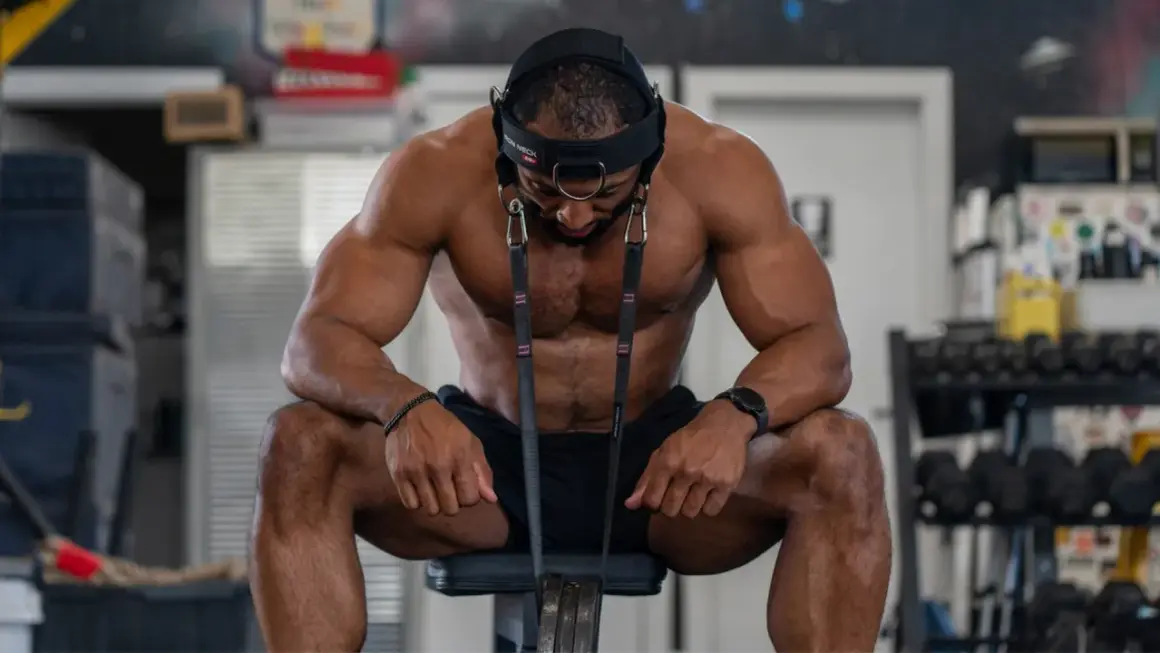
Neck training is one of those small pieces of conditioning that pays off more than its size suggests. This article breaks down head harness exercises, explains what they actually train, and shows how I would program them for combat sports, posture, and general neck resilience without turning the session into a gamble.
The practical takeaways before you load the harness
- A neck harness gives direct resistance to the cervical muscles, which is hard to duplicate with ordinary lifting.
- For most athletes, flexion, extension, and lateral work are the highest-value movements; rotation is usually better handled with bands or manual resistance.
- Two short sessions a week is enough for most people to build useful neck strength and endurance.
- Control matters more than load: if the movement gets jerky or the chin starts flying, the weight is too heavy.
- A good harness should fit securely, stay comfortable, and match your training phase instead of your ego.
Why a neck harness belongs in conditioning work
I treat the neck like a load-bearing bridge: if it is weak, everything above and below it has to compensate. For wrestlers, boxers, MMA athletes, football players, and even desk-bound lifters, stronger cervical muscles can improve head control, reduce the bobblehead effect under contact, and make the upper body feel more stable during hard sessions.
The value of a harness is directness. It lets you load the neck instead of hoping rows, shrugs, or grappling practice cover the gap. That matters because the cervical spine responds best to small, controlled doses of stress. I do not sell neck work as magic injury prevention, but I do see it as one of the cleanest ways to build strength, endurance, and tolerance to force in a specific area that most training plans ignore.
That leads to the next question: which movements are actually worth doing, and which ones look useful but add noise.
The exercises I would prioritize first
A basic harness is best at flexion, extension, and some lateral loading. I rarely start with aggressive rotation or bridge variations unless the athlete already has solid neck control, because the goal is quality tension, not dramatic movement.
| Exercise | What it trains | Why I use it | Starter dose | Key cue |
|---|---|---|---|---|
| Neck flexion | Front-of-neck strength and control | Helps with chin position and resisting front pressure | 2-3 sets of 10-15 reps | Move through a small range and keep the jaw relaxed |
| Neck extension | Posterior cervical chain | The most direct harness pattern for many athletes | 2-4 sets of 10-15 reps | Think "nod," not "throw the head back" |
| Lateral flexion | Side neck muscles and stabilizers | Useful for clinch work and one-sided contact | 2-3 sets of 8-12 reps per side | Keep the shoulders level |
| Isometric holds | All directions without movement | Good for beginners, in-camp work, or light recovery days | 3 rounds of 10-15 seconds each way | Resist without letting the head drift |
| Manual or band-resisted rotation | Rotators and deep stabilizers | Cleaner than forcing rotation with a plate-loaded harness | 2-3 sets of 8-10 reps per side | Keep it smooth and light |
How to program it without overdoing it
For most athletes, the winning dose is boring in the best possible way: two short sessions a week, a few controlled sets, and enough recovery to keep the neck fresh for skill work. If I were starting from scratch, I would keep each session to 10-15 minutes and stop with at least one clean rep still in reserve.
| Training phase | Frequency | Working sets | Rep or hold range | Goal |
|---|---|---|---|---|
| Beginner | 1-2 times per week | 4-6 total sets | 10-12 reps or 10-second holds | Learn control and build tolerance |
| Off-season | 2 times per week | 6-10 total sets | 8-15 reps or 10-15-second holds | Add gradual strength and endurance |
| Fight camp or season | 1-2 times per week | 3-6 total sets | Light to moderate, never grinding | Maintain without draining recovery |
If I had to reduce the process to a simple rule, it would be this: add repetitions before you add load. Small increases matter more in neck work than they do in big compound lifts, because the margin for sloppy form is much smaller. I also like to place the last hard session several days before competition so the area feels fresh rather than thick and tired.
The plan works best when the basics stay clean, which is exactly where most people make the same avoidable mistakes.
The mistakes that waste the session or create needless risk
Most bad neck sessions fail for the same reason: the athlete tries to train the ego instead of the tissue. When that happens, the harness becomes a way to force motion instead of a way to build control.
- Starting too heavy - the neck is not a place to chase the biggest plate in the gym. Light loads often expose the real weakness faster.
- Jerking through the rep - if the weight swings, the target muscles are no longer doing the work cleanly.
- Hyperextending the neck - extension should look modest and deliberate, not like a full head throw.
- Letting the shoulders shrug up - that usually means the upper traps are stealing the job from the deeper cervical muscles.
- Training to failure - once form breaks down, the risk-to-reward ratio gets worse very quickly.
- Ignoring warning signs - dizziness, tingling, radiating pain, visual changes, or unusual headache patterns are not "good soreness." They are a stop sign.
I am also careful with athletes who are coming back from a recent concussion, cervical injury, or nerve symptoms. In those cases, the question is not whether the harness is useful; it is whether it is appropriate right now. That distinction matters, and it leads directly into equipment choice.
Choosing the right harness and setup for your goals
Not every neck tool does the same job. A simple plate-loaded harness is excellent for direct extension and flexion work, but a band-based or multi-directional system is easier to adjust and usually friendlier for beginners. Manual resistance and isometric drills sit even lower on the risk scale, while bridge work is more specific and more demanding.
| Setup | Best for | Strengths | Limits |
|---|---|---|---|
| Plate-loaded harness | Simple flexion and extension loading | Cheap, direct, easy to progress in small steps | Less versatile and less forgiving if you rush the load |
| Band-based multi-directional system | Athletes who want wider movement options | Smoother resistance, easier to scale, better for beginners | Usually costs more and may feel less "hardcore" than it looks |
| Manual resistance or isometrics | Warm-ups, travel, rehab-adjacent work, in-season maintenance | Low load, highly controllable, easy to recover from | Harder to measure progress precisely |
| Bridges | Advanced wrestlers with strong neck control | Very specific to certain grappling demands | Higher technical demand and less friendly for general conditioning |
Fit matters more than marketing. I want the harness to sit securely, spread pressure well, and stay in place when the head moves, without digging into the ears or jaw. If it shifts, pinches, or forces you to compensate through the upper back, the setup is wrong for you even if the product looks premium.
Once the tool matches the goal, the final step is putting it in the week so it supports training instead of competing with it.
Where it fits in a real weekly plan
I prefer neck work as an accessory piece, not a headline act. For combat athletes, that usually means placing it after technical work or after lifting, when the nervous system is already warm and the session can stay controlled. I would not put a hard neck workout immediately before sparring, and I would keep the last heavier session a few days away from competition.
- For wrestlers and MMA athletes - use 2 short sessions in the off-season, then cut back to 1 maintenance session when training gets intense.
- For boxers - keep the work controlled and modest, because the goal is head stability and endurance, not fatigue that ruins speed sessions.
- For football or rugby players - pair harness work with isometrics and upper-back training so the neck is supported from multiple angles.
- For general lifters - two exercises, twice a week, is usually enough unless you have a sport reason to do more.
If I were building a simple week, I would use one day for flexion and extension, another day for lateral work and isometrics, and I would keep the total volume modest enough that the next session still feels crisp. That approach is unglamorous, but it is usually what works.
Before I finish, there is one last checklist I use to decide whether the session should happen at all.
The checklist I use before every neck session
Before I put on the harness, I run through the same quick check: the neck should be warm, the movement should feel controlled, and the load should look almost boring on the first set. If any rep turns into a shrug, a jerk, or a grimace-driven grind, I cut the weight immediately.
- Can I keep a light chin tuck without straining?
- Can I move slowly through a small, clean range?
- Do I feel normal muscular effort rather than sharp pain or nerve symptoms?
- Is this session helping recovery and resilience, not just adding fatigue?
- Would I still want to train hard after this, or is the neck work already too much?
That is the standard I would use for any well-designed neck harness session. Keep it controlled, keep it modest, and let the progress come from consistency rather than bravado.