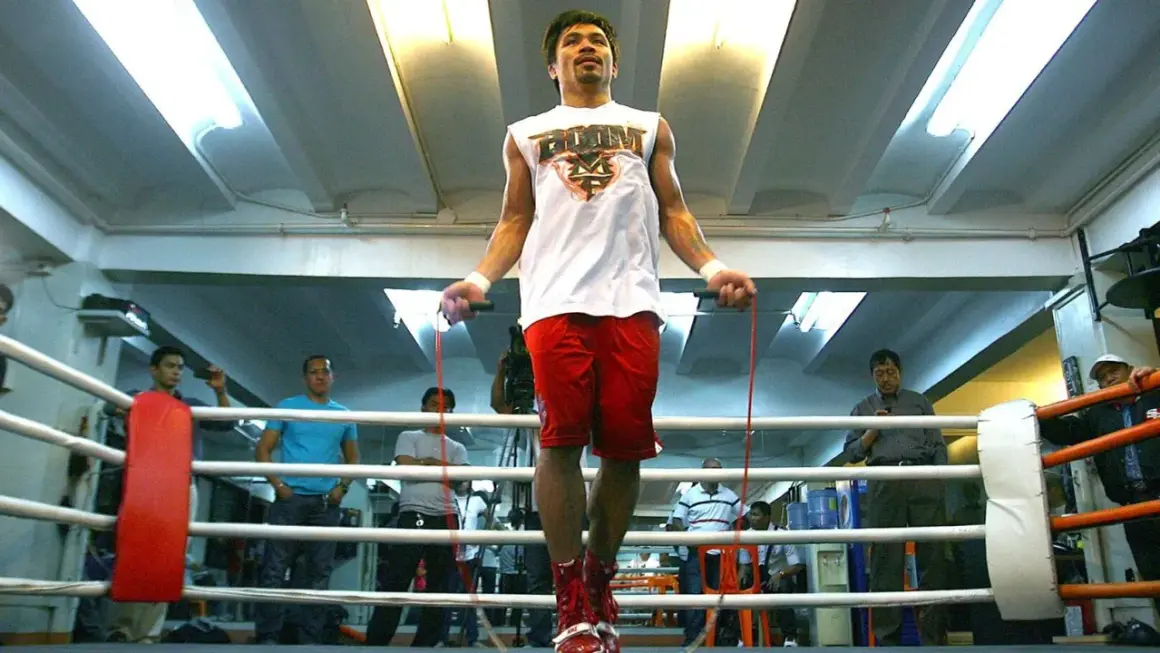
The rope builds fight-ready conditioning fast
- It trains cardio, footwork, and coordination in one drill instead of three separate ones.
- It teaches you to stay relaxed while your heart rate climbs, which matters late in a round.
- It can improve lower-leg durability, but only if volume rises gradually.
- It mirrors the bounce, timing, and rhythm that boxing asks for.
- It works best as part of a broader camp, not as the only conditioning tool.
Why the rope still matters in boxing
When I look at good boxing conditioning, I want drills that do more than make a fighter tired. Jump rope works because it is a plyometric drill, meaning it trains quick stretch-and-release actions in the muscles and tendons. That matters in boxing, where you are constantly absorbing, redirecting, and reapplying force while staying balanced.
It also teaches something a treadmill never will: how to keep your rhythm under pressure. The rope forces you to coordinate hands, feet, breathing, and posture at the same time. If your timing is off, the rope tells you immediately. If your upper body gets tense, the rhythm falls apart. If you start hopping too high, the drill becomes inefficient. That instant feedback is one reason coaches keep coming back to it.
I also like the rope because it is easy to scale. A beginner can use it for short intervals and learn basic foot patterns. A fighter in camp can use it to sharpen pace, build round-specific conditioning, and rehearse the kind of bounce that makes movement in the ring feel lighter. That leads to the next question: what does the rope train better than plain cardio?
What rope work trains better than plain cardio
Running still has a place, and I would not throw it out. But rope work gives a different return. It combines conditioning with movement quality, which is why it feels so specific to boxing. Here is the cleanest comparison I can make:
| Tool | What it does best | Where it falls short | Best use in a boxing camp |
|---|---|---|---|
| Jump rope | Rhythm, foot speed, cardio, light contact with the floor | Does not teach punching, defense, or ring decision-making | Warm-up, conditioning rounds, footwork rhythm |
| Running | Aerobic base and general endurance | Less specific to boxing movement and timing | Extra conditioning and mental grind |
| Shadowboxing | Technique, balance, defense, and movement patterns | Usually lower cardio density than rope work | Skill work and ring movement practice |
| Heavy bag rounds | Power output, punch endurance, combination work | Less foot rhythm than the rope | Fight-specific conditioning and striking volume |
The simplest way to read that table is this: rope work is not a replacement for everything else, but it gives you a very efficient mix of engine and movement. A steady run can build base endurance. Shadowboxing can sharpen technique. Bag work can harden the hands and lungs. The rope sits in the middle and ties those qualities together, which is why it remains such a useful boxing tool. From there, the real value depends on how you structure the rounds.
How boxers use jump rope in actual conditioning rounds
Most boxing gyms do not treat rope work like a random cardio block. They use rounds, because rounds match the way fights are fought. In practice, that often means 2- or 3-minute efforts with short rest, although the exact structure changes by experience level and training phase.
- Beginner pace - 5 to 8 rounds of 1 minute with 30 to 45 seconds of rest. The focus should be clean single-unders, relaxed shoulders, and consistent timing.
- Intermediate pace - 4 to 6 rounds of 2 minutes with about 30 seconds of rest. Mix the boxer step, alternate-foot rhythm, side-to-side hops, and short speed bursts.
- Camp pace - 4 to 8 rounds of 3 minutes with 45 to 60 seconds of rest. Add faster segments near the end of each round, then settle back into control.
The exact round count matters less than the quality of the movement. I would rather see a fighter complete fewer clean rounds than grind out sloppy, high-bouncing reps. Keep the jumps low, let the wrists drive the rope, and try to breathe through the effort instead of holding tension in the neck and shoulders. That style builds usable conditioning, not just fatigue, and it sets up the next problem to avoid: common mistakes.
The mistakes that blunt the benefit
Jump rope is simple, but it is easy to do badly. The drill stops paying off when it turns into frantic bouncing or sloppy arm work. I see the same errors over and over:
- Jumping too high - The rope only needs a small amount of clearance. Big jumps waste energy and hammer the calves.
- Using the shoulders instead of the wrists - The rope should turn from the hands, not from a full upper-body swing.
- Rushing every round - Fast is useful, but every round should not look like a sprint.
- Ignoring the surface - Concrete for long sessions is a bad trade. A mat, wood floor, or other forgiving surface is better.
- Chasing tricks too early - Double-unders and fancy footwork are useful, but only after basic timing is stable.
- Treating it as pure punishment - Rope work should build movement skill along with fatigue tolerance, not just make your legs hurt.
How to start without beating up your lower legs
If you are new to jump rope, the mistake is usually not effort. It is too much volume, too soon, on a body that is not ready for repeated bouncing. I would start with short, controlled work and let the tissues adapt.
- Keep the first sessions short - Start with 3 to 5 total minutes of work, broken into small intervals if needed.
- Stay low to the floor - The less you jump, the less your calves and Achilles have to absorb.
- Choose the right rope length - A simple check is to stand on the middle of the rope; the handles should reach around chest to armpit height.
- Use a forgiving surface - A gym mat, wood floor, or similar surface is better than hard concrete for repeated sessions.
- Build frequency before intensity - Two to four sessions a week is enough to create progress without overloading your legs.
- Leave double-unders for later - Double-unders, where the rope passes under your feet twice in one jump, are useful but not necessary for beginners.
If your shins, Achilles, or feet start complaining, back off before the pain becomes a pattern. The goal is to make the rope sustainable, because the drill is only useful if you can keep using it week after week. That brings us to the bigger picture: where it belongs inside a complete boxing camp.
How to make the rope pay off in a full boxing camp
I think the rope works best when it has a job. Use it as a warm-up on skill days, a conditioning block on non-sparring days, and a finisher only when your legs are already adapted. The point is not to become great at jump rope for its own sake. The point is to carry better foot rhythm, calmer breathing, and cleaner movement into pads, sparring, and bag work.
- Use it before technical work to get the feet and timing awake.
- Use it on conditioning days to build round-by-round output.
- Use it after skill work if you want a short, demanding finisher.
- Keep the pace technical when fatigue rises, instead of turning every round into a scramble.
If I had to reduce the whole thing to one rule, it would be this: keep the rope honest. Low jumps, clean rhythm, gradual volume, and a place inside a bigger training plan will do more for you than flashy tricks or mindless mileage. That is why the drill has lasted so long in boxing, and why it still earns a place in modern conditioning work.