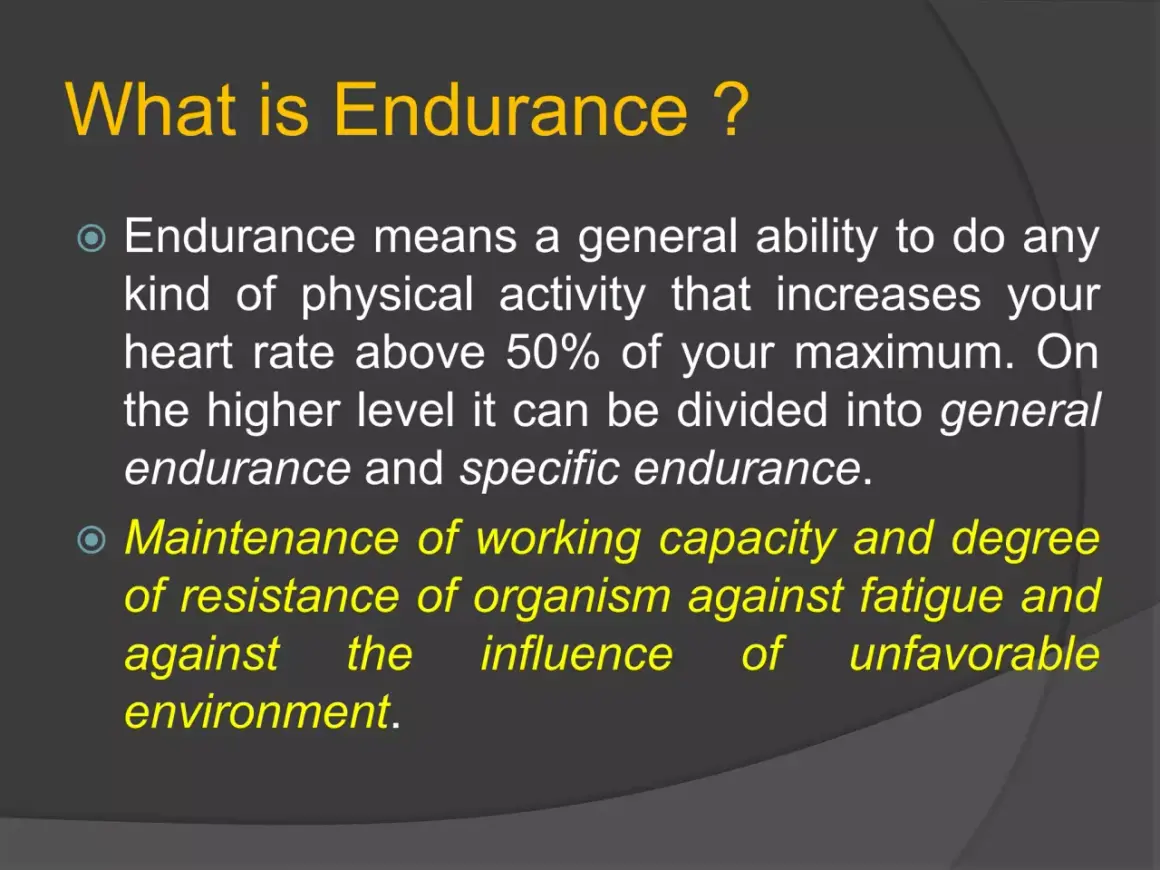
Endurance is the ability to sustain effort, recover well, and keep your form useful under fatigue
- Endurance in fitness usually includes both cardiovascular endurance and muscular endurance.
- Stamina is a broader everyday word, but training usually breaks the idea into more specific pieces.
- For many adults, a solid base is 150 minutes of moderate aerobic work per week plus two strength sessions.
- In conditioning, the real test is whether pace, breathing, and movement quality hold up across repeated work.
- Progress shows up as lower effort for the same task, faster recovery between rounds, and fewer technical breakdowns.
What endurance actually means in physical fitness
Endurance is not just “lasting longer.” It is the ability to keep producing useful output while fatigue is rising. That output can be steady, like a jog or row, or repeated, like push-ups, bag work, or carries.
When I explain it to athletes, I break it into two questions: can your heart and lungs keep supplying the work, and can the working muscles keep contracting without their quality dropping too fast? That is why endurance sits at the center of conditioning instead of on the edges of it. The next step is separating that from the more casual word people use in everyday speech.
Endurance and stamina are close but not identical
Stamina is the broader, more informal term. People use it to describe breathing, muscle fatigue, mental toughness, or even confidence late in a workout. Endurance is more precise. It refers to the measurable capacity to sustain effort.
I separate them because the fix is different. If the limiter is the lungs, the answer is usually more aerobic work and better pacing. If the limiter is the local muscles, you need more muscular endurance, better movement efficiency, or less unnecessary load. That distinction matters once you start choosing how to train.
The two forms of endurance that matter most
Most endurance training falls into one of two buckets.
| Type | What it means | What usually limits it | Examples |
|---|---|---|---|
| Cardiovascular endurance | The ability of the heart, lungs, and blood vessels to support work over time | Breathing demand, heart rate, pacing, and fuel use | Running, cycling, rowing, jump rope, repeated shuttle work |
| Muscular endurance | The ability of a muscle or muscle group to keep contracting or holding tension | Local muscle fatigue, grip, posture, and movement quality | Push-ups, squats, carries, clinch work, high-rep lifts |
The two overlap, but they are not the same problem. A fighter can gas because the engine is underbuilt, because the legs are failing, or because both are happening at once. Once you know which one is breaking first, conditioning stops feeling random and starts looking like a plan.
How endurance shows up in conditioning
In conditioning, endurance is the trait that lets skill survive fatigue. A boxer still needs to throw clean punches in the fourth round. A wrestler still needs to chain effort after a scramble. A functional athlete still needs to move well when the clock and the load are both working against them.
This is where pure cardio and real conditioning diverge. Cardio helps the engine, but conditioning has to respect transitions, grip, posture, change of direction, and decision-making under stress. That is why a sled push, a bag round, a loaded carry, or a rowing interval can tell you more than a comfortable steady jog. In coaching language, that repeatability is often called work capacity, which is just your ability to do useful work before performance falls off. The next question is how to train all of that without turning every session into a mess.
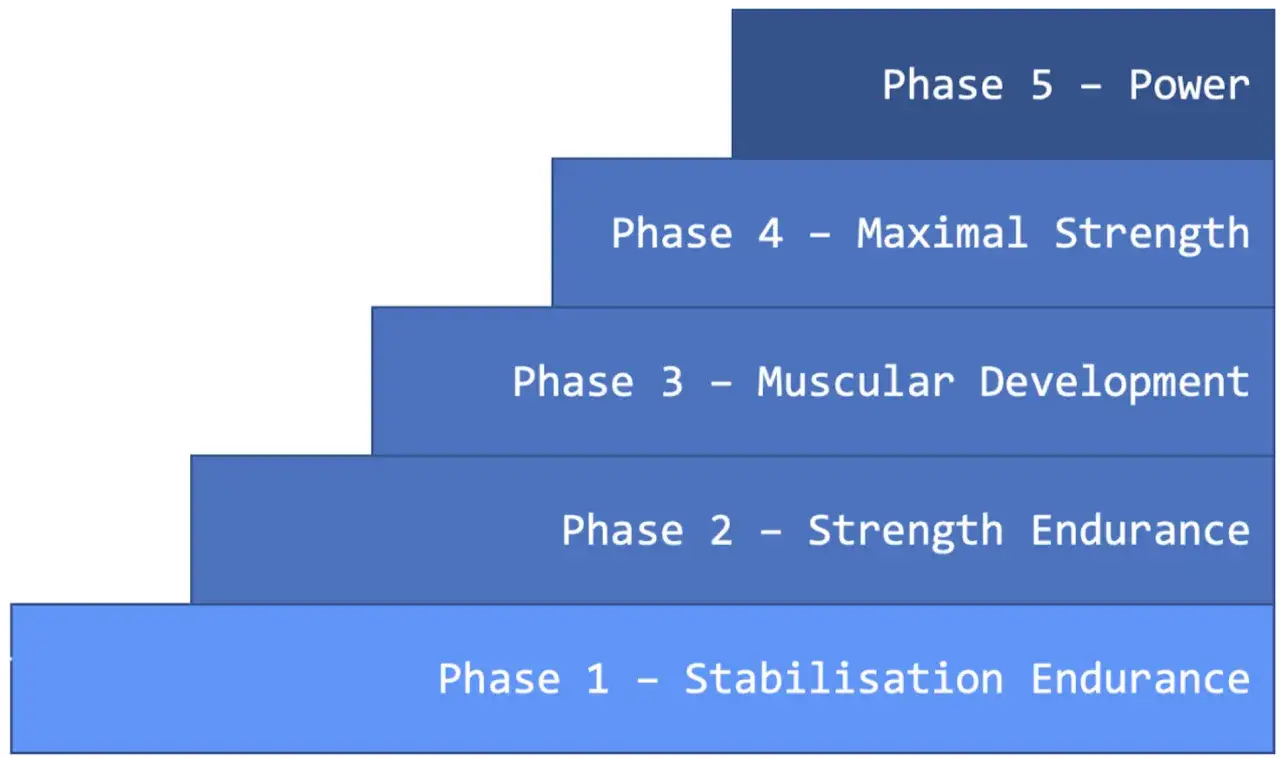
How to build endurance without burning out
The cleanest way to build endurance is to raise your base first, then add harder work on top. For many adults, the ACSM and CDC floor of 150 minutes of moderate aerobic work per week plus two days of strength and endurance training is a sensible starting point. From there, I like a simple structure: two or three moderate sessions of 20 to 45 minutes, one harder interval or round-based session, and the rest of the week protected for recovery and strength.
- Use steady work to build the base. If you can talk in sentences during the session, you are usually in the right range for aerobic development.
- Use intervals to raise repeatability. Short hard bouts with planned rest teach you to recover and go again, which matters in combat sports and circuits.
- Make some work specific. A fighter needs rounds, footwork, and bursts. A lifter or functional athlete needs carries, hinges, pushes, and transitions.
- Keep an eye on recovery. If every session feels maximal, the problem is often volume control, not effort.
For interval work, I often start with 6 to 10 rounds of 30 seconds hard and 60 to 90 seconds easy, or 3 to 5 sport-length rounds of 2 to 3 minutes if the goal is fight conditioning. I am skeptical of programs that chase exhaustion every day. Fatigue is not the same thing as adaptation. The best conditioning plan leaves you able to train again, and that is what makes the improvement stick. Once the work is in place, the next step is checking whether it is actually moving the needle.
How to know whether the work is actually improving your fitness
Progress shows up faster than many people think, but only if you measure the right things. One useful tool is RPE, or rate of perceived exertion, which is simply a 1-to-10 rating of how hard a session feels. If the same workout drops from an 8 to a 6 while your pace or load stays the same, endurance is improving.
- Breathing settles faster. You recover between rounds or sets instead of carrying the same panic into the next effort.
- Technique holds longer. Form is one of the first things to break when conditioning is weak.
- Output stays more repeatable. The second and third effort look more like the first.
- Perceived effort falls. The work still matters, but it costs less.
- Resting readiness improves. You feel less flat before training and less wrecked afterward.
I would not obsess over one number. Heart-rate data, pace, and work totals can all help, but the real question is whether you can do useful work again sooner and with better quality. That is also where a lot of people quietly get in their own way.
The mistakes that quietly slow progress
The most common mistake is doing too much hard conditioning and not enough base work. The second is confusing sweat with progress. I also see athletes repeat the same circuit forever, which leads to familiarity rather than adaptation.
- They test themselves every session instead of training.
- They ignore strength work and wonder why posture collapses under fatigue.
- They build cardio but never train the specific demands of their sport.
- They let recovery slide, then blame the program when performance stalls.
Another trap is treating endurance as a single quality. It is not. A good engine, durable muscles, and the ability to recover between bursts all matter, but they do not always improve at the same speed. That is why the last piece is knowing what I would prioritize for fighters and functional athletes in the real world.
What I would focus on first for fighters and functional athletes
If I were building conditioning for a fighter or a functional athlete, I would start with three things: a steady aerobic base, repeatable sport-specific rounds, and enough recovery to let both of those adapt. That order matters because an athlete who can only survive one brutal session is not really conditioned yet, just drained.
The simplest rule I trust is this: build enough endurance that your form, breathing, and judgment stay intact under pressure. Once that happens, the hard work starts paying off in the way people actually want it to, with more control late in the session, more repeatable effort, and less panic when fatigue shows up. That is the version of conditioning I care about most.