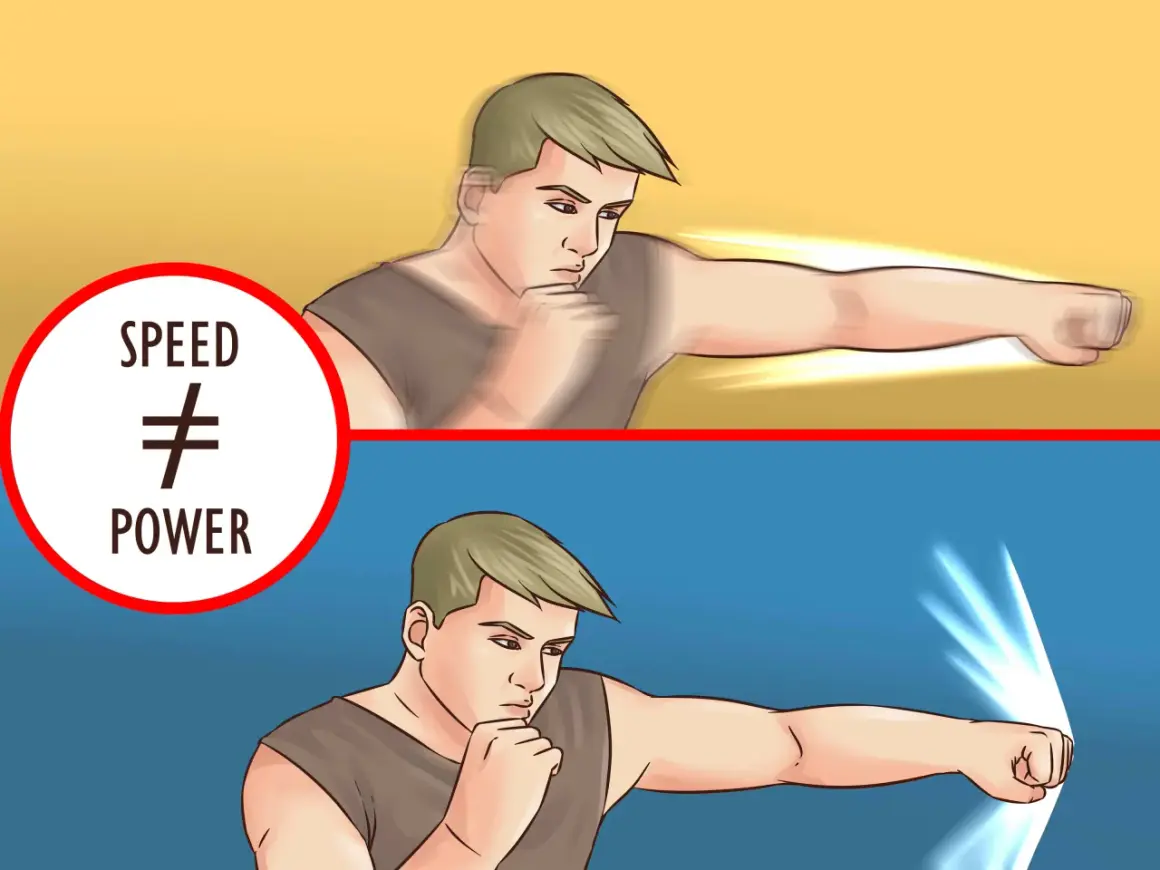
A strong grip can help a fighter keep the wrist stacked, the fist organized, and the hand stable at impact. So, does grip strength increase punching power? Only indirectly, and only up to a point. In this article I break down what grip strength actually changes, what the research suggests, and how I would train it without losing sight of the bigger engine behind a harder punch.
Grip strength supports a punch, but it does not create most of the force
- Most punching power comes from the ground up through the legs, hips, trunk, shoulder, and timing.
- Grip strength mainly helps with transfer by keeping the wrist and fist stable at contact.
- Better grip can reduce force leakage, but it is not a shortcut to knockout power.
- Targeted grip work is useful when it improves stability, endurance, and hand control.
- Overdoing grip training can backfire by fatiguing the forearms and slowing the hands.
Grip strength helps, but it is not the main engine
My short answer is this: grip strength is a support quality, not the primary source of punching power. A firmer grip can help you keep the wrist from collapsing, keep the knuckles behind the line of force, and stay cleaner at impact. That matters, because a punch is only as good as the energy you can transfer into the target.
What it does not do is replace the real power producers. If the legs do not drive, the hips do not rotate, and the trunk does not transmit force efficiently, a stronger hand will not magically make the punch heavier. I think of grip the same way I think of a strong brake on a car: useful, sometimes essential, but not the thing that makes the car fast. The next step is understanding where the force actually comes from.
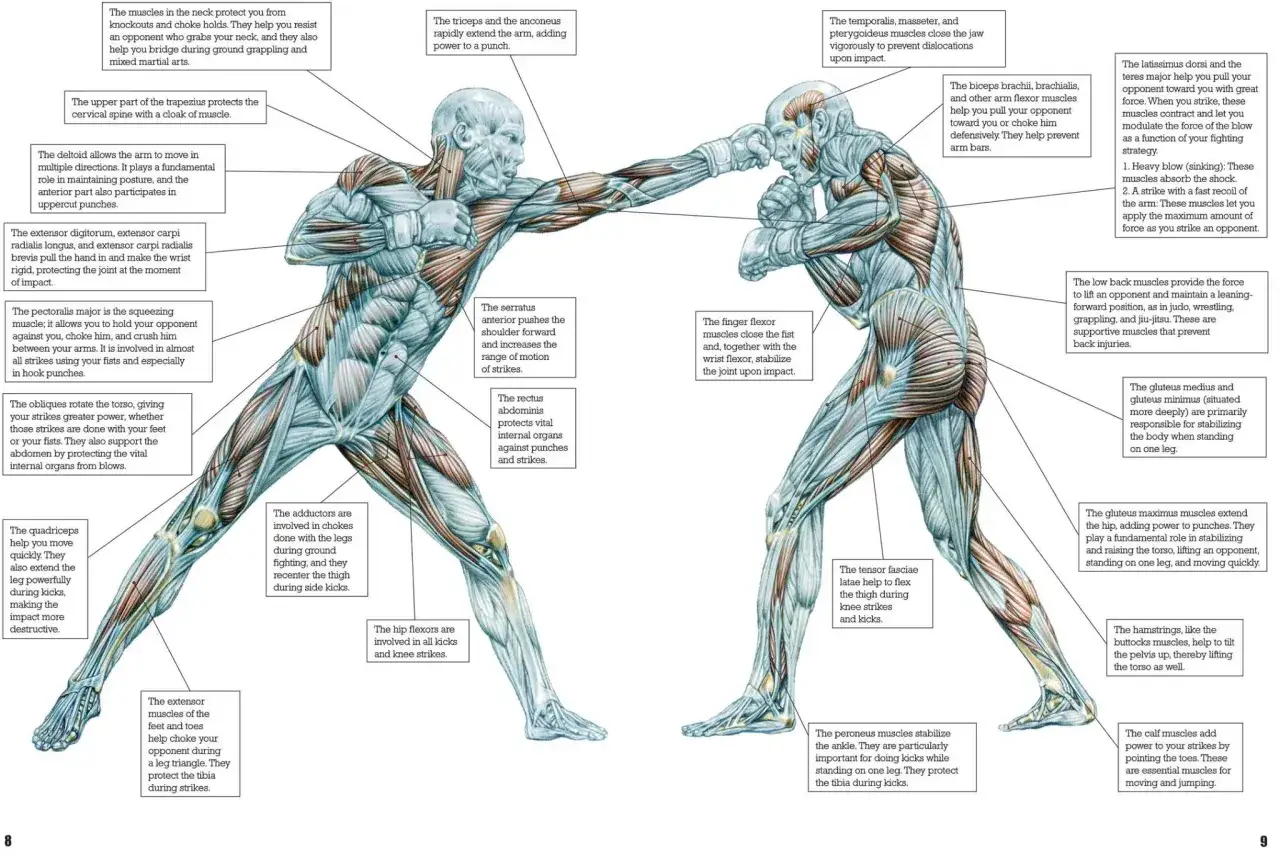
How punch force is really built
A hard punch is a kinetic chain problem, which means force moves through linked body segments rather than coming from one muscle group alone. In practical terms, the floor drives the body, the legs and hips generate momentum, the trunk transfers it, the shoulder and arm deliver it, and the wrist and hand make sure that force arrives cleanly.
The floor-to-fist chain
The best punches start with pressure into the floor. That pressure travels through the legs, then into the hips, then across the trunk as rotation and bracing work together. If that sequence is efficient, the arm is not doing all the work by itself. The arm becomes the final delivery system, not the whole engine.
Read Also: Boxing Mental Conditioning - Master the Mind for Victory
Where grip fits in
Grip enters at the end of the chain. Its job is to keep the fist organized so the impact is transmitted through a stable structure instead of a loose one. That is why I see grip as an energy-transfer quality. It can help you keep more of the force you already created, but it does not create most of that force on its own. Once that is clear, it becomes easier to judge what grip training is actually worth doing.
What grip strength can actually improve
When grip strength matters for punching, it usually shows up in smaller but still meaningful ways. The biggest payoff is not raw knockout force. It is cleaner contact, better stability, and less breakdown late in a round.
| Area | What stronger grip changes | Impact on punching power |
|---|---|---|
| Wrist alignment | Keeps the wrist stacked behind the fist | Indirect, but important for force transfer and injury control |
| Fist integrity | Helps prevent the hand from collapsing on contact | Small to moderate effect on how cleanly force reaches the target |
| Forearm endurance | Lets you keep form when fatigue builds | More useful for repeated shots than for one max-effort punch |
| Bag and pad control | Improves how stable the hand feels under load | Helps technical consistency more than explosive output |
| Clinch and hand fighting | Improves control in grappling-heavy exchanges | More relevant in MMA than in pure boxing power work |
That is why I rarely talk about grip as a knockout variable. I talk about it as a quality multiplier. If your punch mechanics are already solid, better grip can help you express them more cleanly. If your mechanics are poor, grip work will not rescue the shot. That leads naturally to what the research actually shows in boxers.
What the research says about boxers
The research is fairly consistent on one big point: punching power is tied more strongly to whole-body strength, power, and body structure than to isolated hand work. Recent studies on trained boxers have found punch impact to be associated with lower-body strength and power, trunk contribution, and physical traits such as height, arm span, and body mass. In one study, height and arm span explained a meaningful share of the variance in straight and hook punch impact, which tells you how much leverage and body dimensions matter.
The picture around grip is more nuanced. Some boxer samples do show relationships between handgrip measures and punching outcomes, but I would read that as part of a broader profile rather than proof that squeezing harder makes every punch heavier. In other words, grip can correlate with better fighters because better fighters tend to be stronger overall, more stable, and better conditioned. That is not the same as saying grip is the main driver of impact force.
- Lower-body strength and power show up repeatedly as major contributors.
- Upper-body strength alone is less predictive than many athletes expect.
- Anthropometrics like height, reach, and body mass often matter more than people want to admit.
- Grip strength may help, but mostly as part of a larger system of force transfer.
That makes the conclusion pretty practical: if you want harder punches, build the chain first and use grip to support it. From there, the question becomes how to train grip without wasting time.
How I would train grip for boxing without overdoing it
If I were programming for a pure striker, I would keep grip work short, targeted, and tied to the rest of the conditioning plan. Two or three sessions a week is enough for most fighters. The goal is not to chase a maximal squeeze all day; the goal is to improve stability, endurance, and the ability to hold shape under load.
- Farmer’s carries for 3 to 4 sets of 20 to 40 meters, with a tall torso and clean posture.
- Dead hangs or towel hangs for 2 to 3 sets of 20 to 40 seconds to build forearm endurance.
- Pronation and supination work with a hammer, mace, or light club for 2 to 3 sets of 8 to 12 reps per side.
- Thick-handle holds or rows for 2 to 3 sets of 15 to 30 seconds if you want a more functional grip stimulus.
- Light wrist extension work for 2 to 3 sets of 12 to 20 reps to keep the forearm balanced.
If the athlete also wrestles or fights MMA, I would usually add a little more grip volume because clinch control, wrist fighting, and cage work benefit from it. For a boxer, though, I would treat grip as a finishing layer, not the main block of conditioning. That distinction matters, because the wrong grip work can be almost completely non-transferable.
The mistakes that make grip work disappoint
I see the same errors again and again. The first is relying on simple grippers and assuming they will turn into harder punches. Grippers can build crushing strength, but they do not teach the whole hand, wrist, and forearm to stabilize a strike. The second mistake is grinding grip work to failure before pads, bag work, or sparring. That is an easy way to make the hands feel slow and tight.
The third mistake is clenching too hard during the punch itself. A fighter should stay relaxed enough to move fast, then tense only at the moment of contact. If the whole arm is rigid early, the punch usually gets slower, not stronger. The fourth mistake is forgetting the big rocks: legs, hips, trunk rotation, and timing. If those are weak, no amount of hand squeezing will fill the gap.
- Do not confuse grip endurance with punching power.
- Do not let forearm fatigue wreck your striking sessions.
- Do not train the hand harder than the rest of the chain.
- Do not over-clench the fist before impact.
- Do not expect isolated grip work to fix poor mechanics.
Once you avoid those traps, grip work becomes a useful accessory instead of a distraction. The final question is what I would prioritize if punch power were the actual target.
The training order I would use for more punching power
If the goal is harder punches, I would build the program in this order: technique first, lower-body and rotational power second, trunk transfer third, upper-body support fourth, and grip last. That order matches how force actually gets into the target. It also keeps the athlete from wasting recovery on small-muscle work that does not move the needle enough.
- Technique and timing to improve sequencing, relaxation, and impact position.
- Leg and hip power through squats, split squats, jumps, and rotational med ball work.
- Trunk strength to transfer force without leaking it through the middle.
- Upper-body support through presses, pulls, and shoulder stability work.
- Grip and wrist work to keep the fist and forearm solid at contact.
That is the answer I keep coming back to: grip strength matters, but it is the support beam, not the engine block. If you build the full kinetic chain and add just enough grip work to keep the hand and wrist honest, you give yourself a much better path to real punching power than chasing squeeze strength alone.