Key points to keep in mind
- Forearms help transfer force, but they do not create most of the force in a punch.
- Legs, hips, and trunk rotation are the main engines behind punching power.
- Forearm strength matters most for wrist stability, fist alignment, grip endurance, and injury resistance.
- Ballistic upper-body work and rotational training usually matter more than slow, heavy arm work for harder punches.
- The best conditioning plan pairs forearm work with lower-body strength, trunk power, and punch-specific drills.
What strong forearms actually do in a punch
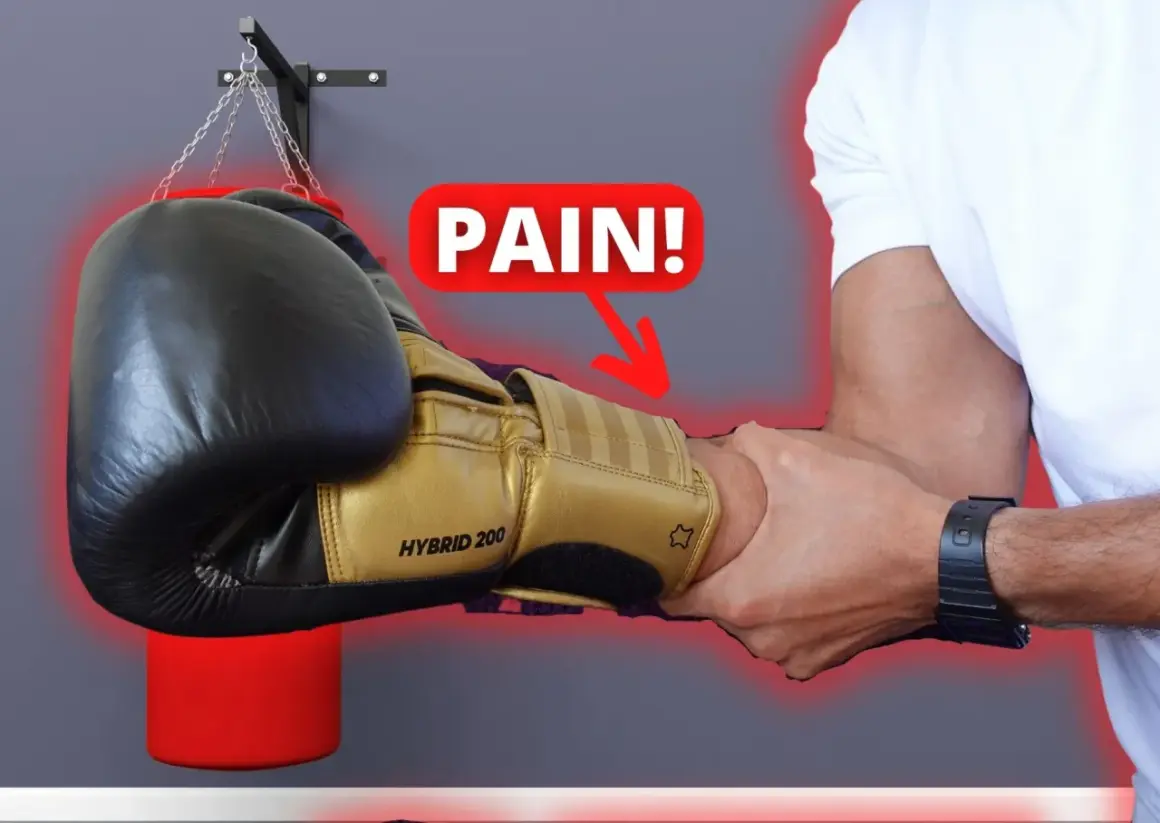
When I talk about forearm strength in boxing, I am not talking about bigger forearms for their own sake. I am talking about the ability of the wrist flexors, extensors, pronators, and supinators to keep the hand rigid enough that force travels cleanly from the shoulder into the target. In practical terms, strong forearms help you keep the wrist neutral, stop the knuckles from folding on impact, and maintain a compact fist under fatigue.
That matters because a punch is only as efficient as its weakest link. If the wrist caves, a portion of the force you created upstream gets lost, and the hand takes more of the stress. I think of forearm training as force insurance: it does not manufacture the punch, but it helps preserve what the rest of the body created. That distinction matters because the evidence favors the bigger links in the chain, not the smallest ones.
What the evidence says about punch force
The research picture is fairly consistent. A review in the Journal of Strength & Conditioning Research found that lower-body maximal strength and explosive strength were strongly associated with punch impact force, while upper-body maximal strength was not the main differentiator between harder and softer punchers. In one dataset discussed in that review, elite amateurs who hit harder had substantially greater lower-body force output, and the gap between groups was large enough to matter in real performance, not just on paper.
That does not make the arms irrelevant. It just means they are not the first place I would look when someone wants more punching power. A 2026 study in Sports followed 31 trained boxers over an eight-week intervention and found that rotational training improved punch impact power, especially on hooks, while handgrip strength was also measured as part of the performance profile. A separate 2025 cross-sectional study of 69 boxing practitioners reported that handgrip strength was strongly correlated with punch impact power, which is useful information, but correlation is not the same thing as proving cause. In plain English, the forearms seem to help the system work better, but they do not replace the system itself.
| Contributor | Effect on punching | What it means in training |
|---|---|---|
| Legs and hips | High | Drive the punch from the ground and feed the kinetic chain. |
| Trunk rotation | High | Links lower-body force to the shoulder and fist. |
| Upper-body speed and ballistic force | Moderate to high | Helps the arm accelerate and stiffen at the right moment. |
| Forearm and wrist strength | Moderate | Keeps the wrist aligned and reduces force leakage at impact. |
| Technique and timing | Very high | Determines how well force is transferred into the target. |
The next question is where forearm strength becomes relevant enough to notice in the gym and in sparring.
When forearm strength matters most and when it barely moves the needle
Forearm strength matters most when the punch meets resistance. That means the moment of impact, repeated bag work, long sparring sessions, and combinations thrown late in a round when your hands are already tired. It also matters more for fighters with smaller hands, less wrist stability, or a habit of letting the wrist drift on contact.
It matters less when the real problem is elsewhere. If your hips are slow, your trunk is loose, or your timing is off, stronger forearms will not magically add mass to the shot. I see this mistake a lot: people build a decent grip, then wonder why the punch still feels flat. That is usually a sequencing problem, not a forearm problem.
- High-value situations include heavy bag work, long pads, hook exchanges, clinch-heavy rounds, and late-round fatigue.
- Lower-value situations include isolated wrist work done with no transfer to punching mechanics.
- Red flags include wrist collapse, knuckle pain, poor wrap support, and a tendency to “push” punches instead of snapping them.
That is the point where specific drills earn their place.
The forearm and wrist work I would keep in a fighter's program
I would not flood a boxer’s week with endless grip toys and wrist curls. I would choose a small amount of work that builds stability, endurance, and control without draining speed. For most fighters, 2 direct forearm sessions per week is enough, especially if sparring and bag volume are already high.
| Exercise | Best use | Suggested dose | Why I keep it |
|---|---|---|---|
| Wrist isometric holds | Stability at impact | 3 sets of 20 to 30 seconds per side | Teaches the wrist to resist collapse under load. |
| Farmer carries | Grip endurance and trunk bracing | 3 to 5 carries of 20 to 40 meters | Builds the kind of support that carries over to guard work and contact. |
| Hammer curls | Balanced forearm and elbow strength | 2 to 4 sets of 8 to 12 reps | Hits the brachioradialis and supports elbow integrity. |
| Reverse curls | Wrist extensor strength | 2 to 3 sets of 10 to 15 reps | Helps balance the forearm and can reduce overuse issues. |
| Pronation and supination work | Rotational control | 2 to 3 sets of 8 to 12 reps | Useful for keeping the hand organized through impact and recovery. |
| Towel hangs or towel pull-ups | Grip endurance | 3 rounds of 15 to 30 seconds | Good for fighters who need more hold strength without chasing a pump. |
If I had to keep the list short, I would start with isometric wrist work, farmer carries, and one rotational drill. Everything else is secondary. The point is not to build bodybuilding forearms; the point is to build stable hands that can transmit force when the shot lands.
The mistakes that make forearm training less useful
The biggest mistake is treating forearm work like the main event. I have seen fighters spend more time on grippers and wrist curls than on rotation, footwork, or lower-body power, then wonder why their punches still do not feel heavy. That is backwards. Forearm work should support your punch, not replace the chain that creates it.
- Training grip to exhaustion before skill sessions can make your hands feel stiff and slow.
- Using only flexion work ignores the extensors and often creates imbalance around the elbow and wrist.
- Doing high-volume pump work can leave the forearms tight, which may reduce relaxation and speed.
- Ignoring wrist position during bag work lets bad mechanics survive longer than they should.
- Skipping trunk and lower-body work turns forearm training into a cosmetic change instead of a performance one.
The best fighters usually look loose until the instant of contact. That is not accidental. It is the product of good sequencing, enough stiffness at the end of the strike, and enough relaxation everywhere else. A tighter week solves more than one hard forearm session ever will.
How I would build it into a conditioning week
If the goal is harder punches, I would program forearms inside a bigger strength and power plan. Two heavy lower-body or total-body sessions per week are a better foundation than endless arm isolation. I would then add rotational work, a small amount of direct forearm training, and enough striking volume to make the gym work matter on the bag.
- Day 1: lower-body strength, trunk bracing, then 2 forearm drills.
- Day 2: boxing skill work, bag rounds, and light recovery work for the hands.
- Day 3: rotational power work, med ball throws, and one grip-endurance drill.
- Day 4: sparring or pad work, followed by short wrist isometrics if the hands still feel fresh.
For most boxers, I would keep direct forearm volume around 6 to 10 quality sets per week and adjust based on sparring load. If the wrists, elbows, or hands start feeling cooked, I would pull volume back before I would add more. Conditioning should make the punch cleaner and more repeatable, not just make the forearms ache.
What I would prioritize if harder punching is the goal
If I had to rank the work by return on investment, forearms would not be at the top. I would first build lower-body force, hip speed, trunk rotation, and punch mechanics, because those are the parts that actually create most of the punch. Then I would add forearm and wrist work to protect the transfer, improve control, and keep the hand from collapsing when the shot lands hard.
So, do strong forearms help you punch harder? Yes, but mainly by helping you deliver the power that was created elsewhere. They are a finishing tool, not the engine. If you train them that way, they earn their place; if you train them as the whole solution, you will probably overvalue the wrong part of the strike.