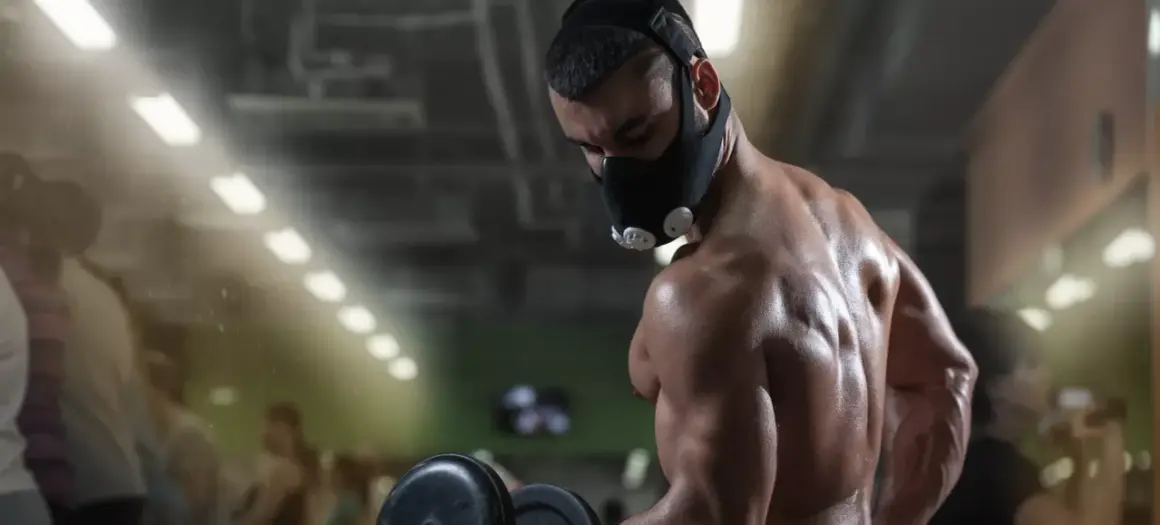
What people call oxygen mask training is usually a breathing-resistance drill, not a real altitude substitute. Used well, it can make conditioning sessions more specific and more demanding; used badly, it just turns a good workout into noisy suffering. I look at it as a tool for fighters, functional athletes, and anyone building work capacity who wants to stress the breathing system without losing the quality of the session.
Here is the practical version before you put the mask on
- The mask adds breathing resistance; it does not recreate true altitude in any reliable way.
- It can raise perceived effort and challenge the breathing muscles, but the effect is usually modest.
- It works best in short, controlled intervals, not as a replacement for your whole conditioning plan.
- If your posture, bracing, or movement quality changes, the resistance is too high.
- If you want cleaner respiratory gains, structured inspiratory muscle work is often the better tool.
What the mask actually changes in a conditioning session
The main effect is simple: you make air harder to move. That increases the work of breathing, especially when the pace rises and ventilation has to keep up with the effort. In practice, that means the session feels costlier sooner, even if the external workload has not changed much.
What it does not do is lower the oxygen content of the air in the same way altitude does. That distinction matters. Real altitude exposure changes ambient oxygen pressure; a breathing-resistance mask mostly changes how hard it is to inhale and exhale. In some setups, a little extra dead space can also make carbon dioxide feel more prominent, which is one reason people describe the device as “brutal” even when performance data do not show a dramatic physiological shift.
| Mechanism | What it feels like | Why it matters for conditioning |
|---|---|---|
| Added airflow resistance | Breathing feels heavier and less smooth | The respiratory muscles do more work during the session |
| Possible dead-space effect | You feel short of breath sooner at hard intensities | Effort rises, so pacing and recovery become more important |
| No true hypobaric change | The air is not actually “thin” in the altitude sense | You do not get the same adaptation as real altitude exposure |
The useful takeaway is this: the mask is best understood as a way to add respiratory stress to training you were already doing, not as a shortcut that replaces aerobic work, intervals, or altitude adaptation. That leads directly to the more important question of when it is worth using at all.
When it fits into a fight camp or GPP block
For combat sports and functional fitness, I would keep it for narrow use cases. It makes the most sense when you want a conditioning session to feel closer to late-round fatigue, when you need a bit more breathing load without changing the movement pattern, or when you want a small variation that forces better control under stress. It is less useful when the real target is basic aerobic development, technical skill, or maximal power.
| Conditioning goal | Mask use makes sense | Why | When I would skip it |
|---|---|---|---|
| Hard interval work | Yes, in short blocks | Raises ventilatory demand and perceived exertion | When pace or mechanics start breaking down |
| Aerobic base work | Usually not my first choice | Base work is better built with plain zone 2 or tempo work | When the goal is easy volume and recovery |
| Fight-round conditioning | Sometimes, as a finisher or specific block | Can mimic the breathiness of later rounds | During live sparring or technical drilling |
| Respiratory loading | Yes, but not the cleanest option | The breathing muscles are clearly challenged | If you want measurable inspiratory strength gains |
I am careful with the phrase “more specific,” because specificity cuts both ways. If you use the mask on a bike, rower, sled, or bag round, the respiratory stress fits the work. If you bolt it onto skill practice and it changes head position, shoulder tension, or punch mechanics, you are training something else entirely.
How I would program a session
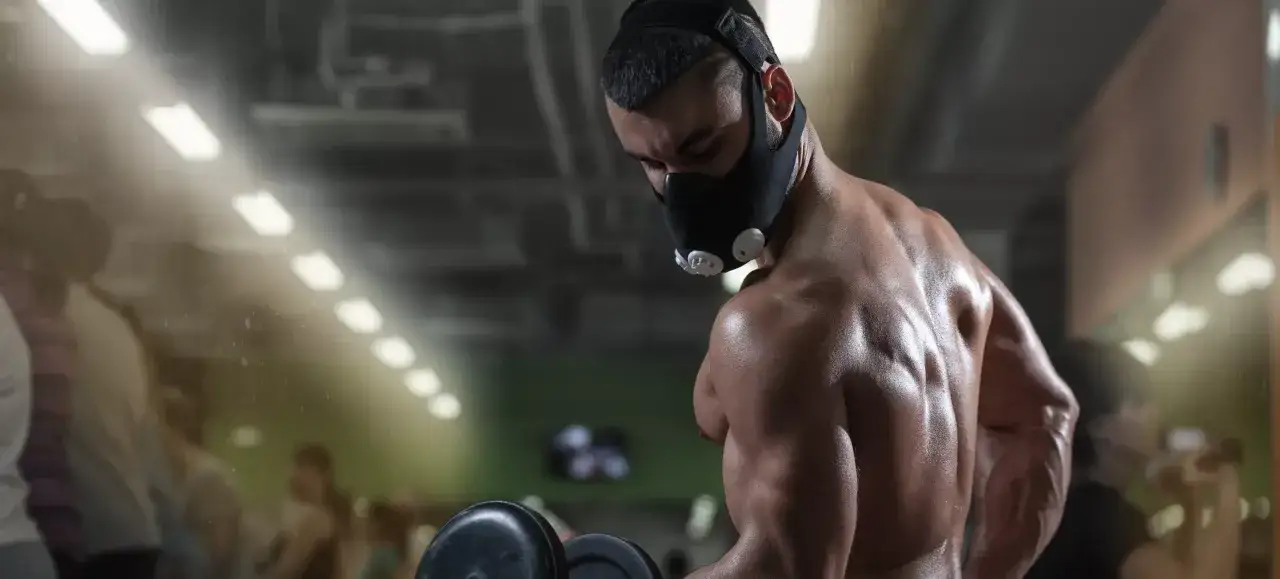
My first rule is simple: start with the least restrictive setting that still changes your breathing. If the mask feels theatrical but not demanding, it is probably too easy. If it changes your posture, cadence, or recovery pace immediately, it is probably too aggressive for the first block.
Starter session
- Warm up for 8 to 10 minutes without the mask.
- Use 4 rounds of 2 minutes hard and 2 minutes easy.
- Keep the mask on the lowest practical resistance setting.
- Stop the set if your shoulders hike, your neck tightens, or your breathing becomes jagged.
Fight-specific round session
- Do 3 to 5 rounds of 3 to 5 minutes with 1 minute of rest.
- Use the mask only during the work rounds, not during the full warm-up.
- Choose stable modalities first: assault bike, rower, sled push, shadowboxing, heavy bag.
- Keep it to once per week until you know how it affects recovery.
Read Also: Boxing Roadwork That Actually Helps in the Ring
GPP finisher
- Run 6 to 8 repeats of 30 seconds hard and 60 to 90 seconds easy.
- Keep the total masked work under 15 to 20 minutes.
- Use this after a strength or skill session only if fatigue will not ruin the rest of the week.
- Track your perceived exertion honestly; RPE, or rating of perceived exertion, is just your 1 to 10 effort score.
Progression should be boring, not heroic. I would rather see an athlete tolerate 10 clean minutes of masked work than survive one sloppy 25-minute misery block and then lose the next two sessions. The breathing load should rise without turning the entire session into a posture problem.
The mistakes that usually waste the stimulus
Most people do not fail because the mask is “bad.” They fail because they use it badly. The common errors are predictable, and they are usually the same errors I see whenever a tool promises a shortcut.
- Cranking resistance too early. If you start at the hardest setting, the session becomes a test of tolerance instead of a useful training stress.
- Using it on every workout. The respiratory system responds to load, but it also needs normal work. Overusing the mask can make sessions needlessly clunky.
- Pairing it with technical work that needs precision. Once your breathing gets ragged, your movement pattern often follows.
- Letting the neck and shoulders take over. If you start shrugging and bracing everything up top, the breathing stimulus is no longer the only thing being trained.
- Confusing discomfort with adaptation. Feeling miserable is not the same as getting fitter.
- Ignoring heat, hydration, and recovery. A hot room plus a hard session plus extra breathing resistance is a bad way to learn whether the tool actually helps.
There is also a more subtle mistake: using the mask during movements that already demand maximal coordination, like live sparring or heavy complex lifts. In those settings, I would rather keep the nervous system clean and let conditioning come from a more controlled piece of work. That brings us to the cleaner alternatives.
How it compares with inspiratory muscle training and true altitude work
If your real goal is respiratory development, I would not treat every tool as interchangeable. A mask, a dedicated inspiratory muscle trainer, and actual altitude or hypoxic work all create very different adaptations. The word “oxygen” in the marketing can blur that difference, but the physiology does not.
| Option | Main stimulus | Best use | Main limitation |
|---|---|---|---|
| Breathing-resistance mask | Extra breathing load during exercise | Short conditioning blocks and round-specific work | Does not recreate real altitude |
| Inspiratory muscle training | Measured inspiratory load, often based on maximal inspiratory pressure | Directly improving breathing muscle strength and endurance | Less specific to movement and pacing |
| True altitude or hypoxic methods | Lower oxygen partial pressure | Endurance athletes chasing altitude adaptation | More expensive, more logistics, not always practical |
Maximal inspiratory pressure, or MIP, is the force a person can generate while inhaling against resistance. That is one reason structured inspiratory muscle training is easier to measure and adjust than a training mask. For many athletes, especially those who want a cleaner respiratory stimulus, that matters more than the feeling of working hard.
My practical view is straightforward. If I want to improve breathing muscle strength, I trust dedicated inspiratory muscle work more than a general-purpose mask. If I want to make a conditioning block feel more demanding while keeping the movement pattern familiar, the mask can earn a small role. If I want real altitude adaptation, I use altitude or hypoxic methods, not a restrictive mask.
Safety, red flags, and who should skip it
Because the device increases breathing stress, I treat it with more caution than many gym gadgets. A healthy athlete can usually tolerate short, controlled use, but the line between “challenging” and “too much” is easy to cross when the session is already intense.
- Skip it or get medical clearance first if you have uncontrolled blood pressure, chest pain, unexplained shortness of breath, a history of pneumothorax, recent chest or abdominal surgery, or a current asthma or COPD flare.
- Stop the session if you feel dizzy, nauseous, panicked, unusually lightheaded, or get a headache that builds fast.
- Do not use it as a substitute for medical testing if you suspect a breathing problem.
- Use it first on a stable machine or simple drill, not on a treadmill sprint or chaotic live round.
- If you are already training at altitude, the mask is usually redundant.
I also tell athletes to be honest about why they want it. If the goal is “feeling destroyed,” there are easier ways to create fatigue. If the goal is to raise tolerance to hard breathing under controlled conditions, the mask can be useful. That difference in intent usually predicts whether the tool becomes a helpful stressor or just another distraction.
What I would actually put in a real training week
If an athlete likes the device and it does not change mechanics, I would use it sparingly: one focused session per week, 10 to 20 minutes of actual masked work, and only after the base conditioning is already in place. I would pair it with controlled intervals on a bike, rower, sled, or bag work, not with the most technical or chaotic parts of training. For most people, that is enough exposure to learn whether the tool earns its place.
My rule is simple: if the mask improves the plan, keep it; if it replaces the plan, remove it. A strong conditioning block still depends more on smart intervals, enough aerobic volume, good strength work, and sport-specific intensity than on any breathing gadget.