
Building a strong midsection for boxing is not about endless crunches. The real job is to create a trunk that can transfer force, resist shots, and stay organized when fatigue sets in. That is why boxer abs are better understood as a conditioning problem, not a vanity project: the right work improves punching mechanics, breathing control, balance, and recovery between exchanges.
The best core work for boxing builds stability first, then power
- Train the patterns boxers actually use: anti-extension, anti-rotation, anti-lateral flexion, and rotational force.
- High-rep sit-ups alone are a weak main strategy because they miss too much of the job.
- Most fighters do well with 2 to 4 short core sessions a week, or 3 to 5 smaller doses in a hard camp.
- Keep most sets in the 6 to 12 rep range or 20 to 45 second holds, then progress load or speed.
- Conditioning still matters: round-specific intervals and sprint work build the engine that lets core control hold up late.
What your midsection actually does in boxing
Inside boxing, the trunk is the transmission system. The abs and obliques help transfer force from the floor through the hips into the fists, while the deep stabilizers keep the ribs and pelvis from leaking energy. When the core does its job well, punches feel cleaner, defensive movement stays organized, and breathing is easier to manage late in a round.
I also think it helps to stop treating the midsection as one muscle. In practice, it includes the rectus abdominis, obliques, transverse abdominis, spinal stabilizers, and the breathing muscles that help you brace under pressure. Anti-extension means resisting the lower back from arching, anti-rotation means keeping the torso from twisting when force tries to pull it off line, and anti-lateral flexion means resisting side bending. Once you look at it that way, exercise selection becomes much easier, because each drill should solve one of those jobs.
That matters because the best drills for a boxer are the ones that create stiffness, control, and transfer, not just a burn in the front of the stomach. Once that frame is clear, the next step is choosing the exercises that actually earn their place in training.
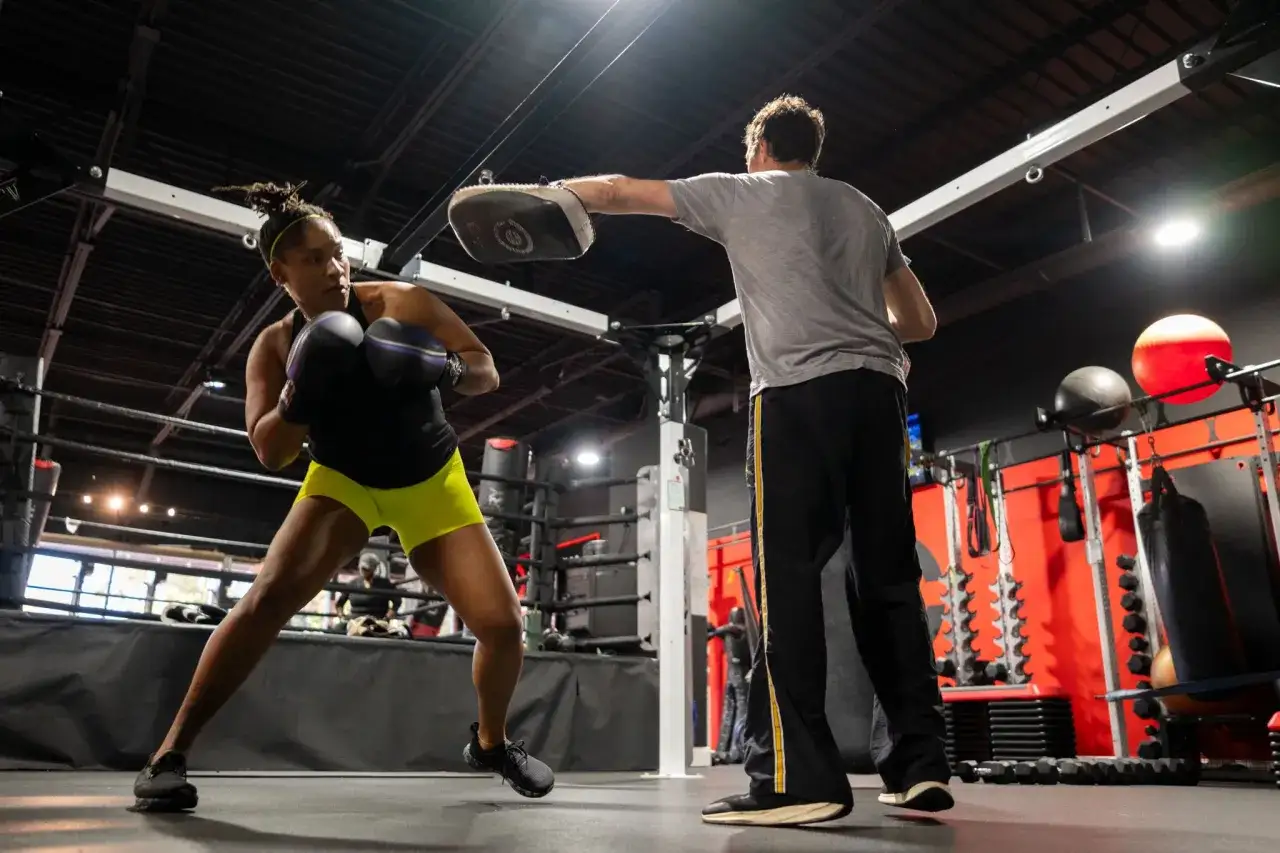
The exercises that deserve a place in a boxing gym
When I build a boxing core block, I want at least one movement from each major category. Boxers need drills that teach the body to hold position, resist movement, and create force without falling apart. The current boxing science approach breaks this into stability first, then loaded work, then explosive work, and that sequence makes sense to me.
| Exercise | What it trains | Why it carries over | Typical dose |
|---|---|---|---|
| Dead bug | Anti-extension and rib control | Teaches the torso to stay quiet while the limbs move | 2 to 3 sets of 6 to 10 reps per side |
| Pallof press | Anti-rotation | Helps the body resist unwanted twist during punches and clinches | 2 to 3 sets of 8 to 12 reps per side or 15 to 20 second holds |
| Side plank or suitcase carry | Anti-lateral flexion | Builds side-to-side stability for stance work and contact | 2 to 3 sets of 20 to 40 seconds or 20 to 40 meters |
| Plank row | Bracing under movement | Forces the torso to stay stacked while one arm works | 2 to 3 sets of 6 to 8 reps per side |
| Medicine ball rotational throw | Explosive rotation | Trains force transfer at speed, which is closer to real punching | 3 to 5 sets of 3 to 6 explosive reps per side |
| Hanging knee raise or reverse crunch | Controlled hip flexion with pelvic tuck | Builds lower-ab and hip control without turning the session into sloppy swing work | 2 to 3 sets of 8 to 12 reps |
I would not build the routine around endless sit-ups. They can have a place as an accessory, but they should not be the foundation. If a movement makes the neck, hip flexors, or lower back do most of the work, it is not solving the boxing problem very well. The better question is whether the drill improves posture, force transfer, and control under fatigue. Once the exercise menu is right, the next question is how much to do and when to place it in the week.
How to program core work without stealing from sparring
Boxing Science recommends core work 3 to 5 times per week, usually at the end of boxing or strength sessions, and that placement is sensible when the goal is performance rather than soreness. For most fighters I work with, 10 to 15 minutes is enough. The point is to create a small but repeated stimulus, not to turn core training into its own exhausting workout.
| Training phase | Frequency | Main goal | Best session style |
|---|---|---|---|
| Off-season base | 2 to 3 sessions per week | Build positions and tolerate load | Controlled tempo, 2 to 3 exercises, 2 to 3 sets |
| Hard camp | 3 to 5 short touches per week | Maintain strength without excess fatigue | Short finishers after boxing or strength sessions |
| Fight week | 1 to 2 light sessions | Stay sharp, avoid soreness | Activation work, bracing drills, low-volume throws |
In practice, I like most sets to stay in the 6 to 12 rep range, with static holds around 20 to 45 seconds. Explosive throws should stay crisp, not grindy. Rest can be short for stability drills and a little longer for power work, because the goal is quality. If the torso loses position before the set ends, the set is already too long. That keeps the work productive without draining the body for pads, bag rounds, or sparring. The missing piece is how this sits inside real boxing conditioning, because core work alone never builds a fight-ready engine.
How core conditioning changes across a camp
Core training is only one part of the equation. A boxer still needs conditioning that matches the demands of the sport, which means repeated bursts of effort, brief recoveries, and enough engine work to keep technique intact as fatigue rises. Boxing Science uses a mix of sprint interval training, high-intensity interval training, and what it calls muscle buffering work, and the labels matter less than the adaptation they chase: the ability to recover fast and then go again.
Two useful examples are 30-second maximal sprints with 3 to 4 minutes of rest for 4 to 6 reps, and 2-minute intervals with 3 minutes of recovery for 6 to 8 rounds. Those are not magic numbers, but they show the logic clearly. Early in camp, the work can be more aggressive and conditioning-heavy. As the fight gets closer, I would reduce volume and keep intensity sharp so the athlete stays fresh. That is also where the core work should become more explosive and less fatiguing. Build, then sharpen, then taper. If that sequence is ignored, the conditioning may improve on paper while the fighter feels flat in the gym. Even with good conditioning, poor exercise selection can still waste the work, which is where the common mistakes show up.
The mistakes that make ab training look busy but do little
The biggest mistake is treating the midsection like a body-part isolation project. Boxing demands a torso that can stabilize, rotate, absorb force, and breathe under stress. If the plan only trains one of those jobs, the carryover will be limited.
- Doing only flexion work. Endless crunches and sit-ups miss anti-rotation and anti-extension, which are both huge in boxing.
- Chasing soreness instead of control. A sore stomach is not the same thing as a useful performance stimulus.
- Moving too fast. Sloppy reps turn core work into momentum work, and momentum is exactly what the trunk should resist.
- Training to failure too often. Once technique falls apart, the nervous system is practicing compensation, not skill.
- Letting core work interfere with sparring. Heavy trunk fatigue before technical work can make timing, guard position, and breathing worse.
- Ignoring the rest of the chain. Hips, upper back, and shoulders all influence how well the core can do its job.
One practical test I use is simple: if the lower back is arching, the shoulders are shrugging, or the hips are taking over, the exercise is no longer specific enough for boxing. Clean reps matter more than dramatic reps. With those errors out of the way, a simple starter plan becomes much easier to follow.
A practical starting point for the next four weeks
If I had to strip the program down for most recreational boxers and many competitive fighters, I would start with three short sessions a week. Each session would last 10 to 15 minutes and include one stability drill, one anti-rotation or anti-lateral flexion drill, and one power or carry variation.
| Week | Focus | Example work | Progression rule |
|---|---|---|---|
| 1 | Position and control | Dead bug, side plank, suitcase carry | Stay clean, keep the reps slow |
| 2 | Add resistance | Pallof press, plank row, reverse crunch | Add a little load or one extra set |
| 3 | Add speed | Medicine ball rotational throw, heavier carry, dead bug variation | Keep the throws explosive and the carries upright |
| 4 | Deload and sharpen | Same exercises, lower volume | Cut total work by about 30 to 40 percent |
The version that holds up best is usually the one that feels almost boring while you are doing it. That is normal. Good core conditioning should leave enough in the tank for skill work, sparring, and recovery. If you keep the movements specific, the volume modest, and the progression honest, the midsection becomes an asset instead of just an aesthetic detail. That is the standard I would use for any boxer who wants the trunk to matter when the pace rises.