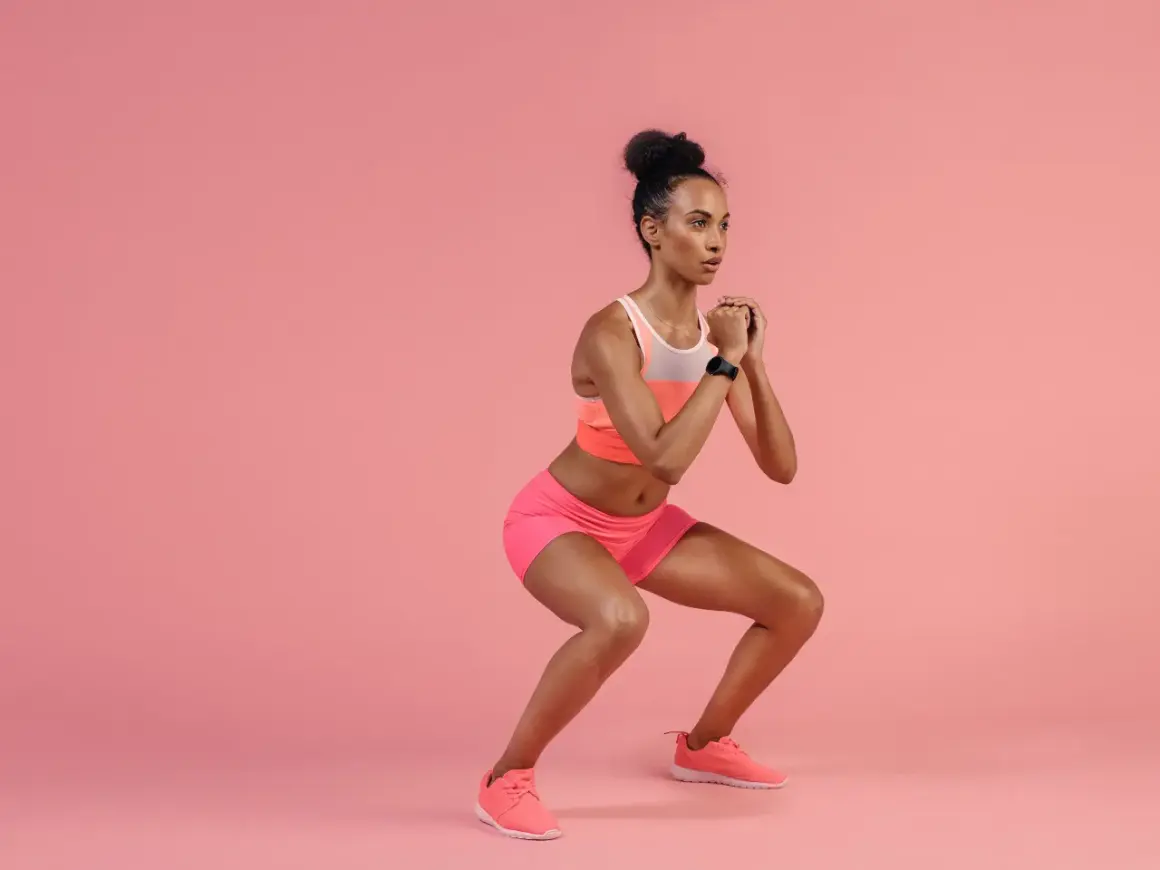
Pulsing squats are one of those simple drills that looks harmless until your quads start shaking. Used well, they become a compact conditioning tool: they keep tension on the legs, challenge your bracing, and let you pile up work without the impact spike of jumping. In this article I break down how they work, how to do them cleanly, how to program them for conditioning, and when a different squat variation is the better choice.
What matters most before you add pulse squats to conditioning
- They are best for muscular endurance and local conditioning, not maximal squat strength.
- The movement stays in a short range at the bottom, so the legs remain under constant tension.
- Clean reps should feel controlled, with the chest up, the core braced, and the heels planted.
- A good working dose is usually 10 to 20 pulses or 20 to 30 seconds per set.
- They work the quads most, but the glutes, adductors, hamstrings, and core all have to stay engaged.
- If your form collapses, the set is over, even if your legs could keep burning.
What pulse squats actually train
At first glance, this is just a squat held in the bottom half of the range with small up-and-down movements. In practice, that short range changes the training effect in a meaningful way. The legs stay under continuous tension, which is why the exercise can feel far harder than a regular bodyweight squat even when the movement looks tiny from the outside.
I think of it as a lower-body endurance drill with a strength bias. The quads do the most obvious work because they stay loaded near the knee-bent position, but the glutes and adductors still help stabilize the hips, while the hamstrings and core keep the torso from folding. If you add load, the demand on posture goes up fast.
That is also why this variation sits in a different lane from heavy squats. A full squat builds strength through a broader range of motion. A pulse-based version is more useful when the goal is to keep the muscle working longer, build burn tolerance, or finish a session without adding impact. That difference matters when you are training for conditioning instead of chasing a one-rep max. From here, the next question is simple: how do you do it without turning it into sloppy half-reps?
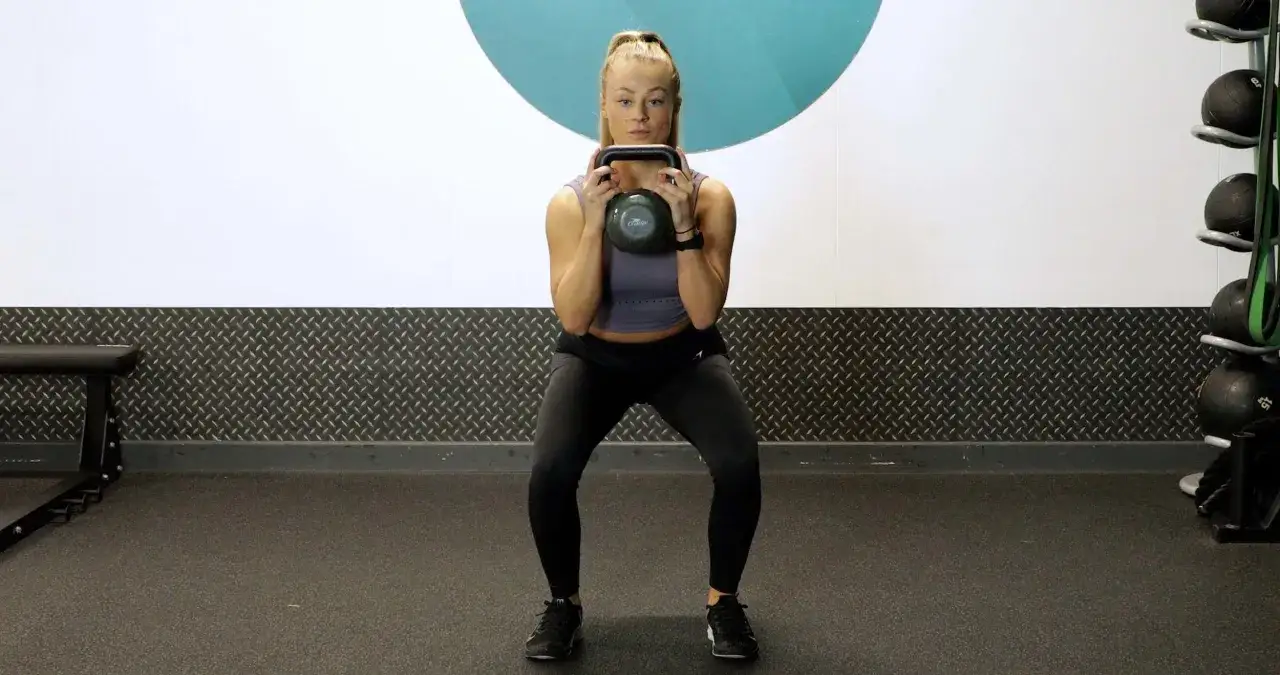
How to do them with clean form
Stand with your feet about shoulder-width apart, or slightly wider if your hips prefer it. Turn the toes out just a little, brace your midsection, and sit down into a squat until your thighs are near parallel or slightly below, depending on your mobility. From there, move only a few inches up and down. I usually cue athletes to keep the pulse range small enough that the tension never disappears.
- Set the base with the whole foot on the floor, especially the heel and big toe.
- Drop into position with the chest tall and the ribs stacked over the pelvis.
- Pulse through a short range of roughly 2 to 4 inches, not a full squat cycle.
- Keep the knees tracking in line with the toes instead of collapsing inward.
- Breathe on purpose with short exhales so the trunk stays braced under fatigue.
If you cannot keep your heels down, the depth is probably too aggressive for the current set. If your lower back starts rounding, you are no longer training the legs the way you want to. For many athletes, a cleaner pulse at a slightly higher squat position is better than a deeper rep that turns into a compensation. Good mechanics are what make the drill useful; bad mechanics just make it noisy. That leads directly into why this move shows up so often in conditioning work.
Why they work for conditioning
Conditioning is not only about getting winded. It is about producing repeatable effort while keeping your technique stable. That is where pulse squats earn their place. They create local fatigue in the legs, raise the heart rate, and force the trunk to hold position even when the muscles start to burn. The result is a kind of muscular conditioning that transfers well to circuits, finishers, and fight-camp style work.
Compared with jumping drills, pulses are lower impact, which can make them easier to recover from when volume is already high. Compared with a long static wall sit, they add a small dynamic demand that asks the hips and knees to keep controlling the position. Compared with full squats, they give you more time under tension in a shorter window. That is a useful trade when the session is about accumulating fatigue rather than building maximal force.
In combat sports, I like them because stance work, shot level changes, clinch positions, and footwork already tax the legs in a similar way. In functional fitness, they fit neatly into short intervals where you want the athlete to keep moving with discipline instead of just surviving the clock. The important caveat is this: they are a tool for conditioning, not a replacement for the main strength lifts. Once you know what they do, the next step is putting them into a session with the right dose.
How to program them without wasting the exercise
The biggest mistake I see is treating pulse squats like a random burn-out. That usually leads to too many sloppy reps and not enough training value. I prefer to choose a clear purpose first, then match the set length, rest, and loading to that purpose.
| Goal | Set format | Rest | Where it fits best |
|---|---|---|---|
| Activation | 1 to 2 sets of 8 to 12 bodyweight pulses | 30 to 45 seconds | Warm-up before lower-body training |
| Conditioning finisher | 2 to 4 sets of 15 to 25 pulses or 20 to 30 seconds | 30 to 60 seconds | After lifting, grappling, or skill work |
| Circuit work | 20 seconds on, 40 seconds off | 3 to 6 rounds | Mixed conditioning blocks |
| Strength endurance | Light goblet load for 12 to 20 pulses | 60 seconds | Accessory work on a lower-body day |
My rule is simple: if the set is clean but too easy, add load. If the set breaks down, reduce the pulse count before you chase intensity. Two to three hard exposures per week is usually enough for most athletes, especially if they already squat heavy, sprint, or train combat sports. More is not automatically better here because the legs still need to recover for the real work. Once the dose is right, the next thing that matters is avoiding the mistakes that make the drill look useful while doing very little.
Common mistakes that turn them into junk volume
The first error is bouncing. If each pulse is just a tiny rebound off the bottom position, you are no longer keeping meaningful tension on the muscles. The second is letting the knees cave in, which usually shows up when fatigue outruns hip control. That is a sign to stop the set, not to chase another five shaky reps.
- Dropping too deep and losing the ability to keep the trunk stacked.
- Moving too fast so the set becomes a blur instead of controlled work.
- Relying on momentum instead of staying in the muscle.
- Letting the heels lift and shifting pressure into the toes.
- Using the drill for soreness rather than a clear conditioning stimulus.
Another common mistake is using the exercise as a substitute for everything else. If your goal is strength, you still need full-range squats and some kind of progressive overload. If your knees are already irritated, you may need a different regression instead of forcing more pulses. In other words, the movement is useful, but it is not universal. That is why I like to compare it with the other squat options before deciding where it belongs.
Best variations for different goals
There is more than one way to use this pattern, and the best version depends on the training target. I usually choose the simplest version that still challenges the athlete in the right place.
| Variation | Best for | What it adds | Main limitation |
|---|---|---|---|
| Bodyweight pulse | General conditioning and home workouts | Easy setup, low friction, easy to repeat | Limited overload once the athlete adapts |
| Goblet pulse | Stronger athletes and gym settings | More trunk demand and more total tension | Grip and posture can fail before the legs do |
| Band-resisted pulse | Glute emphasis and warm-ups | Extra tension at the top and a sharper burn | Band setup can be awkward and inconsistent |
| Split-stance pulse | Unilateral control and side-to-side balance | Exposes asymmetry and stability issues | Balance demands are higher |
| Wall-supported pulse or wall sit pulse | Fatigue tolerance with less balance demand | Lets you focus on leg drive and posture | Less carryover to free-standing squatting |
If I had to choose only two versions for most people, I would pick bodyweight pulses and a light goblet version. The bodyweight drill is the easiest way to teach position and tempo. The goblet version is the cleanest way to add load without turning the movement into a low-bar squat clone. For athletes in a fight camp, I would usually stay conservative and keep the variation simple. That keeps the conditioning value high and the recovery cost manageable. The final question is how to fit them into a real week without stealing energy from the main sessions.
How I’d use them inside a real conditioning week
I would not program pulse squats as the centerpiece of a week. I would use them where they solve a problem. After a lower-body strength session, two short sets can finish the legs without adding a lot of joint stress. In a conditioning circuit, they can sit beside sled pushes, shadowboxing, rower sprints, or push-ups as a controlled lower-body station. In a home workout, they work well when you need something effective that does not require a machine.
For most athletes, the sweet spot is a small dose done well: 2 to 4 sets, a short work window, and enough rest to keep the reps honest. If your weekly plan already includes heavy squats, hard interval work, and sport practice, that is probably enough. If your plan is lighter, you can press the volume a little higher, but only as long as the knees, hips, and low back stay comfortable. Pulsing squats are best when they support the work, not when they replace it.