What endurance means and why it matters
- Endurance is sustained work capacity, not just the ability to survive a workout.
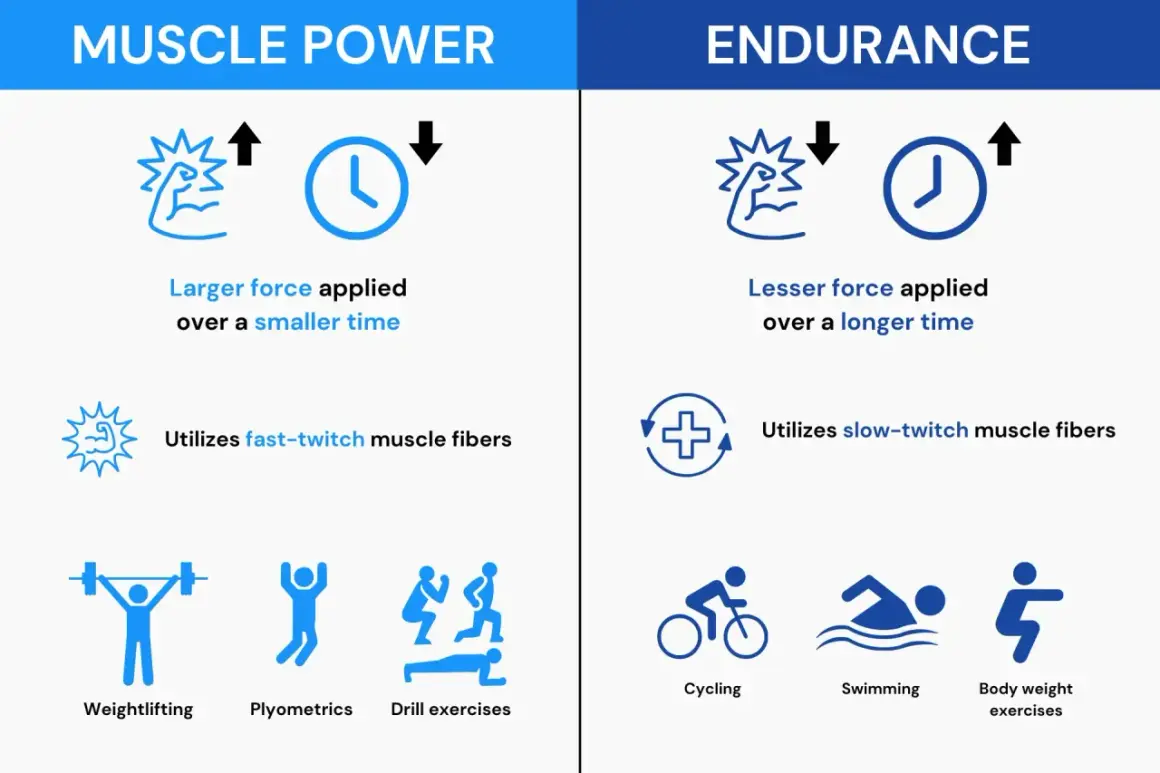
- Cardiorespiratory endurance and muscular endurance are related, but they solve different problems.
- For general health, a useful baseline is 150 minutes of moderate activity or 75 minutes of vigorous activity each week.
- The best conditioning mixes easier base work, harder intervals, and enough recovery to adapt.
- In combat sports and functional fitness, endurance should protect technique, pace, and decision-making under fatigue.
What endurance means in real training
When people ask what is endurance, I usually answer it this way: it is the capacity to sustain work while resisting fatigue. The useful part of that definition matters. A fighter who can keep moving but loses hand position, or an athlete who can keep going but slows to a crawl, has some endurance but not enough of the kind that shows up in sport.
In practice, endurance is not one quality. It sits between oxygen delivery, muscle fatigue resistance, pacing, and skill retention. That is why someone can look fit in a warm-up and still fall apart once the work turns repetitive.
People often use stamina as a synonym, but I keep endurance as the more precise term because it points to sustained output, not just a short burst of grit. For general health, current U.S. activity guidance gives adults a simple baseline: about 150 minutes of moderate activity or 75 minutes of vigorous activity each week, or an equivalent mix. For athletes, that baseline is only the floor; the real question is whether the work matches the demands of the sport or job.
Once that definition is clear, the next step is separating the two forms of endurance people most often train.
The two main kinds of endurance athletes train
I separate endurance into two buckets because each one changes the training plan in a different way.
| Type | What it measures | Examples | Why it matters |
|---|---|---|---|
| Cardiorespiratory endurance | How well the heart, lungs, and circulation can supply oxygen during sustained work | Running, cycling, rowing, long rounds, repeated shuttle work | Helps you keep pace, recover faster between efforts, and avoid early burnout |
| Muscular endurance | How long a muscle or muscle group can keep producing force before form or output drops | Push-ups, squats, clinch control, carries, wall sits, bag flurries | Helps you keep technique, posture, and control when the effort gets repetitive |
Cardiorespiratory endurance usually drives how long you can keep moving at a given intensity, while muscular endurance tells you how long a muscle group can keep producing force before form collapses. In combat sports, both show up at the same time: your engine keeps you moving, but local muscular endurance decides whether your shoulders, trunk, and hips still cooperate late in the round.
That distinction matters because a workout can improve one type while barely touching the other.
Why endurance changes performance under fatigue
Endurance is not only about finishing. It changes how you move while you are still working. When fatigue rises, people usually shorten their stride, lose trunk stiffness, breathe inefficiently, and make poorer decisions. That is why conditioning is never just about suffering more; it is about protecting output when the body starts asking for a slowdown.
- For fighters, it helps you keep footwork, guard position, and shot selection sharp in later rounds.
- For functional fitness athletes, it keeps transitions, grip, and posture from collapsing during longer efforts.
- For general trainees, it makes everyday tasks like carrying, climbing, or repeated lifting feel less costly.
I think the biggest mistake is treating endurance as a separate cardio problem. In reality, it supports the quality of everything else you do.
Once you understand what it buys you, the next question is how the body actually builds it.
How endurance improves over time
Endurance gets better when the body is exposed to work it can recover from and then adapt to. The first changes are usually simple: your breathing settles sooner, the same pace feels less expensive, and you stop redlining as quickly. With consistent work, the deeper changes show up in how your heart, muscles, and nervous system handle repetition.
- Better oxygen delivery means the heart can move more blood with less effort.
- More efficient muscles mean working tissue can use oxygen and fuel with less wasted energy.
- Improved movement economy means you spend less energy on the same task because your mechanics are cleaner.
- Stronger fatigue tolerance means you can keep technique together when the session gets ugly.
This is why progression matters. If the work never gets harder, the body has no reason to adapt; if it gets hard too quickly, recovery breaks first. In my view, the three guardrails are progression, specificity, and recovery. Progression keeps the stimulus moving, specificity keeps the work relevant, and recovery lets the adaptation actually happen.
Those guardrails matter even more once you start choosing the right way to train endurance.

How to train endurance without losing power
The safest way to build endurance is not to make every session a test. I get better results when the week includes a mix of low-intensity work, harder intervals, and sport-specific conditioning. That mix builds capacity without turning the nervous system into a constant recovery project.
| Method | Best use | What it builds | Main limit |
|---|---|---|---|
| Steady aerobic work | 30 to 45 minutes of continuous work at an easy, conversational pace | Aerobic base, recovery ability, and general work capacity | Useful for most athletes, but it does not fully replace sport-specific intensity |
| Intervals | Short hard bursts with planned recovery, such as repeated rounds or run-bike-row efforts | Ability to repeat high effort and tolerate pace changes | Too much of it can flatten power and leave you flat for strength work |
| Circuit conditioning | Repeated stations like carries, sleds, swings, bag work, or body-weight sequences | Muscular endurance and fatigue resistance under movement changes | Form can break down if the load is too heavy or the rest is too short |
| Tempo efforts | Moderate, sustained work that sits between easy base work and all-out intervals | Pacing control and the ability to stay efficient at a challenging speed | Easy to overuse if every session drifts into the same middle intensity |
A workable weekly shape for many athletes is two easier base sessions, one harder interval day, and one sport-specific conditioning block. Fighters might use rounds on the bag, pads, sled pushes, or assault-bike intervals; functional fitness athletes might use mixed-modal circuits, carries, and row or ski work. The key is to keep the hard days hard enough to matter and the easy days easy enough to recover from.
If the goal is to improve both performance and resilience, the next step is avoiding the mistakes that quietly stall progress.Common mistakes that stall endurance gains
Most people do not fail because they work too little. They fail because the work is poorly organized.
- Going hard too often turns conditioning into repeated recovery debt.
- Skipping the aerobic base makes every hard session feel like a fire drill.
- Training outside the sport demands builds fitness that looks good on paper but does not transfer well.
- Letting form break down teaches bad movement under fatigue, which is the opposite of useful conditioning.
- Under-eating or under-sleeping slows adaptation more than most athletes expect, especially when volume climbs.
If your performance is flat for several sessions in a row, or your energy feels worse instead of better, the answer is often less intensity, not more. That is also where overtraining starts to sneak in.
With those traps in mind, progress becomes much easier to judge.
How to tell whether your endurance is actually improving
The cleanest markers are simple. The same pace feels easier, recovery between efforts shortens, and your technique stays sharper when the work drags on.
- You can hold the same round or pace with less breathlessness.
- Your breathing settles faster after hard efforts.
- You can repeat quality efforts with a smaller drop-off from set to set or round to round.
- Your movement stays cleaner when fatigue shows up.
If you want a straightforward baseline, start with the public-health minimums and then layer sport-specific work on top: 150 minutes of moderate activity or 75 minutes of vigorous activity each week. For fighters and functional fitness athletes, the end goal is not doing more cardio; it is having enough endurance that power, timing, and judgment still show up when it matters.
That is the version of endurance I care about: not endless effort for its own sake, but the ability to stay useful when the work becomes uncomfortable.