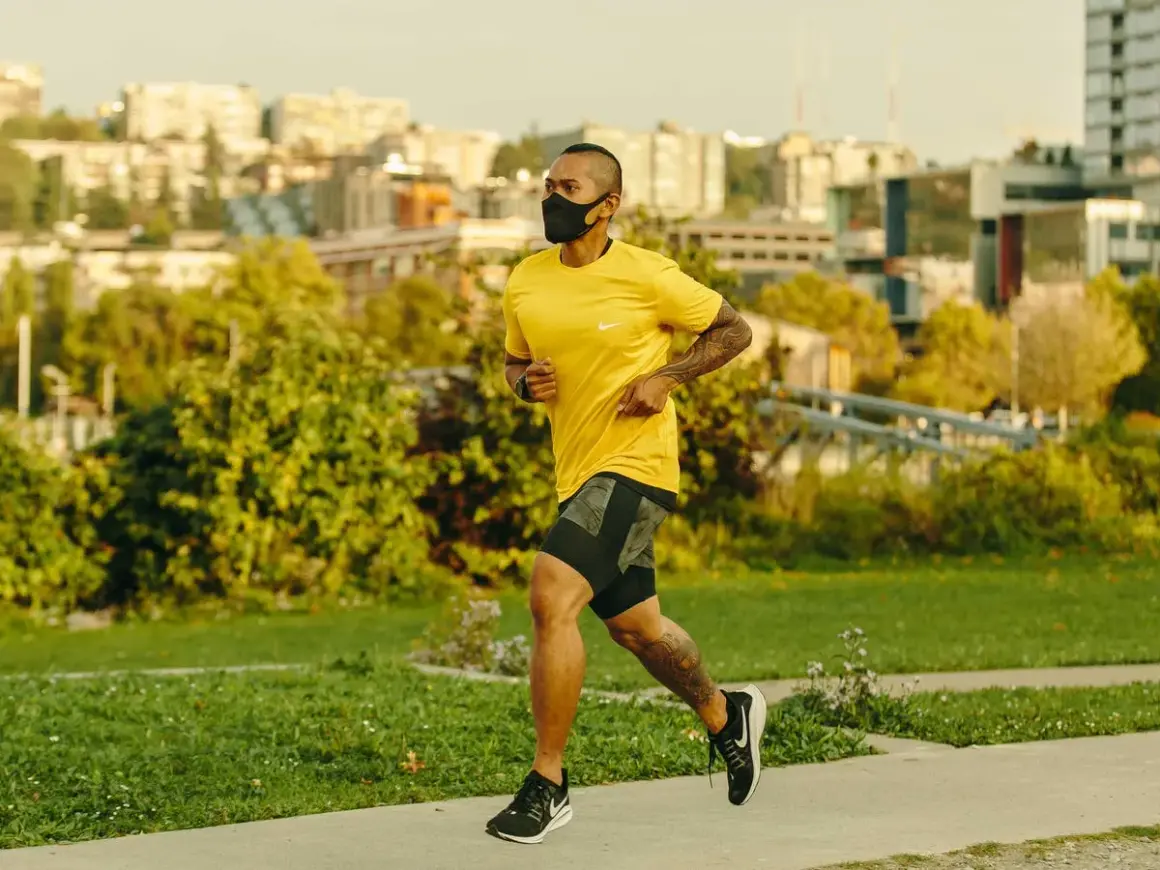
Restrictive running masks change a workout in a very specific way: they make breathing feel harder, raise the sense of effort, and can turn an ordinary run into a test of tolerance. The real question is whether that extra stress actually improves conditioning in a way that matters for runners, fighters, or functional fitness athletes. I would separate the hype from the training effect and look at what the device really does, where it falls short, and what I would use instead when performance is the goal.
The main takeaway is that breathing resistance is not the same as altitude adaptation
- A training mask makes inhaling harder; it does not create true high-altitude conditions.
- The main effect is usually higher perceived effort, not a dramatic new conditioning stimulus.
- For most athletes, intervals, hills, and dedicated inspiratory muscle training deliver cleaner returns.
- If the mask reduces pace, power, or round quality, it is probably costing more than it gives back.
- Used at all, I would treat it as an occasional accessory, not a mainstay of the program.
What a restrictive mask really changes during a run
When I look at this tool, I do not think “oxygen booster.” I think “airflow resistance.” That distinction matters. The mask makes it harder to move air, so the respiratory muscles have to work more, breathing usually feels louder and more urgent, and the session often feels harder sooner. That is a real training stress, but it is not the same thing as lowering the oxygen content of the air the way altitude does.
In one study published in the Journal of Sports Science & Medicine, wearing an elevation-style training mask did not improve lung function, inspiratory muscle strength, or hemoglobin and hematocrit markers. That is useful because those are the kinds of adaptations people usually hope for when they buy into the idea of “oxygen-restricted” running. The mask can make effort feel tougher. It does not automatically create the physiology of altitude.
That is why I treat the device as a breathing-resistance tool, not a shortcut to better conditioning. Once that is clear, the next question is whether the extra resistance actually improves the parts of fitness that matter on the road, track, mat, or in the cage.
Why harder breathing is not the same as better conditioning
Conditioning is not just about how miserable a session feels. I care about output: pace, power, total work, recovery between efforts, and the ability to repeat quality. If a mask forces me to slow down enough that I miss the intended pace or cut the volume, the workout may feel harder while training less useful work. That is the trade-off most people overlook.
For runners, that trade-off shows up fast in tempo work, intervals, and hills. If I cannot hold the target pace, I am no longer training the speed or threshold I planned. For fighters, the same problem shows up in rounds: a mask can make a bag round feel like a late-fight scramble, but it can also lower punch quality, footwork, and repeatability. That may build suffering tolerance. It does not necessarily build better conditioning.
In practice, I want the stimulus to be specific. A hard 800-meter repeat, a threshold run, or a round-based circuit already taxes the cardiorespiratory system without adding unnecessary distortion. A restrictive mask often just adds noise to the session. That leads to the more useful comparison: what else could train the same system better?
How it stacks up against better conditioning tools
| Tool | What it really trains | Best use | My take |
|---|---|---|---|
| Training mask | Breathing resistance and discomfort tolerance | Occasional accessory work on low-risk sessions | Interesting, but not my first choice for real conditioning |
| Inspiratory muscle trainer | Measured inspiratory strength and breathing efficiency | Direct respiratory muscle training off the run | Cleaner and more controllable if the breathing muscles are the target |
| Intervals and hill work | Cardio, leg drive, repeatability, recovery | Main running or fight-conditioning sessions | Highest return for most athletes |
| True altitude exposure | Hypoxic adaptation | Specific altitude prep when available | Much more expensive and logistically demanding, but physiologically real |
I prefer the second and third rows because they are easier to measure and easier to program. A recent review of inspiratory muscle training in intermittent-sport athletes reported improvements in maximal inspiratory pressure ranging roughly from 8% to 33%, which is a much clearer respiratory adaptation than hoping a restrictive mask will quietly do the same job. If the goal is to build a stronger breathing system, I want the stimulus to be deliberate, trackable, and not tied to a compromised run.
That comparison is important, because it shows why the mask often sounds better than it performs.
Where a mask can fit in runner and fighter conditioning
I am not saying the mask is useless in every context. I am saying it has a narrow lane. If an athlete wants to explore discomfort tolerance, or if they want a short, controlled bout of extra breathing load on an otherwise easy day, I can see the logic. That is especially true in combat sports, where late-round breathing stress is part of the reality of the sport.
Even there, I would keep expectations modest. A mask can make a session feel closer to the suffocation of hard exchanges, clinch work, or late-round pressure, but it still does not replace the actual demands of sparring, bag work, sled pushes, shuttle runs, or hard intervals. The sport-specific work is what teaches pacing, tension control, repeatable output, and recovery between bursts.
Where I would not use it is the more important part:
- tempo runs that are meant to build sustainable speed
- VO2 intervals that depend on hitting a precise pace or power target
- hill repeats where leg drive and running mechanics already provide plenty of stress
- hot, humid, or already-fatigued days when breathing stress is already elevated
- sessions where technical quality matters, such as sparring or fast bag rounds
If the session has to be high quality, I would not stack unnecessary breathing resistance on top of it. That is the simplest rule I use when I am deciding whether the mask belongs in the plan.
A practical way to test it without wrecking the workout
If someone insists on trying a restrictive mask, I would keep the experiment small and controlled. I would not introduce it on a key workout, and I would not use it every day. The point is to find out whether it adds a useful challenge, not to let it hijack the training week.
- Start with 5 to 10 minutes on an easy run or easy aerobic circuit.
- Keep the pace low enough that you can still speak in short sentences.
- Limit the first few attempts to one session per week.
- Do not use it for intervals, hard sparring, or any workout where output has to stay high.
- Stop immediately if you get dizziness, unusual headache, wheezing, chest tightness, or a sharp drop in pace.
My practical test is simple: if the mask makes me slow down by more than about 10% to 15% at the same route, same workout, or same round structure, the trade is usually too expensive. At that point I am spending effort on breathing discomfort instead of on the adaptation I actually wanted. That is a bad bargain unless the whole point of the session is discomfort exposure.
My rule for 2026 is to keep the mask as a niche tool
If I want better conditioning, I still start with the boring stuff that works: structured intervals, threshold work, hill repeats, easy aerobic volume, and proper recovery. If I want stronger breathing muscles, I choose a dedicated inspiratory muscle trainer because it gives me a clearer adaptation signal and less guesswork. And if I want to make a session feel nasty for the sake of mental tolerance, I treat the mask as a temporary accessory, not a foundation.
That is the lens I would use for runners and fighters alike. The tool is not completely empty, but it is rarely the best use of training time. If a mask turns a strong session into a slower, sloppier one, I drop the mask and keep the session quality. That is the adaptation that usually matters most.