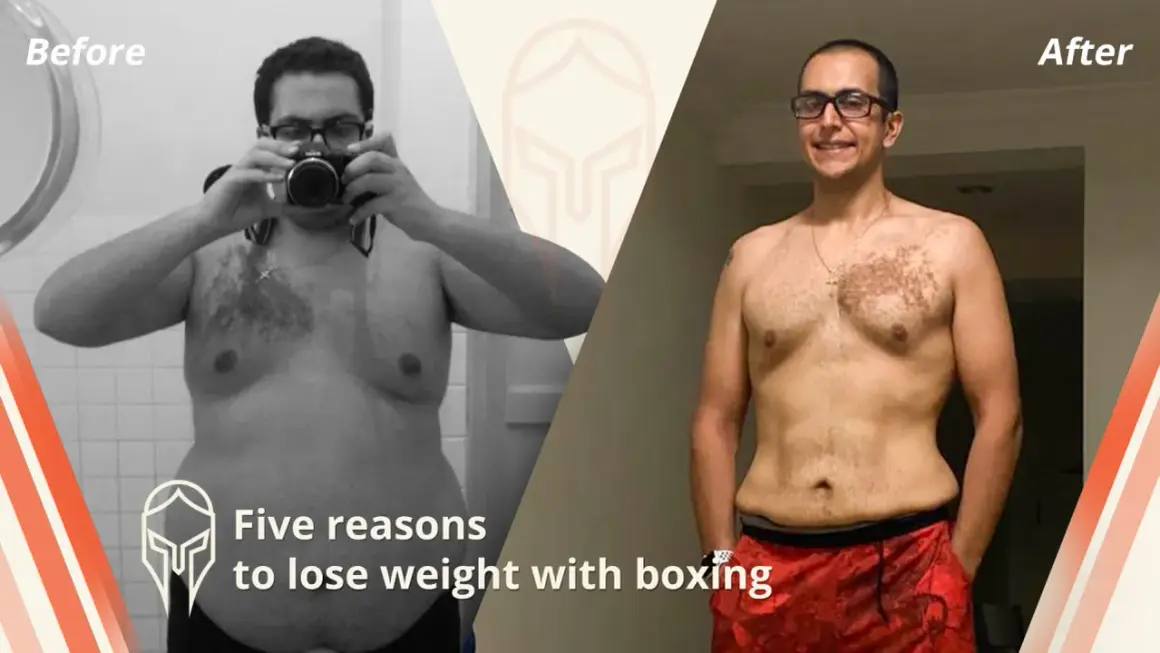
Boxing can be a serious conditioning tool for fat loss, but it works best when the training is repeatable and the rest of your week supports a calorie deficit. So, does boxing help you lose weight? Yes, if the sessions are hard enough to raise energy use and you do not eat back every extra calorie with a loose hand. I’m going to break down how boxing helps, which styles are most efficient, and the mistakes that usually stall progress.
These are the facts that matter most for boxing and weight loss
- Boxing supports fat loss because it combines vigorous cardio, footwork, rotation, and upper- and lower-body work.
- Harvard Health lists boxing sparring at roughly 270 to 378 calories in 30 minutes, depending on body weight.
- Two to four boxing sessions per week usually work better than one brutal session followed by six inactive days.
- Heavy-bag and mitt rounds usually give a better conditioning return than casual shadowboxing if weight loss is the priority.
- Strength training, sleep, and a modest calorie deficit still decide whether the scale actually moves.
Why boxing works as a conditioning tool
When I look at boxing through a fat-loss lens, I see two advantages immediately: it can push heart rate high enough to matter, and it is interesting enough that people often stick with it. That matters, because consistency is the hidden variable in almost every successful weight-loss plan.
Boxing is also more than arm movement. The punch starts in the feet, travels through the hips and core, and finishes in the upper body, so the training asks a lot of the whole system at once. That is one reason boxing often feels harder than a simple steady-state cardio session even when the clock says the same amount of time.
From a conditioning standpoint, boxing sits in a useful middle ground. A hard round combines anaerobic bursts, which are short, intense efforts, with aerobic recovery, which is the system that helps you keep going and repeat the work. That blend is useful if you want to improve work capacity, not just sweat for 20 minutes.
There is a limit, though. Boxing is not magic by itself. If the total weekly energy burn is low or your food intake stays high, the scale may barely budge even if every session feels intense. That is why the structure of the workout matters so much.
The easiest way to see that is to look at what a real session usually contains.

What a fat-loss boxing session actually looks like
A useful boxing workout is usually built in rounds, not in one long grind. That rhythm creates bursts of effort, short recovery windows, and enough accumulated volume to make conditioning improvements show up.
- Warm-up. 5 to 10 minutes of jump rope, mobility work, light shadowboxing, or dynamic footwork.
- Skill rounds. 2 to 4 easy-to-moderate rounds focused on jab-cross patterns, defense, and movement quality.
- Main work. 4 to 8 hard rounds on the heavy bag or pads, usually 2 to 3 minutes each, with short rests.
- Finisher. Short intervals with bodyweight work, sled pushes, or sprints if the class is built for extra output.
- Cool-down. Light movement, breathing, and a few minutes of recovery to bring the heart rate down.
A quick test helps here: if you can hold a full conversation through every round, the pace is probably too soft to count as serious conditioning. For most people, 30 to 60 minutes is enough. You do not need a full fight camp to lose weight; you need repeated quality work that you can recover from and repeat next week.
The type of boxing you choose changes how much of that work you actually get.
Which boxing style gives the best conditioning return
Not every version of boxing gives the same payoff. I would think about it less as “which one burns the most” and more as “which one gives me the strongest training effect that I can repeat without burning out.” The table below is the practical version.
| Boxing style | Conditioning demand | Why it helps weight loss | Main limitation |
|---|---|---|---|
| Shadowboxing | Moderate | Great for technique, movement, and extra volume on low-fatigue days | Lower external load, so the calorie burn is usually smaller |
| Heavy bag rounds | High | Easy to structure as intervals and hard to fake effort through the whole round | Technique can get sloppy when fatigue climbs |
| Mitt work with a coach | High | Strong mix of intensity, accountability, and reaction work | Depends on coaching quality and class design |
| Cardio boxing classes | Moderate to high | Simple to follow and easy to repeat several times a week | Some classes drift toward choreography instead of real output |
| Sparring | Very high | Can be intense and highly demanding for experienced athletes | Not necessary for weight loss and carries more risk |
For most readers, heavy-bag intervals or well-run pad work give the best balance of calorie burn, skill development, and repeatability. Sparring can be effective conditioning, but it is a poor starting point if your only goal is leaning out safely.
Once that choice is clear, the next question is how to turn the training into actual scale change instead of just a very sweaty habit.
How to make the scale move without killing performance
Fat loss still comes down to a calorie deficit. Boxing can create part of it, but it cannot outrun a week of overeating. If you are treating a hard class as permission to eat freely afterward, you are basically canceling the workout.
I usually like this framework for adults who want to lean out without feeling wrecked:
- Box 2 to 4 times per week for 30 to 60 minutes.
- Keep at least 2 strength sessions in the week so you hold onto muscle while you lose fat.
- Use walking, steps, or light cardio to keep daily activity from collapsing outside the gym.
- Eat enough protein and keep meals simple enough that you can repeat them.
- Track weekly average body weight and waist measurements, not just one morning weigh-in, because hard training can shift water weight.
- Sleep 7 to 9 hours when possible, because poor recovery changes appetite and training quality fast.
The CDC recommends 150 minutes of moderate-intensity activity or 75 minutes of vigorous activity each week, and boxing often lives in that vigorous bucket. The same guidance also says 1 minute of vigorous work is roughly equivalent to 2 minutes of moderate work, which is why a few well-structured sessions can do a lot of the heavy lifting.
If I had to reduce it even further, I would say this: box hard enough to matter, lift enough to preserve muscle, and eat with enough discipline that the training can actually show up on the scale.
That sounds simple, but a few predictable mistakes still trip people up.
Common mistakes that slow progress
There are a handful of mistakes I see over and over:
- Confusing sweat with fat loss. Heavy perspiration means you worked hard and lost water, not that body fat disappeared.
- Doing only random classes. If every session is different and there is no progression, your body adapts less and the results flatten out.
- Skipping strength work. Boxing is demanding, but it does not replace all resistance training if you want to keep muscle while cutting.
- Eating back the workout. A post-class meal that turns into a reward binge can erase the deficit from the entire session.
- Going too hard too soon. Beginners often choose pace over precision, then spend two weeks sore and inconsistent instead of building momentum.
The fix is boring but effective: keep sessions measurable, keep food intake honest, and make the training week repeatable. That usually works better than chasing the most punishing workout in the room.
Once those mistakes are out of the way, the question becomes whether boxing is the right starting point for you in the first place.
When boxing is not the right starting point
Boxing is scalable, but it is not ideal for everyone on day one. If your wrists, hands, shoulders, neck, or back are already irritated, heavy punching volume may be a bad place to start without coaching and a medical green light.
I would also be cautious with sparring if the main goal is weight loss. You do not need head contact to get the conditioning benefit, and most beginners are better served by shadowboxing, bag work, mitts, or non-contact classes.
If you are very deconditioned, start with shorter rounds, longer rests, and simpler combinations. If your heart rate spikes too fast or technique breaks down completely, the answer is not more grit; it is a better progression. In practice, that often means shorter rounds, less impact, and a slower ramp-up across the first few weeks.
That kind of caution is not a sign that boxing is too hard. It just means the version of boxing you choose should match the body you bring into the gym.
With that in mind, the smartest approach is usually simpler than people expect.
The boxing setup I would actually use to lean out
If I were building a boxing-based fat-loss plan for most adults, I would keep it simple:
- Two hard boxing sessions on the bag or pads.
- One technical session of shadowboxing or light class work.
- Two strength sessions focused on legs, pulls, pushes, and core.
- Daily walking or other light movement to keep total activity high.
- A modest calorie deficit instead of an aggressive cut that ruins training.
That mix usually gives you the best tradeoff between fat loss, muscle retention, and adherence. Boxing works because it is demanding, but it works best when the rest of your week is not chaotic. If progress stalls for two or three weeks, I would first tighten food intake or add a little more walking before I turned every boxing session into a war.
If you want the scale to move and your conditioning to improve, the goal is not to destroy yourself in one workout. It is to build a system you can actually repeat.