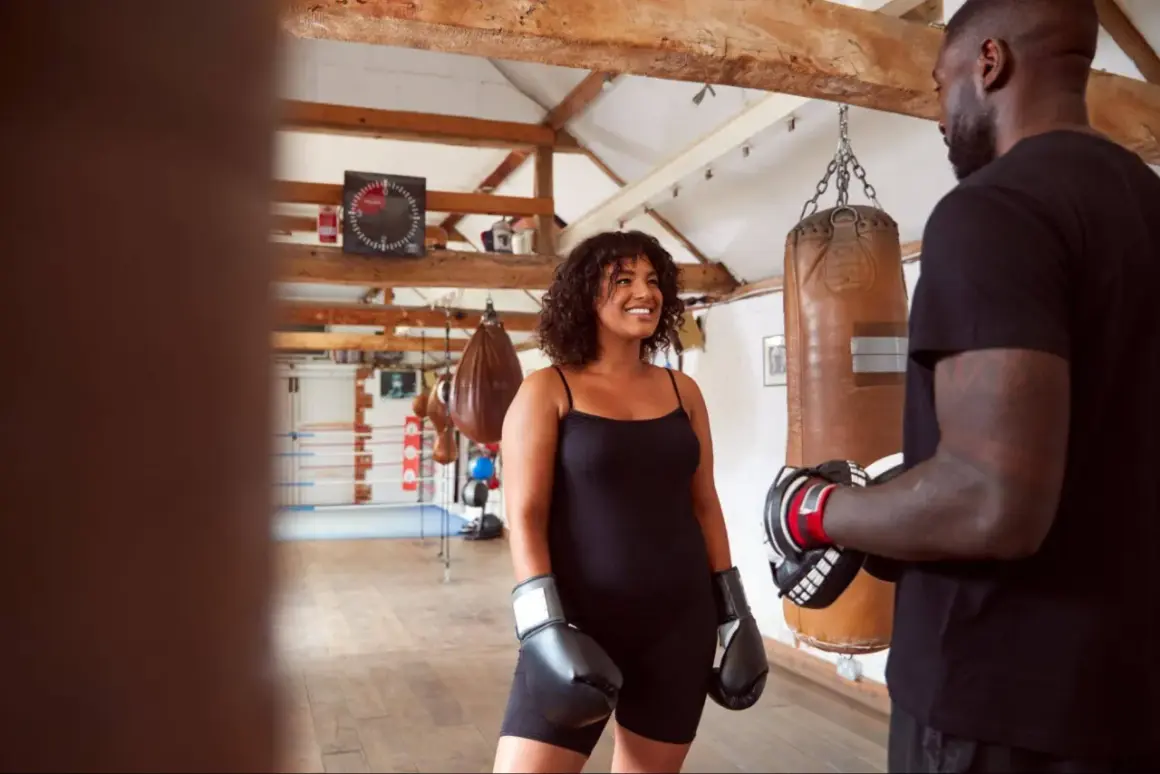
The short answer to the question does boxing make you stronger is yes, but the kind of strength you get depends on how you train. I see boxing improve power, trunk stiffness, muscular endurance, balance, and the ability to keep producing force when fatigue starts to bite. It is excellent conditioning, but if your goal is maximal strength or noticeable muscle gain, boxing works best when it sits beside targeted resistance work, not instead of it.
The strongest gains come from boxing plus targeted strength work
- Boxing builds power, endurance, balance, and coordination more reliably than it builds size.
- Heavy bag rounds, mitt work, and footwork train the body in short, repeated bursts, which is why boxing feels so conditioning-heavy.
- If you want more raw strength, add progressive lifting for squat, hinge, push, pull, and carry patterns.
- For most recreational fighters, 2 strength sessions and 2-4 boxing sessions per week is a practical blend.
- Progress shows up first in cleaner technique under fatigue, faster recovery, and better late-round output.
What boxing actually makes stronger
Boxing does not build strength in one neat bucket. It improves several qualities at once, and that is why the results can feel dramatic even when the muscle gain is modest. When I look at a boxer getting stronger, I usually see more force coming from the legs and hips, a stiffer and more controlled trunk, and shoulders that can repeat work without falling apart.
| Strength quality | How boxing trains it | What you notice |
|---|---|---|
| Power | Snapping punches, rotational force, explosive footwork | Harder, quicker shots |
| Muscular endurance | Repeated combinations, guard work, bag rounds | Less arm burn, steadier pace |
| Core stability | Resisting rotation and keeping posture | Cleaner transfer from floor to fists |
| Balance and coordination | Pivots, slips, head movement | Fewer wasted steps |
| Shoulder and upper-back endurance | Long guard periods, volume punching | Less fade in later rounds |
Why boxing is conditioning first and strength second
Boxing is conditioning first because it is built around repeated high-effort bursts, usually 2 to 3 minutes at a time with short rest. That format pushes the aerobic and anaerobic systems at the same time, and it rewards athletes who can keep technique together while breathing hard. In plain terms, you are learning to produce force when you are already tired.
That is why boxing often behaves like high-intensity interval training, or HIIT, but with a much bigger technical demand than a generic circuit. A bag round is not just cardio: every punch asks for timing, balance, and enough force to stay sharp when your shoulders are burning. The work is demanding enough to improve work capacity, yet specific enough to improve fighting mechanics at the same time.The limitation is obvious, though. If the workload is always the same, you will improve conditioning faster than raw strength. The stimulus is variable, the resistance is brief, and the sport stops you from grinding out heavy reps the way the gym does. That is useful for fighters, but it is not the fastest route to bigger numbers in a strength test.
So if the real goal is stronger punching, more stable posture, and better late-round force, the training plan has to go beyond rounds alone.
How to train boxing for more raw power
If I want boxing to carry over into real strength, I build the week around a small amount of lifting, one or two explosive sessions, and enough skill work to keep technique honest. The goal is not to turn boxing into bodybuilding. It is to give your body a stronger engine, then teach that engine to express itself through punches, footwork, and defensive movement.
| Training block | Practical dose | Why it matters |
|---|---|---|
| Strength work | 2 sessions per week, 3-5 sets of 3-5 reps on big lifts | Raises max force without too much fatigue |
| Explosive work | 1-2 sessions per week, 4-6 sets of 3-5 throws or jumps | Improves rate of force development, the speed at which you can produce force |
| Boxing skill | 2-4 sessions per week, 3-8 rounds | Teaches force transfer into technique |
| Conditioning finishers | 1-2 sessions per week, 6-10 hard intervals | Builds repeat-effort capacity |
The lifts I like most for boxers are trap-bar deadlifts, squats, split squats, pull-ups, rows, weighted push-ups or bench variations, sled pushes, carries, and rotational medicine-ball throws. They cover the force patterns that matter without wasting energy on a lot of bodybuilder-style volume. I especially like the sled because it builds push power and conditioning at the same time while staying relatively joint-friendly.
- Keep heavy lifting away from hard sparring when possible. I usually like 24-48 hours between them.
- Stop conditioning intervals before punching form collapses completely. Sloppy reps build sloppy habits.
- Eat enough protein and total calories to adapt. For most athletes, protein in the 1.6-2.2 g/kg/day range is a sensible target.
That is the kind of structure that turns boxing from a tough workout into a true strength-building tool.
When boxing alone is enough and when it isn't
For a beginner or a general-fitness client, boxing alone can be enough for a long time. The work is challenging, the learning curve is steep, and the body changes fast when everything is new. But once your technique settles in, boxing alone usually stops being the best tool for pure strength or muscle gain.
| Goal | Boxing alone | Better with added strength work |
|---|---|---|
| General fitness and calorie burn | Yes | Optional |
| Better footwork, balance, and stamina | Yes | Optional |
| More punch force | Partially | Yes |
| More muscle size | Limited | Yes |
| Faster late-round recovery | Yes, to a point | Yes, especially with lifting and recovery |
I would be especially cautious with the idea that more rounds automatically mean more strength. Past a point, extra volume can leave you flat, slow, and sore without giving you much additional force production. If the goal is performance, there is a point where less junk volume and more targeted work wins. That is the part many recreational boxers miss when they try to outwork a poor plan.
If you are already strong and just want better conditioning, boxing alone can be enough. If you want both strength and a better gas tank, the hybrid approach is usually the sweet spot.
How to know it is working
Strength gains from boxing are easy to miss if you only judge them by bodyweight or arm size. I prefer performance markers because they tell the truth faster. If boxing is making you stronger, your output should stay cleaner for longer and recover faster between efforts.
- You can keep your guard and shoulder position without your hands dropping as early.
- Your last round looks more like your first round.
- Your punches feel sharper even when breathing hard.
- Recovery between rounds gets faster.
- Your hips and trunk feel more stable when you pivot, slip, or throw combinations.
A simple test I like is three 3-minute bag rounds with the same combination sequence once a week. If your output, timing, and form improve over 6-8 weeks, the program is working. If the numbers or the quality stall, the issue is usually recovery, poor loading, or too much fatigue from too many hard sessions stacked together.
That kind of tracking keeps the conversation honest, because it separates real adaptation from just feeling tired.
The smartest way to build strength with boxing
If I had to give one rule, it would be this: use boxing to build athletic strength and conditioning, then use a little strength training to make that work pay off. For most recreational boxers, that means 2 boxing skill sessions, 1 to 2 conditioning sessions, and 2 full-body strength sessions each week, with recovery treated as part of the program rather than an afterthought.
- Prioritize quality rounds over endless rounds.
- Keep the main lifts simple and progressive.
- Use explosive work to connect strength to speed.
- Eat enough protein and total calories to adapt.
- Back off when your hands slow down and your technique starts leaking.
That is the version of boxing I trust most. It makes you fitter, harder to move, more resilient under pressure, and stronger in the places that matter, without pretending that bag work alone can replace a real strength plan.