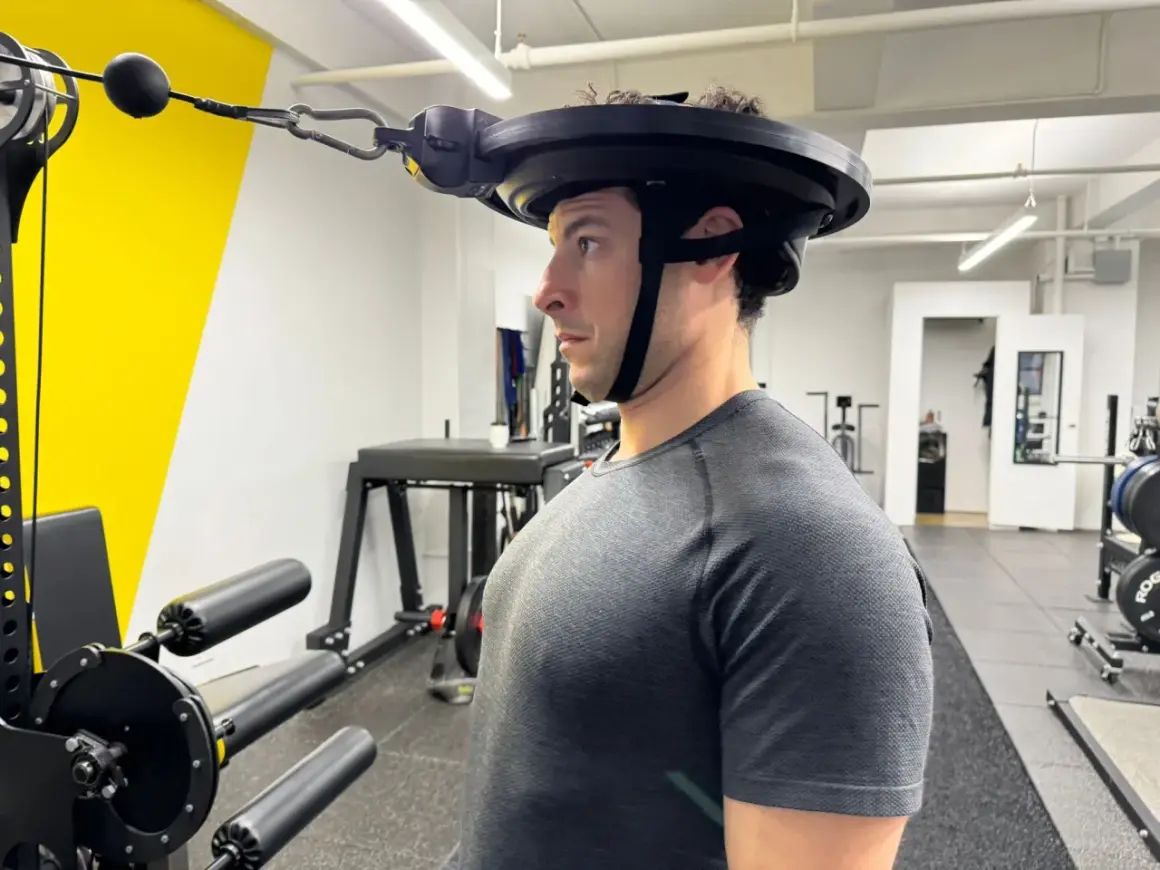
What matters most before you load the neck
- Direct neck work is useful, but not complete on its own. Flexion needs to be paired with extension and lateral work.
- Control matters more than load at the start. Most people get more from clean reps than from chasing weight.
- Recent consensus in combat and collision sports favors a mixed approach. Isometrics and dynamic work both have a place.
- Two to three sessions per week is a practical development range. In-season, volume usually drops.
- Pain, dizziness, numbness, or radiating symptoms are stop signs. This is conditioning, not a test of toughness.
Why direct neck work matters in conditioning
I think of neck training as insurance for the positions athletes actually live in. In combat sports, the neck has to resist snap-downs, clinch pressure, takedown entries, and sudden head movement when you are bracing for contact. A stronger cervical system can also make postural control feel less fragile during hard sparring, grappling, sled work, or heavy carries.The honest part is this: the evidence is mixed on whether neck strength alone reduces concussion risk. Stronger necks may help reduce head acceleration and improve force absorption, but they are not a shield. What I trust more is the performance side of the story. Better neck strength and stiffness can improve how an athlete tolerates chaotic force, which is exactly what conditioning should prepare for.
That is why I do not treat this as a vanity exercise. I treat it as a small, high-value accessory that supports the trunk-neck-head link. And once you see it that way, the next question becomes obvious: which version actually fits your setup?
The versions that actually make sense
There is more than one way to train cervical flexion, and the best option depends on the athlete, the phase of training, and how much control you can keep under load. I usually start by deciding whether the goal is learning the pattern, building load tolerance, or adding a more sport-like stimulus.| Variation | Best at | Best for | Main caution |
|---|---|---|---|
| Prone bench flexion | Clean, controlled range of motion | Beginners and athletes who need a low-cost setup | Easy to cheat by shortening range or using the torso |
| Harness or band resistance | Progressive loading | Athletes who already tolerate direct neck work | Load can get sloppy fast if bracing breaks down |
| Manual resistance | Reactive bracing and coaching feedback | Warm-ups, team settings, travel days | Hard to standardize from week to week |
| Isometric holds | Position strength and tolerance | Return-to-training phases and low-load weeks | Should not replace all dynamic work |
If you only have one option, use the simplest one you can perform with total control. That is usually the right place to begin. The next step is learning how to execute the movement well enough that the neck, not the rest of the body, does the work.
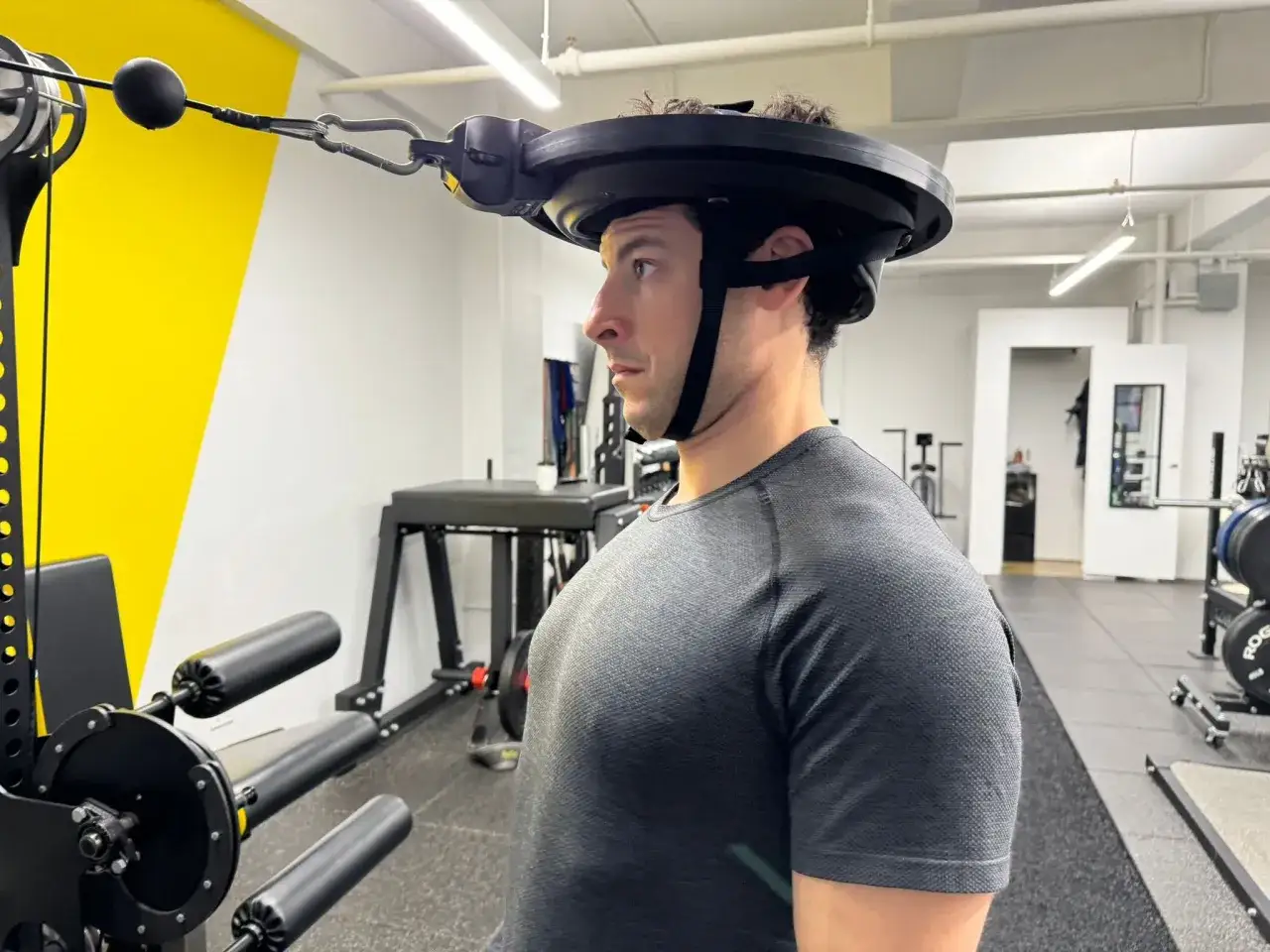
How to perform it with control
For most athletes, I prefer a supported prone setup because it makes cheating harder. Lie face down with your upper chest supported on a bench and your head just off the edge. If you use a harness or band, keep the same standard: ribs down, chin lightly tucked, and no wild movement through the upper back.
- Set the neck in a neutral or slightly tucked position before the first rep.
- Lower slowly into flexion for 2 to 3 seconds.
- Pause briefly at the bottom without collapsing.
- Lift smoothly back to neutral, not into an over-cranked end range.
- Stop the set when the movement starts to turn into a torso crunch or a shrug.
The rep should look boring. That is a feature, not a flaw. I want smooth motion, steady breathing, and no visible strain through the jaw or shoulders. If the shoulders start hiking, the chest starts lifting, or the athlete is holding their breath like they are deadlifting, the load is too high.
For a lot of people, a slow tempo works best: about 2 seconds down, 1 second up, and a brief pause in the most controlled position. If you want to use isometrics, hold the flexed position for 10 to 20 seconds without letting the chin collapse or the head drift forward. Once the movement feels clean, the question shifts from technique to programming.
How to program it without overdoing it
Neck training does not need to be complicated, but it does need to be deliberate. A practical development phase usually sits at 2 to 3 sessions per week, especially in the off-season or general preparation block. In-season, I usually keep the work in maintenance mode instead of trying to force new adaptation.
For most athletes, I like a simple split:
- Beginner phase: 2 sessions per week, 2 sets of 8 to 10 controlled reps.
- Intermediate phase: 2 to 3 sessions per week, 2 to 4 sets of 6 to 12 reps.
- Isometric phase: 2 to 3 sets of 10 to 20 second holds.
- Harder phase: one lighter session and one heavier session, with effort moving from around RPE 5 toward RPE 8+
That loading range lines up with recent sport-specific recommendations that emphasize both lower and higher efforts depending on the phase of training. If you have access to a dynamometer, great. If you do not, use effort and movement quality as the guide. I would rather see a neck trained at a moderate, repeatable effort than a neck trained to failure once and then ignored for two weeks.
There is also a sequencing issue. I usually place direct cervical work after the main strength lifts or at the end of a technical session, not before hard sparring. Fatigue changes head position, and poor head position is the last thing you want when skill quality matters. That leads straight into the biggest ways people mess this up.
Common mistakes that cut the value in half
The most common error is loading too aggressively too soon. The neck is small, but that does not mean it should be treated like a fragile rehab toy or an ego lift. It responds best when progress is gradual and easy to repeat.
- Using too much range. More motion is not automatically better if the end position is sloppy.
- Turning flexion into a crunch. If the torso is doing the job, the neck is not getting the target stimulus.
- Training flexion alone. That creates an incomplete profile. Extension and lateral flexion still matter.
- Chasing soreness. A sore neck is not the same thing as a stronger or more useful neck.
- Ignoring warning signs. Headache, dizziness, numbness, tingling, or radiating pain means stop and reassess.
I also see people borrow habits from other strength lifts and apply them badly here. Heavy bracing is fine, but over-bracing can make the neck rigid in the wrong way. The goal is not to lock the head into one frozen position all day. The goal is to let the athlete produce force and recover from force across multiple angles. That is why the final piece of the puzzle is integration.
Where it fits in a real combat-sport week
A useful neck plan should fit the athlete’s actual workload, not sit on paper as a separate fantasy program. In combat sports, I prefer to pair direct neck work with broader strength sessions or low-to-moderate skill days. If the week already has hard sparring, heavy clinch work, and lots of grappling, the neck is already getting taxed. In that case, accessory volume should be tighter, not bigger.
I also like to match the neck menu to the athlete’s needs. A wrestler who spends a lot of time fighting posture in the clinch may need more extension and lateral flexion than a general fitness client. A boxer may need more reactivity and bracing tolerance. A functional fitness athlete may care more about posture under load, carries, and overhead stability. In other words, the exercise is the same, but the target is not.
Deadlifts, shrugs, carries, rows, and grappling all contribute some indirect neck demand, but they are not a substitute for direct work if cervical conditioning is the goal. I see them as supporting players. Direct flexion work fills the gap they leave, especially when the aim is to make the neck stronger in a measurable, repeatable way.
A starter block I would actually use
If I had to start with one direct neck drill, neck curls still make the most sense as the entry point, because they are easy to scale and easy to coach. My simple starter block for a fighter or functional athlete would look like this:
- Weeks 1 to 2: 2 sessions per week, 2 sets of 8 to 10 slow reps on a supported prone setup.
- Weeks 1 to 2: add 2 sets of 10-second isometric holds in a separate session or after the reps.
- Weeks 3 to 4: add one set or a small load increase, not both at once.
- Weeks 3 to 4: add extension or lateral flexion so the program stops being one-dimensional.
That is enough to build a meaningful base without turning the neck into a recovery problem. Once the movement is smooth and the athlete can keep the head stacked cleanly over the torso, the next progression is usually not maximal loading. It is better position, better tolerance, and a more complete cervical menu. That is the part that actually carries over to conditioning.