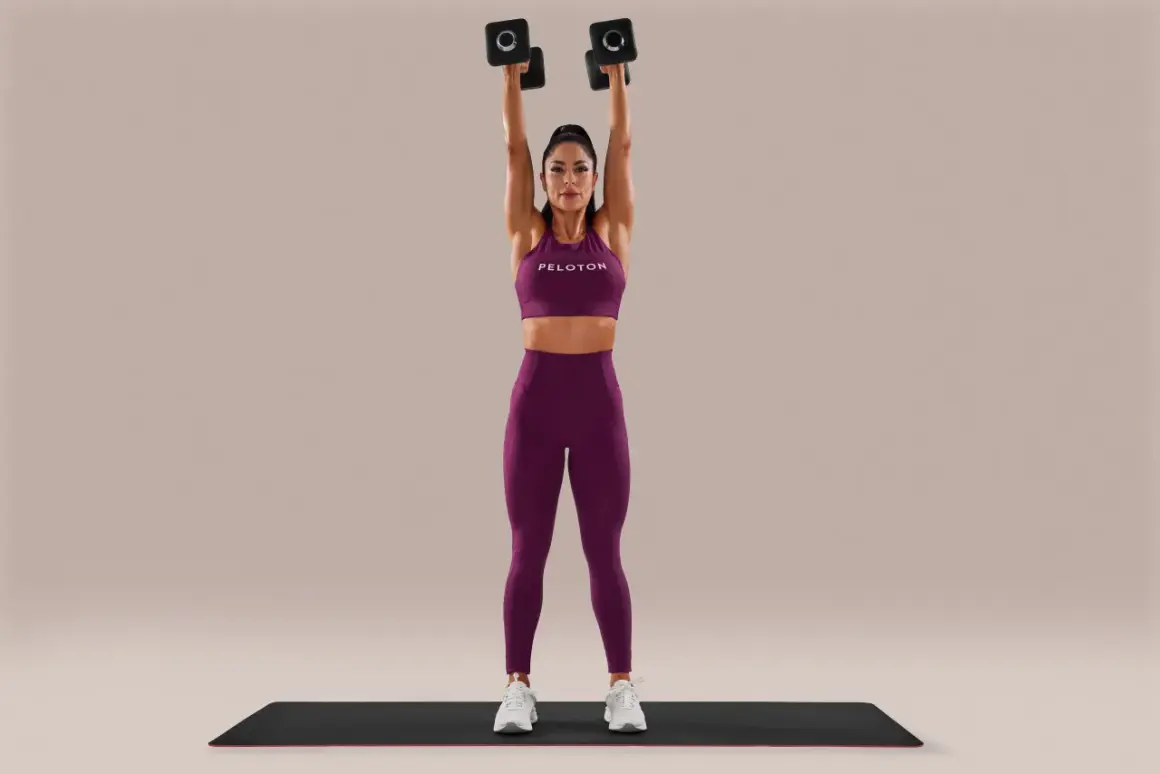
Firm, defined arms come from a simple combination: enough resistance to build muscle, enough weekly work to make progress, and enough overall activity to reveal the shape underneath. This guide on arm-toning exercises for females with weights breaks that down into the moves, set-and-rep targets, and programming choices that actually matter. I’ll keep it practical, because the best results come from routines you can repeat consistently, not from chasing burn for its own sake.
The fastest route to more defined arms is smart loading, not endless light reps
- Toning is really two things: building the arm and shoulder muscles while lowering overall body fat enough for the shape to show.
- Two weighted sessions per week is a solid minimum, with 2 to 3 sets per exercise and mostly 8 to 12 reps.
- The best exercises combine curls, triceps work, presses, rows, and lateral raises instead of isolating only one small muscle.
- Progress matters more than variety: add reps first, then load, once your form stays clean.
- Most people notice real change in 6 to 12 weeks if training, recovery, and nutrition stay consistent.
What arm toning actually means
When people say they want toned arms, they usually want two visible changes at once: a little more muscle shape through the biceps, triceps, and shoulders, plus less softness around the upper arm. That is why weights matter. They give the muscle enough tension to adapt, and that adaptation is what creates a firmer look.
I also like to clear up one common misconception early: you cannot “spot reduce” fat from the arms by training the arms alone. Mayo Clinic makes the same point in plain language - you can strengthen a muscle in one area, but fat loss happens across the body as a whole. In practice, that means the best arm plan is a mix of smart resistance training, enough daily movement, and a nutrition pattern that supports gradual fat loss if that is part of the goal.
There is another myth worth ignoring. Lifting weights will not suddenly make most women look bulky. Building that kind of size takes far more training volume, food, and time than people usually imagine. For most readers, weights make the arms look tighter, not bigger, especially when the work is paired with a sensible weekly routine. Once that is clear, the exercise menu makes a lot more sense.
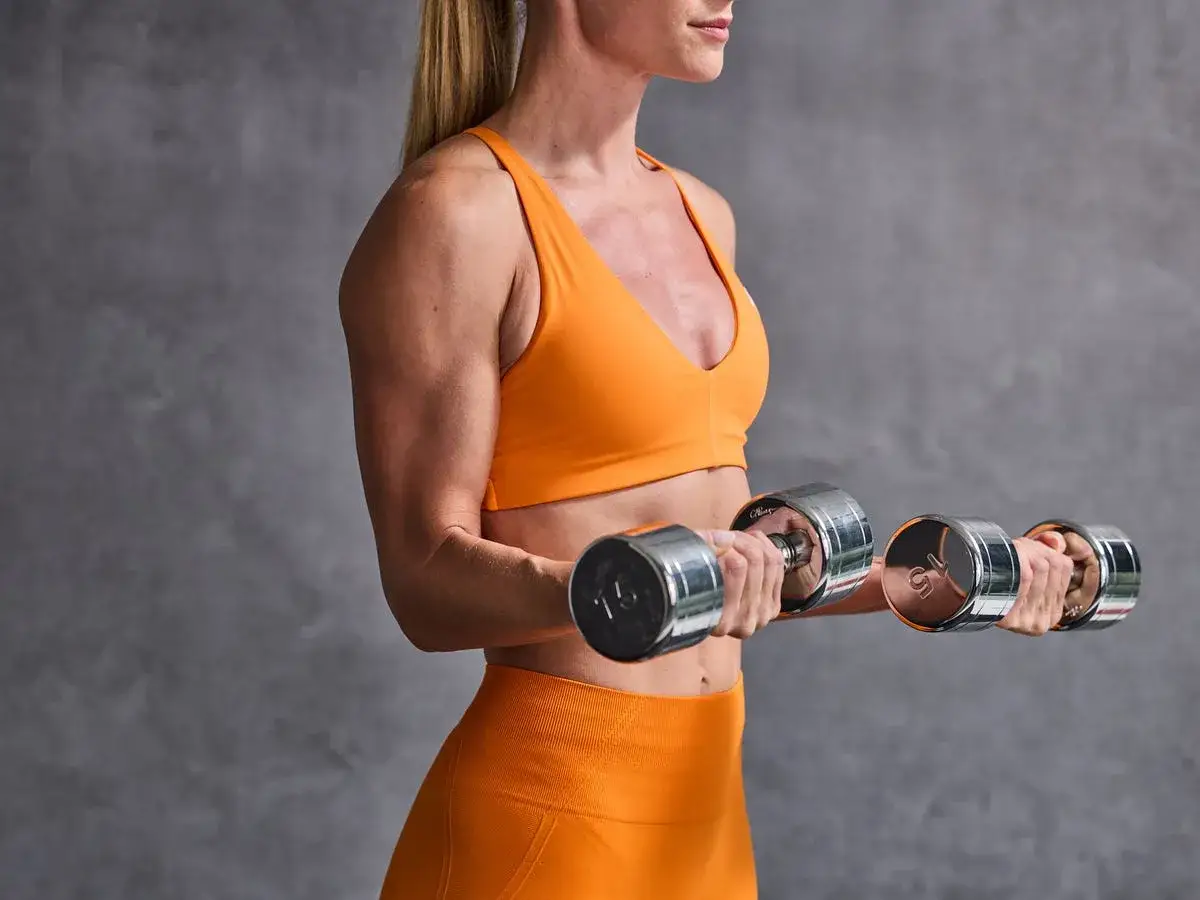
The best weighted moves for the upper arms
I prefer to build an arm-focused session around a few reliable patterns rather than a pile of random isolation drills. The goal is to hit the front of the arm, the back of the arm, and the shoulder frame that makes the whole area look more athletic.
| Exercise | Main focus | Why I use it | Form cue |
|---|---|---|---|
| Dumbbell biceps curl | Biceps | Classic front-of-arm builder that improves visible shape | Keep the elbows close to your ribs and avoid swinging |
| Hammer curl | Biceps, brachialis, forearms | Adds side-arm thickness and carries over well to grip work | Use a neutral grip and lift under control |
| Overhead triceps extension | Triceps, especially the long head | One of the best moves for the back-of-arm area | Keep the ribs stacked and the elbows narrow |
| Triceps kickback | Triceps | Good as a lighter finisher when you want clean lockout work | Freeze the upper arm and move only the forearm |
| Dumbbell floor press | Chest, triceps, front shoulders | Gives the arms a heavier compound pressing stimulus | Lower with control and keep the elbows at about 45 degrees |
| One-arm dumbbell row | Lats, rear delts, biceps | Balances all the pressing and improves posture | Pull the elbow toward the hip, not the shoulder |
| Lateral raise | Side delts | Makes the upper arm line look broader and more athletic | Lift to shoulder height with a slight bend in the elbows |
If I had to keep the list short, I would start with curls, hammer curls, overhead triceps extensions, floor presses, rows, and lateral raises. That combination covers both the muscle groups that shape the arm and the support work that keeps the shoulder healthy. From there, the next question is how hard to train them.
How to choose weights, reps, and weekly volume
The CDC still recommends muscle-strengthening work on at least 2 days per week, and that is a good floor for almost everyone. For arm-focused work, I usually find that 2 upper-body sessions per week is enough to make progress without beating up the elbows or shoulders. If you recover well, a third session can help, but it should add quality work, not just more fatigue.
For most women, the sweet spot is straightforward:
- Compound lifts like floor presses and rows: 2 to 3 sets of 6 to 10 reps.
- Isolation lifts like curls, hammer curls, kickbacks, and overhead extensions: 2 to 3 sets of 8 to 15 reps.
- Rest periods: about 75 to 120 seconds for bigger lifts, and 45 to 75 seconds for smaller arm moves.
- Effort level: finish most sets with 1 to 3 reps left in the tank, which means the last rep is challenging but still clean.
I like that range because it is flexible. Heavier work builds strength and density, while moderate reps are usually easier to recover from and better for learning form. You do not need to chase extreme pump sets or endless 25-rep burnouts to get a better-looking arm.
Progression is the part that changes everything. When you can hit the top of the rep range for every set with solid form, increase the dumbbells by the smallest available jump, usually 2.5 to 5 lb per hand in many home or gym setups. If the weight jumps are too large, add one or two reps before you add load. That is how an arm routine stops being a random workout and starts becoming a training plan. Once the numbers are set, the workout template becomes simple.
A simple 2-day arm-conditioning plan
I like this structure because it feels realistic. It trains the arms hard enough to matter, but it also respects the rest of your week. Each session should take about 30 to 40 minutes, including a brief warm-up.
| Day | Workout | Sets and reps | Why it works |
|---|---|---|---|
| Day 1 | Dumbbell floor press, one-arm row, overhead triceps extension, dumbbell curl, farmer carry | 3 x 8-10 on press and row, 2 x 10-12 on arm work, 3 x 30-45 seconds on carries | Builds pressing and pulling strength while giving the triceps and biceps direct work |
| Day 2 | Incline push-up or dumbbell press, lateral raise, hammer curl, triceps kickback, rear-delt fly | 3 x 8-12 on the first two moves, 2 x 10-15 on the rest | Hits shoulder shape, arm definition, and upper-back balance in one session |
Before either workout, I would spend 5 to 8 minutes on light movement: arm circles, band pull-aparts, shoulder rolls, and a few easy practice reps with very light dumbbells. That small warm-up helps the shoulders feel stable and keeps the first working set from feeling awkward. If you only have 20 minutes, I would still keep the same pattern and cut the extras before I cut the presses or rows.
This is where conditioning sneaks in as a benefit. Farmer carries, rows, and pressing work make the upper body stronger in a way that carries over to daily movement, sports, and combat-sport prep. It is not just about appearance; it is about making the arms useful under load. From there, the main job is avoiding the mistakes that blur progress.
Common mistakes that slow visible change
The biggest mistake I see is underloading the movement forever. If the same 3 lb or 5 lb dumbbells feel comfortable month after month, the muscles do not have much reason to adapt. The second mistake is chasing a burn with sloppy reps. A set only helps if the target muscle is doing the work.
- Training only biceps and ignoring triceps, shoulders, and upper back.
- Using momentum on curls and kickbacks instead of controlling the lift.
- Skipping compound work like presses and rows, which gives the arms a stronger training stimulus.
- Doing too much volume too soon and letting elbows or shoulders get irritated.
- Expecting arm workouts alone to reveal definition without any attention to total activity and nutrition.
That last point matters more than people admit. If body fat is staying high, arm shape can improve without looking very different in the mirror yet. If calories are too low and protein is too sparse, you may lose strength and stall. I prefer a middle path: train hard, eat enough to recover, and use overall activity to help the definition show. Once those mistakes are out of the way, results become much easier to read.
What progress usually looks like over the first 12 weeks
Strength changes usually show up before visible changes do. In the first 2 to 4 weeks, most people notice better coordination, less shaking, and a little more confidence with the weights. By weeks 6 to 8, the arms often start to feel firmer, and by weeks 8 to 12, the change is usually visible if training and recovery have been consistent.
I tell readers to watch three signs instead of obsessing over the mirror every day:
- Rep quality: the same weight feels smoother and more controlled.
- Load tolerance: you can increase the dumbbells without losing form.
- Clothing fit: sleeves and shoulders start to sit differently, even before the scale changes much.
If you want faster visual change, add some total-body conditioning too. More steps, a few brisk cardio sessions, or short finishers after lifting can help with fat loss without interfering with arm strength. The point is not to turn every workout into cardio; it is to make the whole weekly pattern support the goal. That is the lens I use when I build arm-focused conditioning plans.
What I would prioritize if the goal is firmer arms, not just tired arms
If I were simplifying the whole topic for someone starting now, I would keep the plan almost boring on purpose. Train arms and upper body twice a week, use a push, a pull, a curl, and a triceps move in each session, and progress one variable every 1 to 2 weeks. That alone solves most of the confusion around weighted arm training.
- Stay consistent: two good sessions beat five scattered ones.
- Keep the load honest: the last 2 reps should feel challenging, not decorative.
- Use compound lifts: presses, rows, and carries make the arm work more useful.
- Respect recovery: sleep, protein, and one or two easier days keep progress moving.
- Track something: reps, weight, or total sets so you know when you are improving.