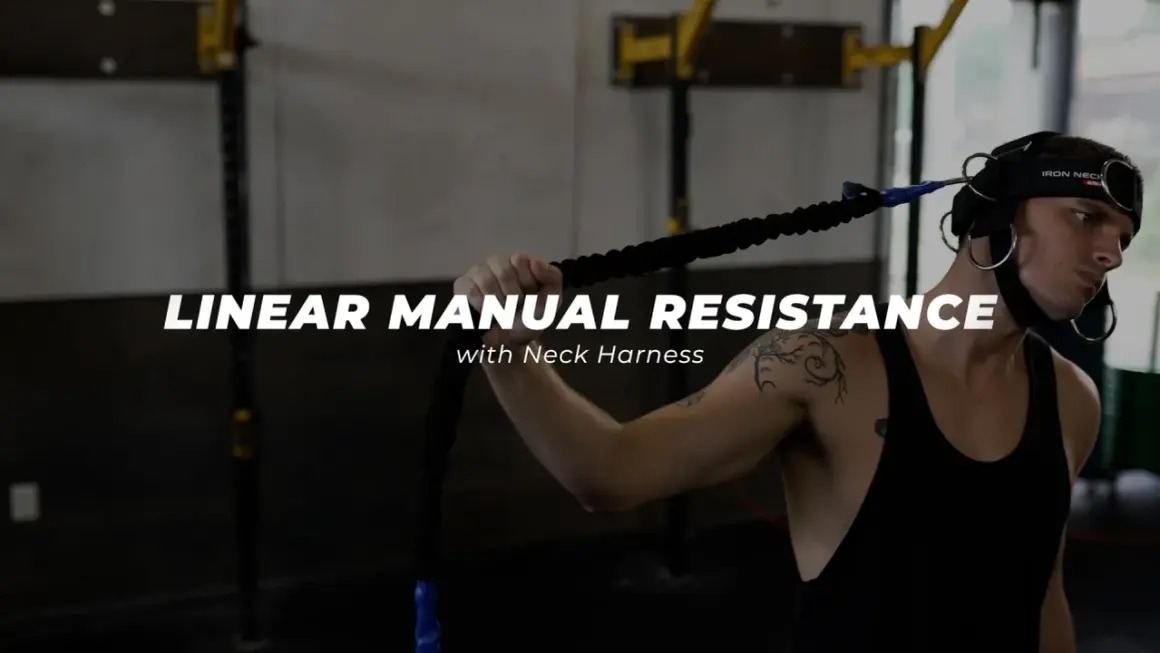
I like neck harness work because it is simple, honest conditioning: you load the cervical spine in a specific direction, then the muscles that control that motion have to adapt. The real answer behind neck harness muscles worked is straightforward: the target changes with the movement, the setup, and how much control you keep. That matters whether you are training for combat sports, general resilience, or just a stronger-looking, more stable neck.
The target changes with the direction of resistance
- Extension mainly loads the posterior neck chain, especially the splenius, semispinalis, and suboccipital muscles.
- Flexion shifts work to the sternocleidomastoid, longus colli, longus capitis, and the scalenes.
- Lateral flexion and rotation add more scalene and SCM demand, with the upper traps and levator scapulae assisting.
- For conditioning, a neck harness works best with controlled reps, modest volume, and steady progression.
- The best sets finish with the neck working hard, not the torso cheating the motion.
What a neck harness actually trains
A neck harness is not a magic attachment that trains one muscle in isolation. It is a loading tool, and the muscles that work depend on whether you are extending, flexing, side-bending, or rotating the head. In practical terms, that means a rear-loaded harness mostly challenges the back of the neck, while a front-loaded setup shifts demand to the front and deep stabilizers of the cervical spine.
I think of it this way: the harness gives you direct resistance, but the direction decides the job. That is why direct neck work is more useful than people expect. It lets you target the cervical muscles on purpose instead of hoping they get enough incidental work from deadlifts, shrugs, or grappling. Those lifts help, but they do not replace direct loading when the goal is actual neck conditioning.
The neck also does not work as one lump. The superficial muscles are easier to feel, but the deeper stabilizers matter just as much for control, posture, and force transfer. Once you understand that, the next step is matching each movement to the right muscle groups.
The muscles that work in each movement
The cleanest way to understand a neck harness is by movement pattern. A single harness can train several regions of the neck, but each direction shifts emphasis to a different set of muscles.
| Movement | Primary muscles worked | What it feels like | Best use |
|---|---|---|---|
| Extension | Splenius capitis, splenius cervicis, semispinalis capitis, semispinalis cervicis, suboccipitals, with levator scapulae and upper traps assisting | Back of the neck and upper posterior cervical chain | Most common choice for fighters, wrestlers, and anyone who wants rear-neck resilience |
| Flexion | Sternocleidomastoid, longus colli, longus capitis, scalenes, and the infrahyoids | Front of the neck, especially the deep stabilizers you do not usually notice | Posture support, forward-head control, and balanced neck development |
| Lateral flexion | Scalenes, sternocleidomastoid, levator scapulae, splenius, and semispinalis | Side of the neck, often with a strong stabilizing feel | Clinch work, asymmetry control, and all-around cervical balance |
| Rotation | Sternocleidomastoid, splenius muscles, semispinalis muscles, and the suboccipitals | Smaller but very specific rotational control | Accessory work, not usually the main lift |
The biggest misconception is that the traps do all the work. They can assist, especially if you shrug or lose position, but the real work belongs to the cervical movers and stabilizers. The deep flexors in particular, especially the longus colli and longus capitis, are easy to overlook because they do not create the same obvious burn as the sternocleidomastoid. That is exactly why controlled range matters so much.
Once you know which muscles are involved, the next question is how to train them without turning a useful drill into junk volume.
How I would program it for conditioning
For most athletes, one to two neck sessions per week is enough to build useful conditioning without creating a recovery problem. I usually start with 2 to 4 sets of 10 to 20 controlled reps for dynamic work, or 15 to 30-second holds if the athlete is still learning to control the movement. The neck responds well to consistency, not reckless loading, so I would rather see clean submaximal sets than one ugly all-out effort.
- Start with one direction first, usually extension or flexion.
- Add the opposite direction after the first pattern feels stable and predictable.
- Use the smallest load jump available, often 2.5 to 5 lb at a time.
- Keep 1 to 2 reps in reserve on most sets so form stays honest.
- Use slower lowering phases if the goal is tissue tolerance and control.
- Use isometrics when you want lower joint stress or a simpler entry point.
For combat athletes, I tend to keep the volume modest and the execution strict. The neck already gets exposed to isometric bracing, impact, clinch pressure, and awkward angles in sport, so the goal is to build capacity, not pile fatigue onto an already busy area. If your reps start turning into a whole-body heave, the set is over.
That leads directly to the part most lifters get wrong: making the neck work while everything else tries to steal the rep.
How to keep the load on the neck, not your ego
For extension
Set the harness securely, keep the torso braced, and move through the cervical spine instead of arching the lower back. If your shoulders are climbing toward your ears, the traps are taking over and the neck is getting a reduced stimulus. I want the back of the neck to work first, not the whole upper body.
For flexion
Think of the motion as a controlled nod rather than a violent chin shove. The front of the neck should feel active, but the movement should stay smooth. If you jam the chin down or shorten the range too aggressively, you usually lose the deep flexor contribution and turn the rep into a sloppy crunch.
Read Also: What Muscles Do Forearm Grips Work? The Real Answer
For lateral work
Keep the face square and avoid rotating or leaning through the torso. Side-bending should feel like the ear moves toward the shoulder under control, not like the shoulder hikes up to meet the head. This is the version that exposes whether the scalenes and sternocleidomastoid are actually doing the job.
The general rule is simple: the cleaner the rep, the more useful the adaptation. Once that is in place, the next question is whether a harness is the best tool for the job or just one option among several.
When a harness helps and when another tool is better
A neck harness is excellent when you want measurable, repeatable overload through a full movement pattern. It is less useful when you need a very low-stress start, a travel-friendly option, or a rehab-style entry point. In real programming, I use the harness as one piece of the puzzle, not the whole puzzle.
| Tool | Best use | Strength | Limitation |
|---|---|---|---|
| Neck harness | Direct dynamic loading and progressive overload | Easy to track and scale | Can become too heavy too quickly if ego takes over |
| Bands or manual resistance | Warm-ups, travel sessions, and light accessory work | Cheap, flexible, and easy to control | Harder to standardize from session to session |
| Isometrics | Early-stage conditioning, deloads, and pain-sensitive situations | Simple and joint-friendly | Less direct carryover to full-range strength |
| Bridging variations | Advanced wrestling-style tolerance work | Very specific to some sports | Not the safest default for most lifters |
I still like harnesses because they make progression obvious. If the same motion feels smoother with a little more load over time, you know the work is doing something. Bands are great when you want simplicity. Isometrics are great when you want to keep the joint stress low. Bridges can have a place, but they are not where I would start most people.
That leaves the real bottom line: how to get useful neck adaptation without overcomplicating the whole thing.
The part that makes neck harness work worth it
The main payoff is not just a thicker-looking neck. It is the ability to keep your head and cervical spine organized under fatigue, contact, and awkward positions. That matters in wrestling, MMA, boxing, football, and any conditioning plan where the head gets pushed, pulled, rotated, or held in place longer than it wants to be.
If I had to reduce the whole topic to one coaching point, it would be this: train extension and flexion first, add lateral work if you need more balance, and keep the load light enough that the neck, not the rest of the body, is doing the job. Start conservatively, progress in small jumps, and stop sets the moment your posture starts to unravel.
Used that way, a neck harness becomes a precise conditioning tool instead of a novelty attachment, which is usually the difference between training that sticks and training people abandon after one bad session.