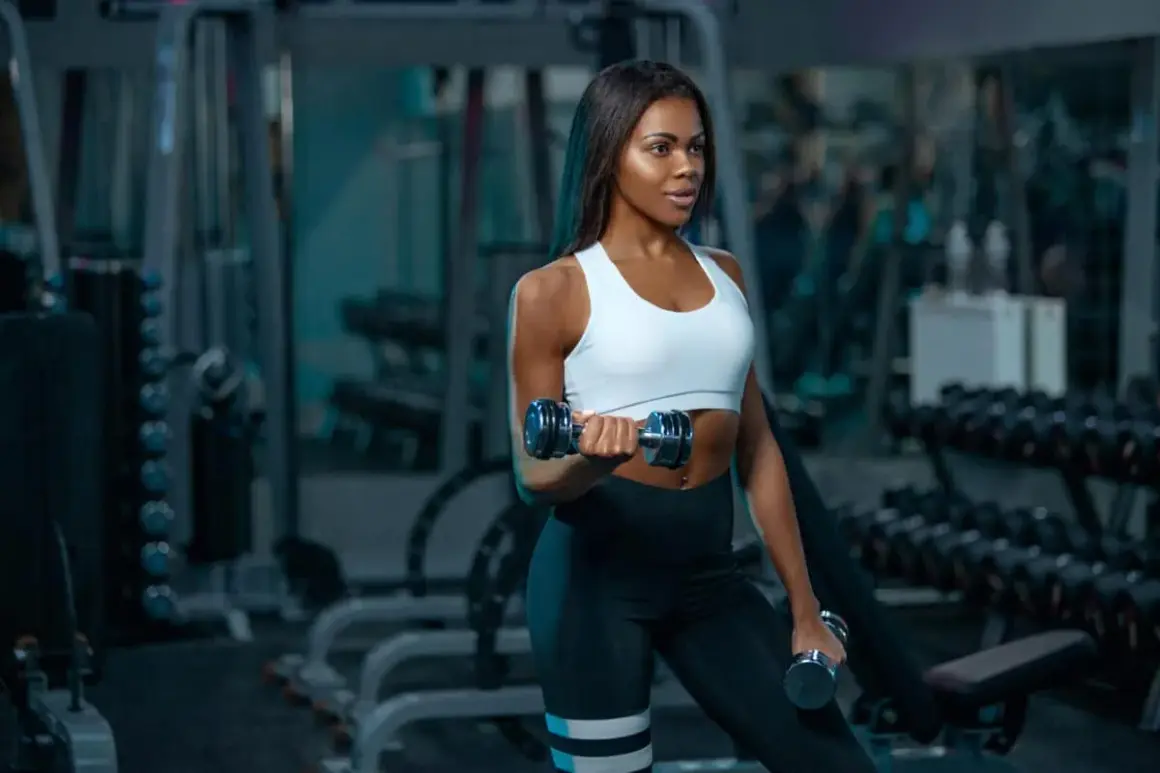
Strong, defined arms are not built by chasing a burn or stacking endless light reps. They come from enough resistance, enough weekly volume, and enough recovery for the triceps, biceps, shoulders, and grip to adapt. In this article, I break down what actually drives visible arm development in women, how to train for size and conditioning at the same time, and what usually slows progress down.
Strong arms come from progressive training, not random burnout
- Visible arm definition is a mix of muscle development and overall body composition, not local fat loss.
- A practical hypertrophy target is about 10 weekly sets per muscle group.
- Most useful arm work sits in the 6-12 rep range, with heavier loads reserved for strength.
- Presses, rows, curls, triceps work, and carries give the best return for both shape and conditioning.
- Protein, sleep, and steady progression matter more than chasing failure every workout.
What stronger arms really mean
When I talk about stronger arms, I mean more than the look of the upper arm in a tank top. Strong arms also change how the upper body performs under load: the delts give the arm width, the triceps create most of the upper-arm mass, the biceps help with elbow flexion, and the back and forearms keep the whole system usable when fatigue starts to climb.
That is why I do not treat arm definition as a trick. Visible shape comes from muscle plus body composition, not from trying to "burn off" one specific area. Harvard Health has made the same point for years: fat loss is systemic, not local. If the goal is more defined arms, the training has to build tissue first and then support a body-fat level where that tissue can show.
Women also adapt very well to resistance training. Research reviews show similar hypertrophy responses between men and women overall, and some data even suggest a relative upper-body strength advantage in women. In practice, that means there is no reason to train timidly just because the goal is leaner, stronger-looking arms.
Once that is clear, the programming question becomes much cleaner: what load, what volume, and what exercises actually move the needle?
The training variables that matter most
I usually lean on the current ACSM guidance as a simple anchor. Train major muscle groups at least twice a week, and if hypertrophy is the goal, aim for roughly 10 sets per muscle group across the week. That is not a magic number, but it is a useful target that keeps arm training honest instead of random.
| Goal | Typical load | Reps and sets | Weekly target | Best use |
|---|---|---|---|---|
| Strength | About 80% of 1RM | 2-3 sets of 3-6 reps | 2 sessions weekly | Heavier presses, stronger carries, better pulling power |
| Hypertrophy | About 60-80% of 1RM | 2-4 sets of 6-12 reps | Around 10 sets per muscle group | More visible arm size and shape |
| Conditioning | About 30-60% of 1RM | Timed circuits or 12-20 reps | 1-2 finishers per week | Work capacity and shoulder endurance |
1RM means one-repetition maximum, the heaviest load you can lift once with clean form. For most people, the sweet spot is not maximal testing; it is repeatable training that creates enough tension to force adaptation. A moderate repetition scheme around 6-12 reps is still the most practical default for arm growth, while heavier work close to 80% 1RM is better when raw strength is the priority.
I also pay attention to two terms that matter more than most people think. Mechanical tension is the force the muscle must produce under load. Metabolic stress is the local fatigue that builds in higher-rep work. For muscular arms, I want both, but I care more about consistent progression than about chasing a pump every session.
And no, you do not need complicated periodization to get started. Bands, bodyweight, dumbbells, and cables can all work if the effort is real and the loads progress over time.
With that in place, the next question is simple: which movements deserve space in the program?
The exercises that do the heavy lifting
I build arm development around patterns, not random isolation moves. That keeps the shoulders healthy and makes the work useful outside the mirror, especially for combat sports and functional fitness.
Pressing patterns
Close-grip push-ups, dumbbell floor presses, incline presses, and overhead presses train the triceps and delts together. I like them because they create the kind of shoulder and arm endurance that shows up when your guard is high, your breathing is hard, and the round is still not over.
Pulling patterns
Rows, lat pulldowns, and assisted chin-ups keep the upper back involved. The back frames the arm, protects the shoulder, and usually improves how the arm looks from the side more than people expect. If I had to choose one rule here, it would be this: do at least as much pulling as pushing.
Direct arm work
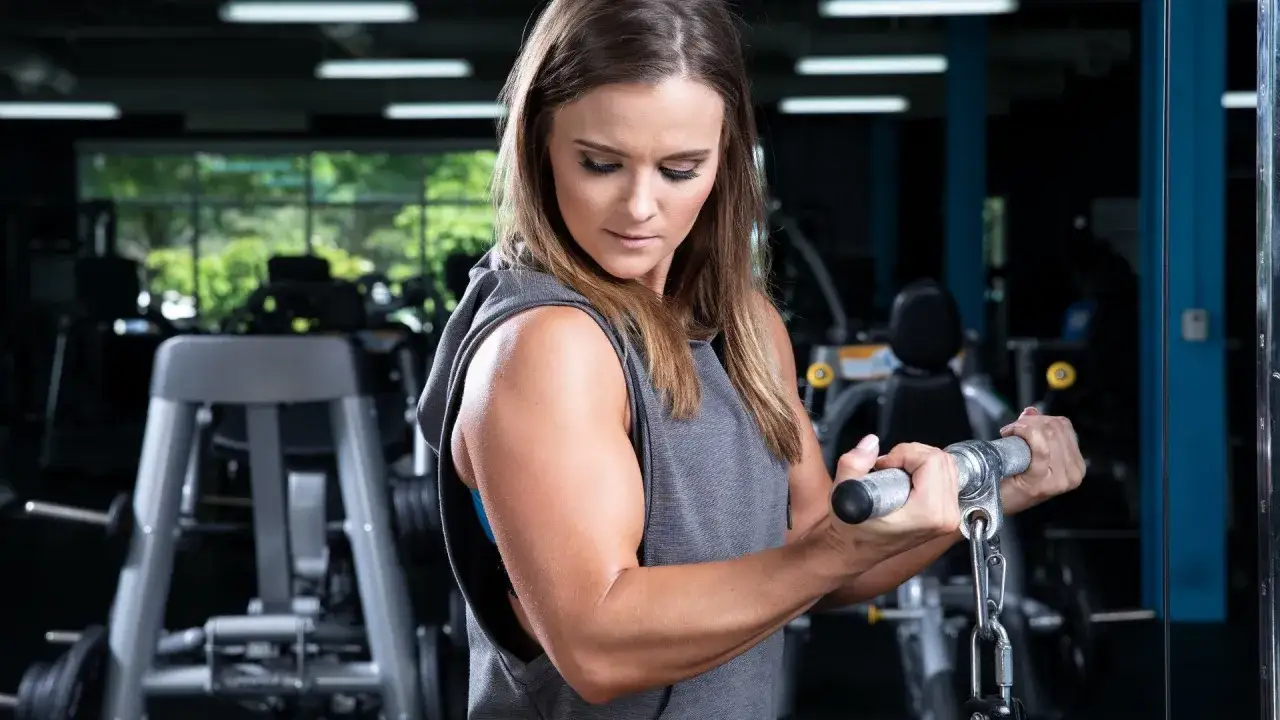
Curls and triceps extensions still matter. Hammer curls hit the brachialis and forearm more than a standard curl, while overhead triceps extensions bias the long head of the triceps, which contributes a lot to upper-arm size. I also like to slow the lowering phase a little; that eccentric phase, the controlled descent, usually gives better stimulus than swinging for extra reps.
Read Also: How Many Miles Should a Boxer Run? The Smart Approach
Loaded carries and grip work
Farmer carries, suitcase carries, and dead hangs build grip endurance, forearm density, and shoulder stability. For fighters, they are not an accessory afterthought. They help the upper body keep producing force when fatigue is already high, which is exactly what conditioning is supposed to improve.
With the right exercise mix, the next question is how to organize the week so the work actually adds up.
A weekly arm-conditioning setup that fits real life
If you only have two lifting days, I would train arms and upper body hard twice rather than scatter half-effort work across the week. If you have a third day, keep it short and metabolic. Eight to twelve minutes of carries, ropes, shadowboxing, or push-up and row intervals is enough to improve work capacity without burying recovery.
| Session | Focus | Work | Why it works |
|---|---|---|---|
| Day 1 | Strength | Overhead press 3 x 4-6, row 3 x 6-8, close-grip push-up 3 x 6-10, farmer carry 4 x 30-40 sec | Builds force and shoulder stability |
| Day 2 | Volume | Incline press 3 x 8-12, hammer curl 3 x 8-12, overhead triceps extension 3 x 10-12, lateral raise 2-3 x 12-15 | Drives growth with manageable fatigue |
| Optional finisher | Conditioning | 6-10 minutes of intervals: shadowboxing, ropes, or carry circuits | Raises work capacity without wrecking recovery |
My progression rule is simple: when you can hit the top of the rep range for every set with solid form, add a small amount of load next time, usually 2.5-5%. I keep most sets 1-3 reps in reserve, which means I stop when I still feel I could have done a few more clean reps. Going to failure every time usually buys fatigue faster than it buys muscle.
If the arms are part of combat or athletic conditioning, I also like one session to feel heavier and one session to feel more metabolically demanding. That combination gives you strength, shape, and the ability to keep working when the pace rises.
Training hard only works if recovery and nutrition let the muscle adapt, so that is the next piece I would not ignore.
Nutrition and recovery that make the work show up
I usually separate this into three levers: protein, energy balance, and sleep. A large meta-analysis found that increasing protein intake improves lean-mass gains during resistance training, with the clearest benefit around 1.6 g/kg/day and above. In practice, most active women do well with roughly 1.6-2.2 g/kg/day, split across 3-4 meals.
If the goal is fuller arms, I would not diet aggressively. A small surplus or maintenance calories usually work better than a hard cut because training quality stays higher. If the goal is more definition, use a modest deficit and keep the lifting quality up; otherwise the arms may get smaller without looking better.
Sleep deserves the boring spotlight. I want 7-9 hours most nights, enough water to keep training quality stable, and at least 48 hours between hard upper-body sessions. If the schedule is packed, I would rather trim accessory volume than let recovery collapse.
For women returning from a layoff, or for anyone training through a heavy work week, lower starting volume is usually smarter than heroic volume. The arms respond well to consistency, but tendons and elbows prefer gradual loading.
Once the structure is in place, the biggest gains often come from simply avoiding the mistakes that stall the process.
Common mistakes that slow arm development
The biggest mistakes I see are usually not technical; they are structural.
- Training only curls and triceps pushdowns while skipping presses and rows.
- Using weights that are too light to force adaptation.
- Chasing a pump and forgetting progression.
- Doing too much failure work and irritating elbows or shoulders.
- Trying to reveal definition with arm work alone instead of improving overall body composition.
- Ignoring grip and upper-back strength, which makes the arms look and perform worse.
If the joints start complaining, I usually reduce failure sets first, then swap straight-bar work for neutral-grip options, and only then cut volume. That order preserves progress while protecting the tendons.
What matters most is not novelty. It is choosing a plan you can actually repeat long enough for the body to change.
What I would prioritize first over the next 8 weeks
If I were starting from zero, I would spend the next eight weeks doing exactly five things: two upper-body sessions every week, one short conditioning finisher, progressive loading on presses and rows, direct triceps and curl work, and enough protein to recover. That is not flashy, but it is the shortest route I know to stronger, more defined arms that still hold up under real conditioning demands.
- Use one heavy push, one heavy pull, one curl, one triceps movement, and one carry every week.
- Track reps and loads so progress is visible on paper before it shows in the mirror.
- Keep the arm work balanced with back work to protect the shoulders.
- Expect the first meaningful changes in strength before the biggest visual changes arrive.
That is the version of arm training I trust: simple enough to repeat, demanding enough to work, and practical enough to fit athletic conditioning rather than fight it.