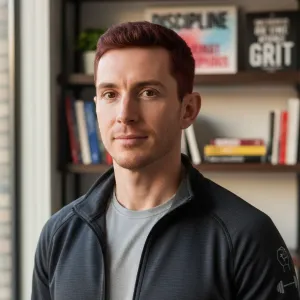
When a familiar TV personality spends years in a serious boxing gym, it is fair to ask where fitness ends and genuine fight involvement begins. Mario Lopez has trained, sparred, studied the sport closely, worked around professional fighters, and contributed as a boxing commentator, but he is not best described as a mainstream professional boxer. His story is more interesting than a simple celebrity workout because it connects wrestling, boxing technique, media work, and long-term athletic discipline.
Mario Lopez has built a serious boxing life without a conventional professional record
- Training has included regular boxing sessions and sparring at Wild Card Boxing Club in Hollywood.
- Background includes high-school wrestling, which helps explain his balance, timing, and comfort with physical contact.
- Career role has included boxing announcing, ringside analysis, and podcasting with Steve Kim.
- Public footage shows him training with experienced coaches and sharing the ring in controlled sessions.
- Important distinction is that fitness boxing, sparring, and professional competition are not the same thing.

Mario Lopez’s boxing involvement explained
Mario Lopez’s connection to boxing goes well beyond throwing a few punches for a fitness video. He has spoken about growing up watching fights with his father and grandfather, then becoming more deeply involved after training at Wild Card Boxing Club in Hollywood. That gym has long been associated with elite-level boxing, so regular access to serious coaching and sparring partners gives his interest more substance than a typical celebrity workout.
The Los Angeles Times reported that boxing was his favorite part of a weekly training routine that also included running, hiking, strength work, and wrestling. At one point, Lopez described a typical week with sparring sessions on Monday, Wednesday, and Friday. That schedule suggests consistency, although it should not be confused with the structured preparation of a licensed professional fighter.
My read is that Lopez belongs in the category of a committed boxing enthusiast and experienced celebrity athlete. He has earned credibility through time spent in the gym, but public evidence does not establish a conventional professional boxing career with a recognized record.
How wrestling shaped his approach in the ring
Before boxing became a major part of his fitness identity, Lopez was a successful high-school wrestler in Chula Vista, California. Wrestling develops skills that transfer well to boxing, including foot positioning, balance, conditioning, and composure under pressure. It also teaches athletes to keep working when a bout becomes physically uncomfortable.
The transfer is not automatic. A wrestler may be comfortable with contact but still need years to develop boxing distance, defensive reactions, punching mechanics, and responsible sparring habits. Wrestling often encourages forward pressure, while boxing requires careful control of range because a poorly timed entry can lead directly into a counterpunch.
That combination helps explain why Lopez often appears comfortable moving, changing pace, and working through demanding rounds. It does not make him a professional boxer, but it gives him a stronger athletic base than someone who has only recently discovered mitt work.
What his training reveals about practical boxing fitness
Lopez’s public training routine is useful because it highlights a point many beginners miss. Boxing fitness is not just about hitting a heavy bag until exhaustion. It combines skill practice, aerobic conditioning, strength, coordination, and recovery, and each element supports the others.
Technical work comes before intensity
Shadowboxing, mitt drills, bag work, and controlled sparring each solve a different problem. Shadowboxing develops movement and visualization, mitts sharpen accuracy and combinations, while the heavy bag builds rhythm and endurance. Sparring adds decision-making because the target moves, reacts, and creates pressure.
I consider controlled sparring the most misunderstood part of this process. It should develop timing and defensive awareness, not become a weekly contest to prove who can hit hardest. Beginners usually gain more from three-minute rounds at moderate intensity with clear objectives than from chaotic exchanges.
Read Also: Jersey Joe Walcott and the Art of Late Heavyweight Greatness
Conditioning needs variety
Lopez has combined boxing with running, hiking, circuits, and strength training. That mix makes sense for an athlete who wants to stay durable rather than peak for one scheduled fight. Boxing rounds are intermittent, so a useful program needs both steady aerobic work and short bursts that resemble repeated attacks and defensive movements.
A practical recreational week might include two technical boxing sessions, one conditioning workout, two strength sessions, and at least one full recovery day. The exact schedule depends on age, injury history, and experience. More training is not automatically better, especially when the shoulders, wrists, ribs, and lower back are already carrying accumulated fatigue.
His role as a boxing commentator matters too
Lopez’s involvement is not limited to physical training. The Los Angeles Times noted his work as a boxing announcer and ringside analyst for HBO International, while later coverage highlighted his work with journalist Steve Kim on The 3 Knockdown Rule. These roles require a different kind of boxing knowledge because watching a fight critically is not the same as simply enjoying it.
A useful analyst must recognize how fighters manage distance, create angles, control tempo, and adjust after exchanges. The best commentary also explains why a punch landed instead of merely announcing that it landed. Lopez’s enthusiasm is valuable here because he approaches boxing as both a fan and a participant in the training environment.
His interest in Latino boxing history has also been a recurring theme. Conversations involving figures such as Oscar De La Hoya, Julio César Chávez, Canelo Álvarez, and Roberto Durán connect contemporary fights with the cultural history of the sport. That perspective gives his media work more depth than a purely celebrity-driven appearance.Celebrity training is not the same as professional competition
Short clips of Lopez sparring can create exaggerated assumptions about his competitive status. A gym round, exhibition, charity bout, and sanctioned professional contest all have different rules, preparation standards, and medical requirements. Without an official record or commission listing, it is safer to describe a public figure as a trained amateur or serious boxing practitioner only when the available evidence supports that wording.
| Type of involvement | What it demonstrates | What it does not prove |
|---|---|---|
| Bag and mitt work | Technique, conditioning, and coordination | Readiness for a live contest |
| Controlled sparring | Timing, reactions, and defensive awareness | A professional fight record |
| Exhibition boxing | Ability to perform under public pressure | Elite competitive ranking |
| Commentary and analysis | Knowledge of tactics and boxing history | Proof of championship-level ability |
Lopez has also appeared in playful boxing content, including a filmed training and boxing challenge with Courtney Lopez at Wild Card Boxing Club. That kind of material is entertaining and can motivate viewers, but it should be judged on its intended purpose. It is not a substitute for a sanctioned bout or a verified competition history.
What athletes can learn from Mario Lopez’s routine
The most transferable lesson is consistency. Lopez has maintained boxing as part of a broader lifestyle rather than treating it as a temporary challenge. His approach supports the idea that the best training is the form you can repeat for years, not the most punishing session you can survive once.
- Choose a boxing gym where coaches teach defense as seriously as offense.
- Build a base with footwork, stance, breathing, and balance before chasing power.
- Use sparring selectively and keep the intensity appropriate to your skill level.
- Pair boxing with strength work for the legs, trunk, shoulders, and upper back.
- Track soreness and injuries instead of treating pain as proof of progress.
- Keep at least one full rest day each week when training consistently.
There is also a useful warning in Lopez’s example. High motivation can encourage athletes to train through shoulder, rib, or wrist problems, but boxing rewards patience. A technically clean session at 70 percent effort is often more productive than an aggressive workout that forces you to miss the next ten days.
Why his boxing story remains worth following
Mario Lopez is best understood as a long-term boxing enthusiast, trained athlete, commentator, and media personality rather than a conventional professional boxer. His connection to Wild Card, his wrestling background, his sparring experience, and his work discussing major fighters all point to genuine involvement.
For readers interested in combat sports, the appeal is not whether he could suddenly enter a world-title fight. It is the more practical example he provides: boxing can be a serious craft, a demanding fitness system, and a lifelong source of discipline even when it is not your full-time profession.