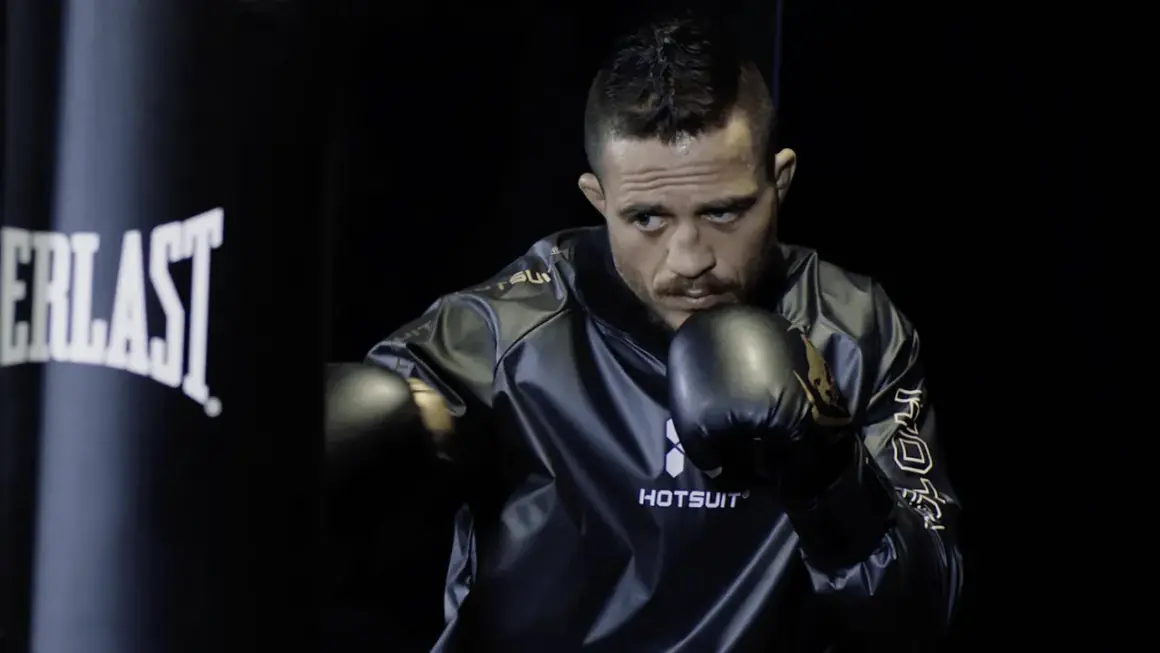
You can throw clean combinations on a heavy bag and still freeze when there is no target in front of you. Ghost boxing usually refers to a form of shadowboxing against an imagined opponent, sometimes with a mirror, coach’s cues, or virtual reality added to make the exchange feel more real. I’ll explain what the term means, how to train it safely, which drills work best, and where it falls short compared with bag work or sparring.
A practical way to understand and use this solo boxing drill
- Meaning: It is usually shadowboxing with a clearly visualized opponent, not a separate official boxing style.
- Main benefit: The drill improves footwork, defense, balance, timing, and decision-making without equipment.
- Best session length: Beginners can start with 3 to 5 rounds of 2 minutes, resting for 30 to 60 seconds.
- Essential habit: Every combination should include a defensive action and a deliberate exit.
- Limitation: Solo practice cannot fully replace contact, resistance, or feedback from a live opponent.
What the term usually means in boxing
In most boxing gyms, this phrase is an informal way to describe shadowboxing with an imagined opponent. You are not simply waving punches into empty space. You picture where an opponent stands, how they attack, and how you respond with punches, slips, blocks, pivots, and counters.
The term is not a universally standardized technical label. One coach may use it to describe traditional shadowboxing, while another may mean a drill built around a moving “ghost” opponent, a mirror, reaction lights, or a VR boxing program. The shared idea is simple: you train against a visualized threat instead of a physical target.
I treat it as a training concept rather than a special boxing style. That distinction matters because beginners sometimes expect a secret system or a particular punching method. The real value comes from how realistically you think, move, defend, and reset during the drill.
Shadowboxing versus an imagined opponent
Basic shadowboxing can be as simple as rehearsing a jab, cross, hook, and footwork pattern. The more advanced version gives every movement a reason. You jab because the opponent is outside range, slip because a counter is coming, and pivot because standing directly in front of the target would leave you vulnerable.
That extra layer turns a loose warm-up into technical rehearsal. I often tell athletes to stop asking, “What combination should I throw?” and start asking, “What did the opponent just do?” The second question creates more realistic boxing.
Why this solo drill deserves a place in your training
A well-structured round develops several qualities at once. You work on technique, aerobic conditioning, coordination, spatial awareness, and tactical imagination without waiting for a partner or setting up equipment.
- Footwork: You learn to step, slide, pivot, and maintain stance while punching.
- Defense: Slips, rolls, parries, blocks, and retreats become part of each exchange.
- Balance: You notice whether your punches pull you out of position.
- Fight rhythm: You practice changing pace instead of throwing every punch at maximum speed.
- Ring awareness: Imagining ropes, corners, and angles helps you avoid standing still in the center.
- Conditioning: Short, intense rounds can raise your heart rate while preserving technical focus.
The biggest advantage, in my experience, is immediate feedback from your own movement. Without the impact of a bag, you can feel whether your hips, feet, shoulders, and guard are working together. That makes the drill especially useful for beginners who need to build clean habits before adding speed and power.
It also works well for experienced boxers between harder sessions. A controlled round can sharpen movement without adding the same level of impact stress as heavy bag work or sparring. The catch is that you must stay honest. If your imagined opponent never attacks, the exercise becomes choreography.
How to run a focused 10-minute session
You do not need a ring, mirror, or expensive equipment. Give yourself roughly 2 by 2 meters of clear space, wear supportive shoes, and keep your hands relaxed enough to avoid unnecessary tension. If you are new to boxing, use hand wraps and light gloves only after a coach has shown you proper alignment.
Round 1 builds the position
Spend two minutes moving around your imagined opponent. Use small steps forward, backward, and laterally while keeping your chin protected and your weight centered. Add single jabs, but focus mainly on returning the hand to guard and staying balanced after every punch.
Round 2 adds simple combinations
Work with combinations such as the jab-cross, jab-cross-hook, or jab to the body followed by a cross upstairs. After each combination, move your head or feet. A useful rule is one defensive action after every attack, even if that action is only a small angle step.
Round 3 introduces reactions
Now imagine the opponent responding. After your jab-cross, picture a right hand coming back and slip outside it. After a body hook, imagine a clinch or a counterhook and pivot away. This is where the drill becomes more than memorized punching because you are linking offense to a believable reaction.
Round 4 changes the pace
Alternate between calm movement, brief bursts, and controlled resets. Try 10 seconds of sharp activity followed by 20 seconds of technical movement. Keep the work rate high enough to challenge your conditioning, but never so high that your guard drops or your feet cross.
Beginners can start with three 2-minute rounds and 60 seconds of rest. More experienced athletes can use five 2-minute rounds or three 3-minute rounds, depending on the rest of their weekly workload. The number of rounds matters less than whether your technique remains recognizable near the end.
How to make the movements realistic
The quality of this training depends on the story you create. I prefer to give the imaginary opponent a stance, height, reach, and style before the round begins. A taller southpaw requires different angles from a shorter orthodox pressure fighter, and that small decision immediately makes the movement more purposeful.
Give every combination a trigger
Do not throw a combination simply because you remember it. Start with a trigger such as the opponent stepping forward, raising their guard, reaching with a jab, or backing toward the ropes. Then choose the response that fits the situation. Purposeful punches teach more than long combinations.
Use the floor as a tactical map
Imagine a line between your lead foot and the opponent’s center. Step outside that line when you angle off, and avoid drifting straight backward for the entire round. A pivot after a hook should change your position, not just rotate your body in place.
Read Also: How to Throw a Powerful Boxing Hook With Better Form
Practice defense at realistic speed
Large, dramatic slips may look impressive in a mirror, but they often create bad habits. Keep defensive movements compact enough to protect your balance and return quickly to a punching position. The aim is not to dodge an imaginary punch by a full foot. It is to move just far enough to make the next shot miss.
A mirror can help with posture, but I would not stare at it for the entire workout. Looking at your reflection may encourage you to perform for yourself instead of reading the opponent. Use the mirror for short technical checks, then spend most of the round looking through the imagined target.
Common mistakes that make the drill less useful
Many people enjoy shadowboxing because it feels free and creative. That is helpful, but too much freedom can hide errors. The following problems show up repeatedly, even among athletes who have trained for a while.
- Throwing without defense: Finish combinations with a slip, block, pivot, or exit step.
- Overextending punches: Keep the shoulder connected to the punch and return smoothly instead of reaching.
- Crossing the feet: Move the lead foot first when stepping toward that side, then bring the rear foot back under you.
- Holding the breath: Exhale briefly with punches and breathe during movement.
- Using maximum speed constantly: Build rhythm with relaxed technical work, then add short bursts.
- Imagining a passive opponent: Make the opponent jab, counter, pressure, retreat, and change levels.
- Ignoring the non-punching hand: Keep the opposite hand responsible for defense while the other hand attacks.
The mistake I would correct first is usually the lack of an exit. A boxer may land a perfect combination in the air and then admire it from the same spot. In a real exchange, that pause is when the counter arrives. Finish by leaving on an angle, stepping out of range, or covering responsibly.
How it compares with bag work and sparring
This drill is valuable, but it does not give you every kind of feedback. A heavy bag teaches impact, force transfer, and how the body reacts when a punch lands. Sparring adds timing, uncertainty, pressure, and the discomfort of being hit or crowded.
| Training method | Best for | Main limitation |
|---|---|---|
| Imagined-opponent shadowboxing | Footwork, defense, balance, tactics, and movement quality | No real resistance or unpredictable reaction |
| Heavy bag work | Impact, combinations, conditioning, and body mechanics | The bag does not think, move, or counter |
| Pad work | Accuracy, timing, combinations, and coach-led reactions | Usually depends on a partner and may become overly scripted |
| Technical sparring | Distance, pressure, timing, and decision-making under stress | Higher injury and fatigue demands without proper supervision |
For most athletes, the best approach is to combine them. Use solo rounds to rehearse movement, bag rounds to connect technique with impact, and supervised sparring to test whether the habits survive against a live opponent. No single drill proves that you can box, but each one can improve a different part of the skill.
Virtual reality can add visual targets and game-like motivation, which may help people train consistently. It still cannot fully reproduce weight transfer, clinching, range disruption, or the consequences of being countered. I see it as a useful fitness and reaction tool, not a replacement for a qualified coach or controlled partner work.
Turn empty space into better boxing habits
The most effective version of this practice is not the flashiest one. It is the round where your stance stays organized, your opponent has believable reactions, and every combination ends with a defensive decision.
Start with three focused rounds, record one round occasionally, and review whether your feet, guard, breathing, and exits hold together under fatigue. If you can make the imaginary opponent feel specific without sacrificing balance, this simple solo drill becomes a reliable way to sharpen boxing between classes, bag sessions, and sparring days.