
A draw in boxing means the bout ended without a winner. That can happen because the scorecards were even after the final bell, or because the rules forced an even result after an injury or foul stopped the fight. I’m going to break down how that works under U.S. boxing rules, what the different draw labels mean, and why a draw is not the same thing as a no contest.
The short version of a boxing draw
- A draw means neither boxer was declared the winner.
- In U.S. professional boxing, bouts are usually scored by three judges using the 10-point must system.
- Common labels include unanimous draw, majority draw, split draw, and technical draw.
- A draw is different from a no contest, which usually means the bout ended too early to be scored.
- In most title fights, the defending champion keeps the belt if the bout is scored even.
What a draw means on the scorecards
On a finished fight, a draw simply means the judges’ totals match. If the cards end up level, the bout is ruled even even if one boxer looked sharper in stretches or had the stronger finishing rounds. That is one reason I tell people not to confuse a close fight with a won fight; close is not the same as ahead.
A draw does not mean both fighters were ineffective. It means the official scoring could not separate them. One boxer may have landed the cleaner shots, while the other won more rounds by a narrow margin, and the final totals canceled each other out. The record books care about the math, not the debate in the arena.
That scoring logic is what creates the different draw labels, and the next step is understanding how judges get there in the first place.
How judges score a fight into a draw
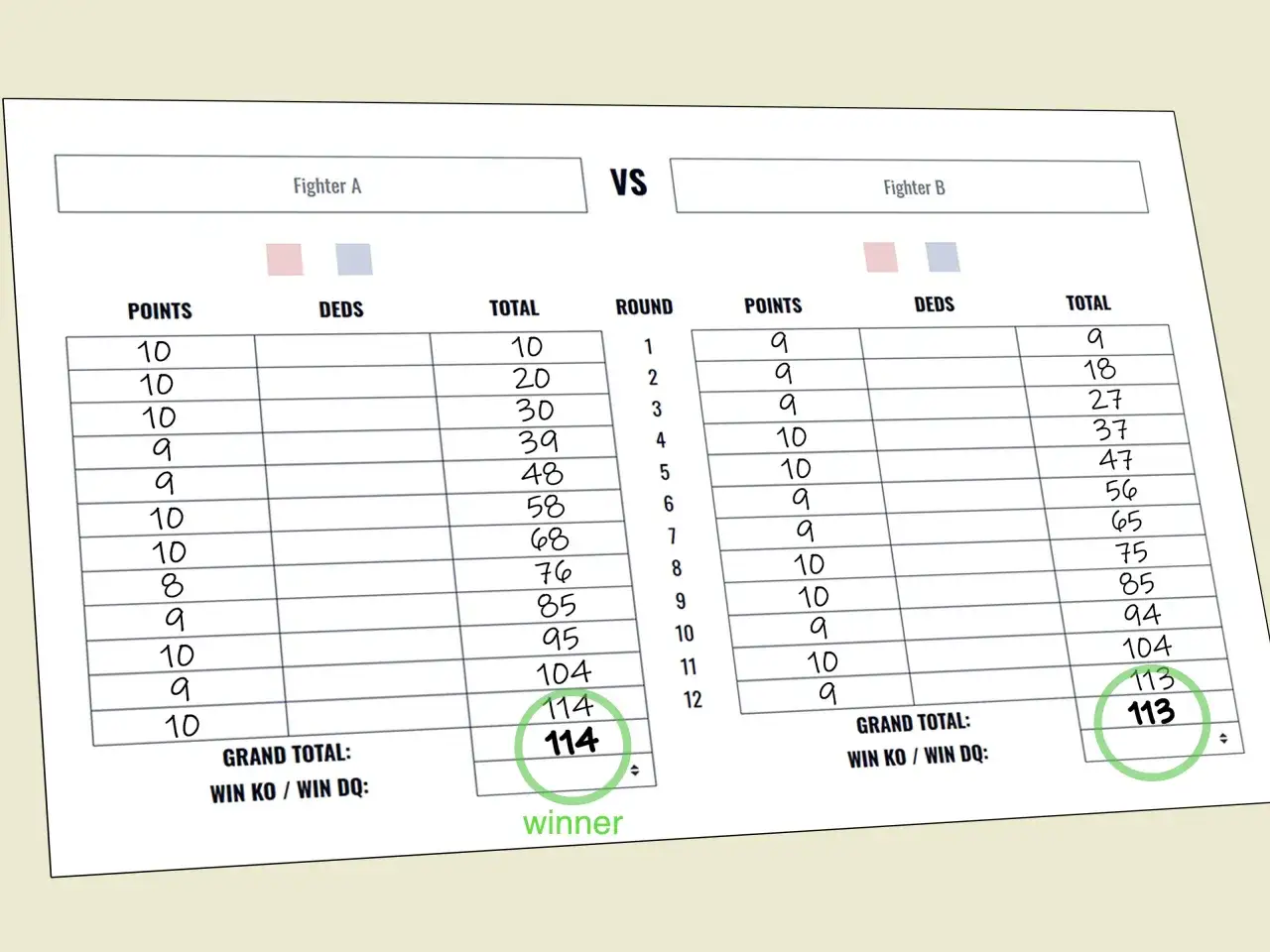
In U.S. professional boxing, the baseline setup is straightforward: three judges, one referee, and the 10-point must system. Most rounds are scored 10-9 for the boxer who wins the round, but knockdowns, point deductions, and dominant rounds can change that number. When all the rounds are totaled, a tie on the cards produces a draw.
Under the ABC Unified Boxing Rules used by many U.S. commissions, a foul-related stoppage can also create a draw or a different technical result. An intentional foul that forces a stoppage after the fourth round can lead to a technical draw if the injured boxer is behind or even on the cards. By contrast, an accidental foul after four completed rounds usually goes to a technical decision for the boxer ahead on the scorecards, while an accidental foul before four completed rounds is normally a no decision. That distinction matters, because fans often lump all three outcomes together.
In other words, a draw can come from pure scoring, or it can come from the rulebook stepping in after a bout is cut short. That difference is where most of the confusion starts.
The main draw types you will hear on broadcasts
| Result | What it means | Simple example | Why it matters |
|---|---|---|---|
| Unanimous draw | All three judges score the bout even. | 114-114, 114-114, 114-114 | This is the cleanest tied result. |
| Majority draw | Two judges score it even, and one judge gives the edge to a boxer. | 115-113 A, 114-114, 114-114 | One judge saw a winner, but the majority did not. |
| Split draw | One judge scores it for Boxer A, one for Boxer B, and one even. | 115-113 A, 113-115 B, 114-114 | This is usually the most debated tied result. |
| Technical draw | The bout is stopped for a foul or injury and the rules require an even result. | Often after an intentional foul when the injured boxer is behind or even | It is rule-based, not just card-based. |
| No decision | The bout ends too early after an accidental foul to reach a scored result. | Stopped before four completed rounds in many U.S. pro bouts | This is related to a draw, but it is not a draw. |
The easiest way to remember it is this: if the rounds were scored to a tie, it is a draw; if the fight ended too early because of an accidental foul, it is usually a no decision; if an intentional foul forced the stoppage after enough rounds, the technical ruling can become a draw or a decision depending on the cards.
That distinction is one of the most useful things to know when you are reading a fight result after the broadcast ends.
What a draw changes for the fighters
A draw leaves both boxers with the same official result, but the consequences are not neutral. It affects the record, the rankings conversation, and whether a rematch feels necessary. In most title fights, the defending champion keeps the belt if the bout ends even; if the title was vacant, nobody takes it home. That is why a draw can feel satisfying for one side and frustrating for the other, even when both were competitive.
For a challenger, a draw can be proof of legitimacy without the full payoff of a win. For a champion, it can feel like a warning shot: the belt is safe, but the performance did not settle the debate. For promoters and matchmakers, it is often the easiest route to a rematch because the argument is already built into the result.
The real takeaway is that a draw does not erase the fight. It usually extends it, whether through a return bout or a deeper debate about who controlled the important rounds.
What a draw tells you about the fight you just watched
When I look at a drawn bout, I usually see one of three things: neither boxer created enough separation, the point deductions and knockdowns balanced out, or the stoppage rules interrupted a fight that was still too close to call. That is why draws often happen in bouts that feel split down the middle rather than in messy, one-sided fights.
If you are watching as a fan, the best habit is to score the round yourself and focus on what judges actually reward: clean punching, effective aggression, ring generalship, and defense. If you are looking at it as a boxer, the lesson is sharper. Make your best rounds obvious. Finish exchanges cleanly. Avoid point deductions. Do not rely on the crowd to win a round for you.
A draw is not a loophole or an apology from the judges. It is the sport’s way of saying the fight was close enough that the official result had to stay even, or the rules forced it there. Once you understand that, the label makes a lot more sense, even when the argument around the fight does not.